




.svg)
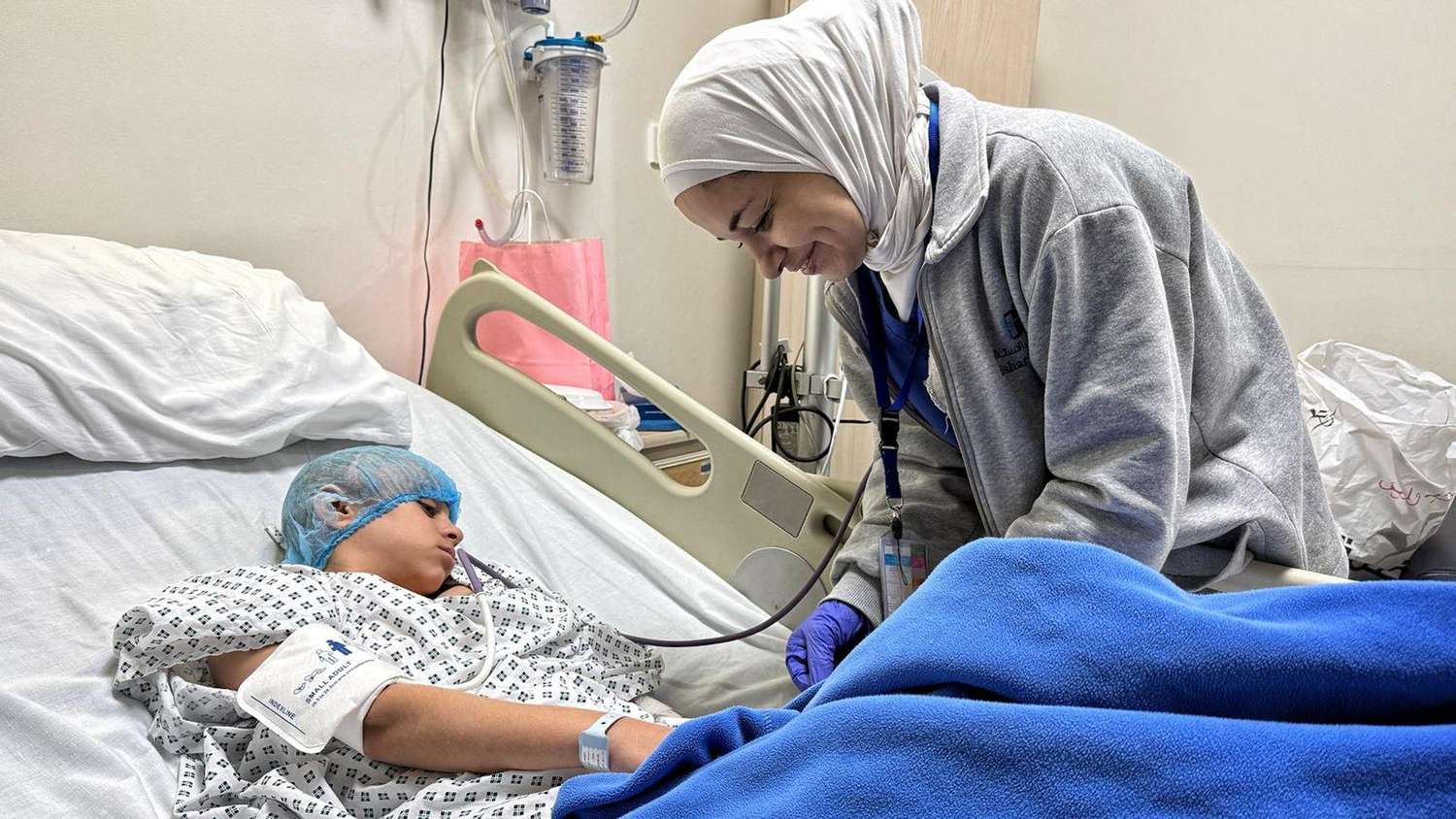
The 3D scan of Maryam’s skull reveals a large, open cavity — a stark reminder of the Israeli strike that nearly killed the young Gazan girl. Yet in a hospital room in Amman, Jordan, she sits upright, smiling as she chats playfully with her father back home.
“I’m okay,” the 12-year-old says brightly. She has also learned that heavy floods have drenched the tents and temporary shelters where tens of thousands in Gaza are living. Still, her father is focused only on her condition as she prepares for another critical brain surgery.
Maryam is among the very few who have managed to leave Gaza for urgent medical treatment since the October 2025 Israel–Hamas agreement intended to halt fighting. The World Health Organization estimates nearly 16,000 people need lifesaving care outside the territory.
Between 13 October and 26 November 2025, WHO recorded just 217 patients evacuated for medical treatment abroad. Israel’s COGAT says another 72 patients and caregivers have since travelled to Jordan. Meanwhile, thousands more remain in Gaza awaiting specialised care like the treatment Maryam is receiving.
After surviving both the bombing and a craniectomy to remove shattered skull fragments, she then faced a months-long wait for approval to exit Gaza for reconstructive surgery — a procedure critical to her survival. With part of her skull missing, even a minor fall could cause permanent brain damage, a frightening risk in Gaza’s current conditions.
The Palestine Children’s Relief Fund, which is covering her treatment, says the conflict has inflicted “catastrophic” harm on children. Many have been orphaned, severely injured or traumatised for life. With numerous hospitals destroyed, basic healthcare has become scarce.
Evacuations remain difficult. Two British surgeons were recently denied entry into Gaza, highlighting a wider problem. According to IDEALS charity surgeon Dr. Victoria Rose, WHO found that only 47% of emergency medical teams were allowed into Gaza in 2025 — even as large numbers of local doctors have been detained by the IDF or remain missing. Gaza, she said, simply lacks the staff needed to care for the wounded.
Maryam’s story gained international attention after American children’s educator and YouTuber Rachel Griffin Accurso (“Ms Rachel”) spoke to her online, following the girl’s account of being bullied for her appearance due to her cranial injury.
Her family understands how rare her opportunity is. But as soon as she recovers, Maryam will be sent back to Gaza, facing an uncertain future.
Israel maintains on X that it is facilitating humanitarian and medical aid, including field hospitals, and argues that coordination failures by other countries and organisations are causing delays. However, this claim contradicts the experiences of numerous humanitarian groups and medical professionals.