




.svg)
Islamic social finance is far more than a financial system—it is a comprehensive framework for human prosperity grounded in the Divine principles of justice (‘adl), compassion (rahmah), dignity, and collective responsibility. In Islam, wealth is not viewed as a private privilege or unrestricted ownership; rather, it is an amanah (trust) from Allah (SWT), to be managed in ways that uplift society, protect the vulnerable, and promote equitable development.
Allah (SWT) reminds us:
“Believe in Allah and His Messenger and spend out of that in which He has made you successors.” (Surah Al-Hadid, 57:7)
This surah establishes a foundational economic principle: wealth is not merely possessed—it is entrusted. As custodians of Allah (SWT)’s provisions, believers are accountable for how wealth is earned, distributed, and invested in the service of humanity.
The Qur’an further emphasizes that righteousness is not achieved through ritual alone, but through faith that manifests in social responsibility and active compassion. Allah (SWT) says:
“Righteousness is not that you turn your faces toward the east or the west, but righteousness is [in] one who believes in Allah… and gives wealth, in spite of love for it, to relatives, orphans, the needy, the traveler, those who ask [for help], and for freeing slaves…” (Surah Al-Baqarah, 2:177)
This powerful verse connects belief with generosity and reminds us that true piety must be reflected in uplifting others. Islamic social finance, therefore, becomes a means of building a society in which wealth circulates, opportunities expand, and human dignity is safeguarded.
While Islamic social finance includes essential tools such as Zakat (obligatory purification of wealth), Sadaqah (voluntary charity), and Qard Hasan (benevolent loans), one of the most transformative and historically significant institutions in Islam is Waqf.
What is Waqf?
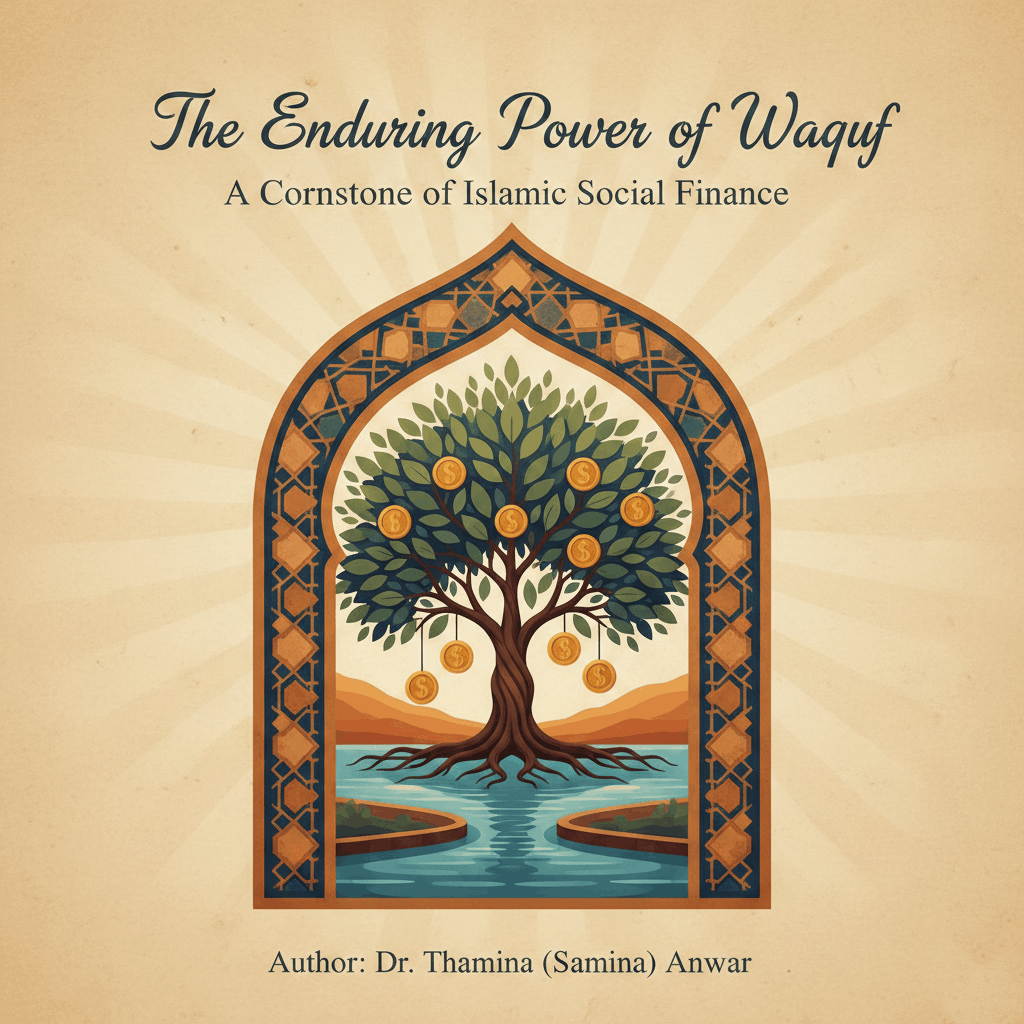
A Waqf (plural: Awqaf) is a perpetual charitable endowment dedicated for the sake of Allah (SWT). It involves assigning an asset—such as land, buildings, cash, businesses, or other valuable resources—for religious or social benefit, while ensuring that the principal remains preserved and its yields are continuously distributed for ongoing good.
Once an asset is declared as Waqf, it is no longer treated as personal property. Instead, it becomes devoted to Allah (SWT) and remains protected from sale, inheritance, or transfer. The benefits generated from it are continuously directed toward designated beneficiaries, creating long-term social value and sustained community development.
Waqf is the living embodiment of Sadaqah Jariyah—a charity that continues to benefit people long after the giver has departed from this world. The Prophet (SAW) said:
“When a person dies, all their deeds come to an end except three: ongoing charity (sadaqah jariyah), beneficial knowledge, or a righteous child who prays for them.”
(Sahih Muslim)
Waqf is among the strongest manifestations of this prophetic teaching, as it creates a lasting mechanism of mercy, benefit, and continuous reward.
Why Waqf is the Ultimate Tool for Creating Social Impact
While other forms of charity provide immediate relief and purification, Waqf holds a unique position because it establishes the foundation for sustainable, long-term transformation. Its enduring impact lies in several defining characteristics:
1. Perpetuity and Sustainability
The hallmark of Waqf is its ability to create a continuous stream of benefit across generations. A one-time donation may feed the hungry today, but a Waqf that establishes a farm, a marketplace, or a water supply system can nourish communities for decades—or even centuries.
This aligns with the Qur’anic principle of investing in lasting good. Allah (SWT) says:
“The example of those who spend their wealth in the way of Allah is like a seed [of grain] which grows seven spikes; in each spike is a hundred grains.”
(Surah Al-Baqarah, 2:261)
Waqf embodies this multiplication of reward by ensuring that benefit continues long after the initial act of giving.
The well-known narration of Umar ibn Al-Khattab رضي الله عنه further illustrates the prophetic foundation of Waqf. When Umar acquired valuable land in Khaybar, he consulted the Prophet (SAW) regarding its best use. The Prophet (SAW) advised:
“If you wish, you may keep the asset itself and give its fruits in charity.”
(Sahih Al-Bukhari & Sahih Muslim)
This established the enduring model of preserving the principal while distributing its yield—forming the legal and spiritual basis of Waqf.
2. Empowerment and Self-Sufficiency
Waqf is not merely charity—it is a strategy of empowerment. It shifts communities away from dependency on inconsistent donations or external aid and enables them to develop independent sources of income.
Through Waqf assets such as rental properties, agricultural land, commercial centers, and investment funds, communities can generate stable revenue to finance their own priorities and programs. This financial autonomy strengthens resilience and enables communities to design long-term solutions for their own development.
Allah (SWT) encourages believers to build strength and preparedness:
“And prepare against them whatever you are able of power…”
(Surah Al-Anfal, 8:60)
Although this verse was revealed in the context of security and preparedness, its broader meaning reflects the Islamic principle of building strength—economic strength included—so that the Ummah is not left vulnerable. Waqf becomes a powerful instrument for sustainable resilience and economic independence.
3. Addressing the Root Causes of Need
Zakat serves as a vital safety net—providing immediate intervention for the poor and vulnerable. However, Waqf functions as a strategic long-term institution that addresses systemic issues such as illiteracy, unemployment, healthcare deficits, and lack of infrastructure.
Waqf not only treats the symptoms of poverty—it addresses its structural roots by building hospitals, schools, vocational training centers, and social institutions that empower individuals to escape cycles of hardship.
The Prophet (SAW) taught a principle of proactive transformation when he said:
“The upper hand is better than the lower hand.”
(Sahih Al-Bukhari)
Waqf transforms recipients into contributors by creating pathways to education, employment, health, and dignity. It becomes a bridge from survival to sustainability.
4. Versatility Across All Sectors of Development
The beauty of Waqf lies in its vast adaptability. Throughout Islamic civilization, Awqaf formed the backbone of public welfare, funding everything from learning institutions to essential infrastructure.
Historically, Awqaf supported:
Education: universities, libraries, madrasas, and scholarships
Healthcare: hospitals, clinics, medical research, and pharmacies
Economic Development: marketplaces, caravanserais, and microfinance systems
Public Welfare: wells, roads, bridges, fountains, and parks
Social Services: orphanages, shelters, and care for widows and the elderly
Animal Welfare: shelters and feeding systems
This reflects Islam’s broad understanding of worship, where serving creation is part of serving the Creator. The Prophet (SAW) said:
“The most beloved people to Allah are those who are most beneficial to people.”
(Reported by Al-Tabarani in Al-Mu’jam Al-Awsat)
Waqf institutionalizes this prophetic principle by creating systems that continuously serve society.
5. Intergenerational Justice and Legacy
Establishing a Waqf is an act that transcends one’s lifetime. It is a deliberate decision to invest in the well-being of future generations, creating a legacy rooted in faith, compassion, and enduring social benefit.
Allah (SWT) says:
“And whatever good you put forward for yourselves—you will find it with Allah.”
(Surah Al-Baqarah, 2:110)
The founder of a Waqf becomes a visionary who invests in a future they may never see, but for which they will be rewarded eternally. This is not only financial foresight—it is spiritual foresight.
Conclusion
While every instrument of Islamic social finance plays a critical role, Waqf stands as one of the most powerful engines of sustainable social transformation. It is not merely a charitable act, but a comprehensive socio-economic institution that builds the physical, educational, and social infrastructure of a just and caring society.
Waqf is Islam’s timeless mechanism for ensuring that wealth is not trapped in the hands of a few, but becomes a source of mercy, empowerment, and opportunity for many.
Allah (SWT) reminds us:
“So that it will not be a perpetual distribution among the rich from among you.”
(Surah Al-Hashr, 59:7)
Waqf ensures that blessings are shared not only for a day, but across generations. It is the spirit of Islam in action—faith translated into systems, worship manifested through service, and wealth transformed into perpetual reward.
An extract from a forthcoming book release:
“Think Like an Islamic Social Entrepreneur: A Mindset Shift”
by Dr. Thamina Anwar
Author: Dr. Thamina (Samina) Anwar
CEO & Founder,
Global Halal Shura Hub
