




.svg)
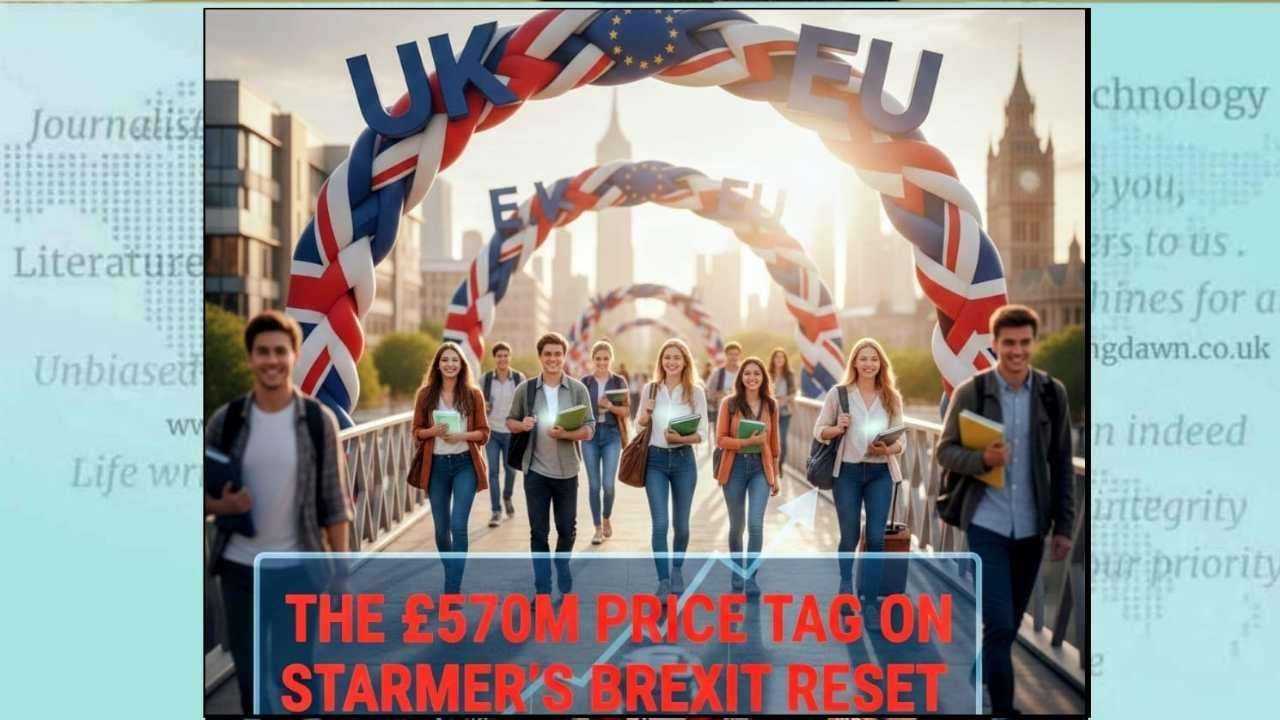
The British government has formally confirmed a landmark agreement with Brussels to rejoin Erasmus+, the European Union’s flagship student exchange programme, marking the most significant reversal of a post-Brexit policy to date. Starting in January 2027, the deal will allow up to 100,000 British and European students, apprentices, and adult learners to cross the Channel for study and work placements, ending a five-year hiatus that began when the UK withdrew from the scheme in 2021.
The breakthrough comes as Prime Minister Sir Keir Starmer accelerates his "reset" of UK-EU relations. Following months of intensive negotiations led by EU Relations Minister Nick Thomas-Symonds and the European Commission’s Maroš Šefčovič, the UK has secured participation at a cost of approximately £570 million for the first year. This figure includes a 30% discount on the standard membership fees typically calculated based on a nation’s GDP—a key concession won by London after initially pushing for a 50% reduction.
The "No Cap" Controversy: Unlimited EU Access?
Critics have been quick to point out that the new agreement does not currently include a hard cap on the number of EU students entering the UK. When questioned on the matter, Policing Minister Sarah Jones stated that she could not "get ahead of negotiations," but emphasized the government’s priority of securing the "best deal for our young people." While the lack of a numerical limit has drawn fire from some political quarters, the government maintains that the scheme is built on reciprocity, ensuring that British students have equal, unfettered access to all 27 EU member states.
Economic Impact: A Long-Term Investment in Skills
From an economic perspective, rejoining Erasmus+ is viewed as a strategic move to address the UK’s skills gap. While the Treasury will face a significant upfront cost, the government argues that the return on investment will be seen in a more globally competitive workforce.
Job Sector Growth: Participation in Erasmus+ is highly valued by employers; data suggests that students with international experience are more likely to find employment within six months of graduation.
University Revenue: British universities, which have faced financial strain since Brexit, are expected to benefit from the revitalized "soft power" and research collaborations that naturally follow student exchanges.
The Turing Scheme’s Future: The UK-only Turing Scheme, launched by the previous government, is expected to be phased out or integrated into the wider Erasmus+ framework, providing much-needed "certainty" for higher education institutions.
Social and Cultural Renaissance
Beyond the balance sheets, the impact on British society is profound. The "Plus" in Erasmus+ extends the scheme beyond elite universities to include vocational trainees, apprentices, and adult learners. This inclusivity aims to break down barriers for disadvantaged groups who were previously priced out of international travel. For the first time since 2021, a new generation of Britons will have the legal and financial support to live, work, and integrate into European cultures, fostering mutual understanding and rebuilding the "broken bridges" left by the Brexit transition.
The Strategy: Why Now?
The sudden move to reopen the door to EU students is a calculated component of Labour's broader geopolitical target. By rejoining Erasmus+, the Starmer administration is demonstrating a willingness to accept "trade-offs"—specifically accepting higher numbers of mobile young Europeans in exchange for deeper economic and security cooperation. The ultimate goal is a comprehensive Youth Mobility Scheme, which would extend beyond students to young professionals, potentially acting as a precursor to a new UK-EU customs arrangement.
For the Labour Party, this is not just about education; it is a signal to Brussels and the world that Britain is ready to move past the isolationism of the early 2020s. By securing this deal for 2027, the government is placing a long-term bet on the "Erasmus generation" to lead the UK’s economic and cultural reconnection with its nearest neighbours.

.jpg)