

.jpg)




.svg)
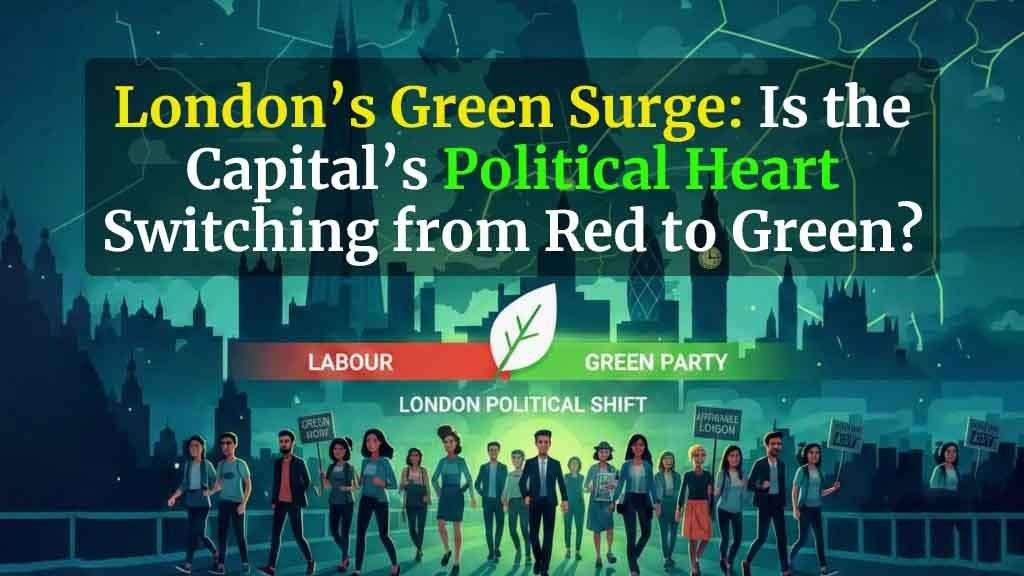
The political foundations of London are undergoing a seismic shift as the countdown to the May local government elections begins. For decades, the capital has been viewed as a solid fortress for the Labour Party, but recent data and changing voter sentiment suggest that this dominance is facing its most significant challenge in a generation. Driven by a combination of economic pressures, housing insecurity, and a perceived move toward the center by the current government, a growing number of Londoners are looking toward the Green Party as the new voice of the progressive left.
A New Era for the Green Movement
Under the leadership of Zack Polanski, the Green Party has transitioned from a fringe movement into a formidable electoral force. Recent polling indicates that the party’s message is resonating far beyond its traditional environmental base. In fact, some surveys now show the Greens as the most favored party in London, particularly among younger demographics and those in inner-city boroughs. This surge is not merely symbolic; the party has seen its membership more than double in the last year, reaching over 125,000 members and positioning itself as the third-largest political organization in the UK by membership.
Economic Turmoil Driving Voter Realignment
The shift in political allegiance is increasingly fueled by the cost-of-living crisis and a deepening housing emergency. In many London boroughs, lifelong supporters of the status quo are expressing frustration with a system they feel has abandoned them. Residents like Arthur Miller, a 71-year-old pensioner living in East London, exemplify this change. Miller, who has supported Labour for half a century, now finds that his fixed income is unable to keep pace with soaring rental and housing costs. For him and many others in his position, the decision to back the Greens in May is a response to the "managed decline" they feel has characterized recent governance.
Polling Data and the Youth Vote
The statistics backing this "Green surge" are startling. In London, the Green Party is currently polling at approximately 27% for first-preference choices, surpassing Labour’s 20% in specific favorable rankings. This trend is most pronounced among voters aged 18 to 24, where support for the Greens has climbed as high as 36%. These younger voters cite a lack of affordable housing and the government’s cautious stance on social welfare as primary reasons for their disillusionment. By positioning themselves as the party of radical social and economic change, the Greens are capturing an electorate that feels unrepresented by the two traditional major parties.
Tactical Battles in the Boroughs
As the May elections approach, the electoral map of London is being redrawn into distinct zones of competition. While the outer boroughs are seeing a rise in support for more conservative alternatives, the inner-London heartlands—including areas like Hackney, Islington, and Lambeth—are becoming primary targets for the Green Party. Local activists are focusing their campaigns on hyper-local issues such as community safety, public service funding, and rent controls. This strategy aims to capitalize on the "localist" sentiment, where voters feel that national party priorities have overshadowed the immediate needs of London neighborhoods.
The Challenge to the Status Quo
The implications of this shift extend far beyond the council chambers. If the Greens successfully convert their current polling strength into seats this May, it will signal a fundamental change in the UK’s political landscape. The party is no longer just campaigning on climate change; it has successfully integrated social justice and economic reform into its platform, attracting a diverse coalition of working-class voters, students, and retirees. As London prepares to head to the polls, the "Green Wave" appears less like a temporary ripple and more like a permanent change in the tide of British politics.