

.jpg)


.svg)
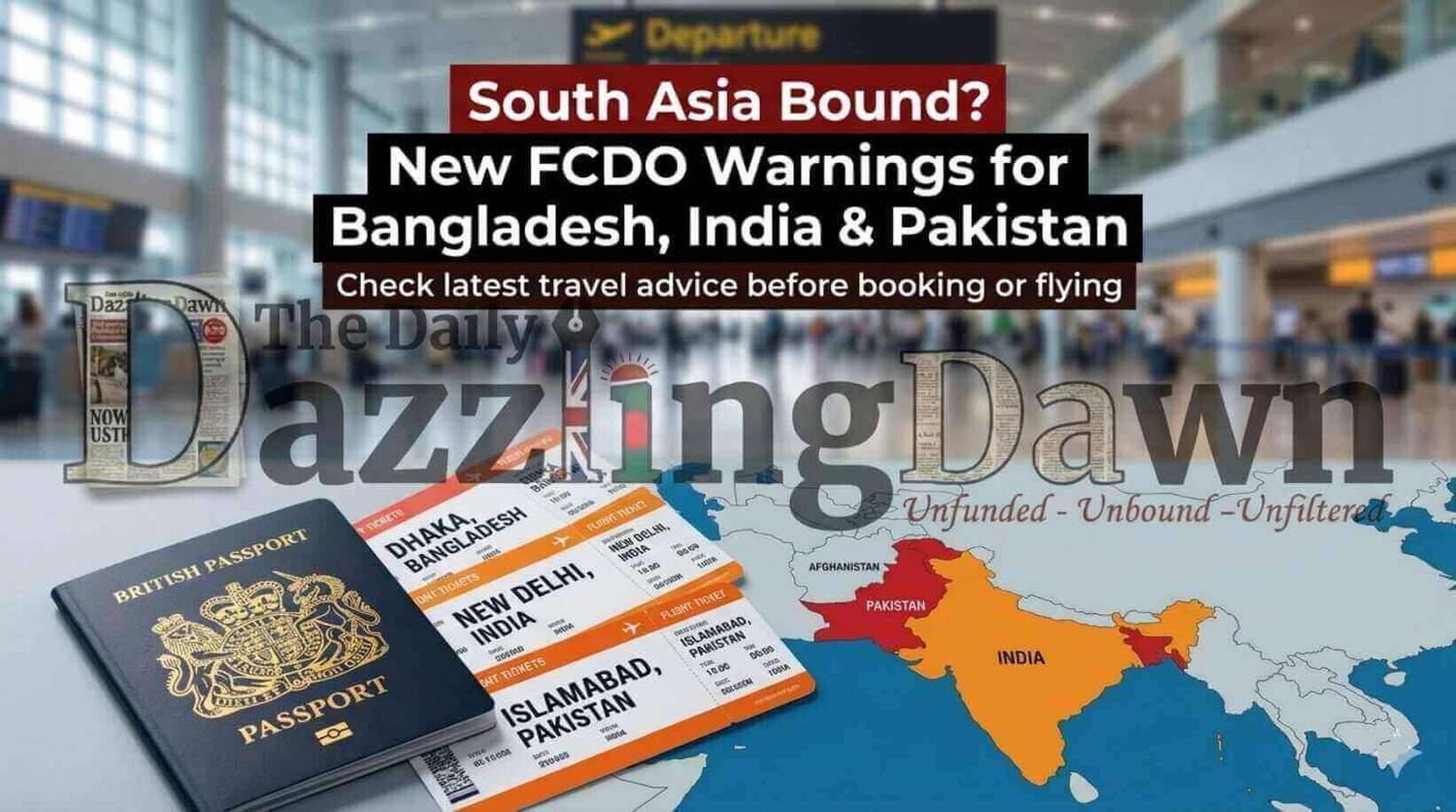
The current geopolitical climate has introduced significant travel complexities for British nationals planning trips to South Asia this Easter. While these countries remain popular holiday destinations, new alerts from the Foreign, Commonwealth & Development Office (FCDO) as of March 2026 reflect a landscape of increased vigilance, Daily Dazzling Dawn understand.
The FCDO has significantly updated its travel guidance for South Asia as of March 20, 2026, citing heightened regional tensions and potential impacts on international transit due to escalation in the Middle East. For British citizens planning trips during the April holiday season, the situation has shifted from routine travel to a requirement for high vigilance. While the UK government has not issued a blanket "Do Not Travel" for the entirety of South Asia, specific "All But Essential Travel" warnings are now in place for parts of Bangladesh, India, and Pakistan.
Impact on Flights and Schooling-Families traveling with school-age children face the most significant logistical risks. If regional tensions lead to further airspace closures, commercial flight paths—especially those transiting through Middle Eastern hubs like Dubai or Doha—could be suspended. The UK government typically advises citizens to "shelter in place" until safe commercial or chartered options become available. Parents should be aware that the UK Department for Education does not automatically excuse absences caused by being stranded abroad. Schools may mark these as unauthorized, potentially leading to fines upon return. In prolonged closures, evacuation flights are a last resort and are not guaranteed, requiring families to have the financial means for an extended stay.
Universal Credit and Employment Protections- For those receiving Universal Credit, a forced stay abroad beyond the allowed one-month period can result in the suspension of benefits. The Department for Work and Pensions (DWP) requires claimants to be in the UK and "fit for work." While exceptions exist for medical treatment or bereavement, being stranded due to conflict-related flight cancellations often requires a manual review by a work coach. Employees also face precarious situations; UK employment law does not require employers to pay staff who cannot return to work due to travel disruptions. While many companies may offer unpaid leave or remote work, an employee could technically face disciplinary action for "frustration of contract" if they are unable to fulfill their duties for an indefinite period.
Cargo and Commercial Airspace Outlook- The current escalation has already begun to ripple into South Asian flight paths. If the situation deteriorates, cargo and commercial flights from the UK to Dhaka, Islamabad, and Delhi may be rerouted or suspended to avoid high-risk zones. This would not only trap travelers but also delay essential goods. The FCDO strongly recommends that any "emergency" travel be preceded by a thorough check of travel insurance policies, as many standard plans contain "war exclusions" that void coverage if a traveler enters a region after an official warning has been issued.
Preparation and Protocol-
Speaking to Daily Dazzling Dawn reporter on Sunday night regarding this matter, Salah Uddin Suman, a prominent London-based barrister, stated: British nationals are urged to register with the "Keep Up To Date" email alerts from the FCDO and ensure they have access to at least six weeks of emergency funds. Priority for the upcoming holidays should be flexibility; travelers should ensure their tickets are refundable or changeable and maintain a secondary departure plan via land or sea to a neutral third country if possible.