


.svg)
A convicted offender who targeted women and a teenager in East London faces an upcoming Parole Board assessment in September, where a judicial panel will determine whether he can be safely returned to the community.
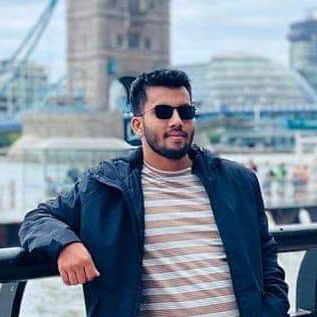
Sunny Islam, who told a trial jury he was a practising Muslim raised in a strict religious family, was handed an indefinite sentence for public protection in 2012 following a series of knife-point attacks in 2010.
Despite a formal request submitted by one of his victims seeking to open the proceedings to public scrutiny, the Parole Board confirmed that the hearing will take place behind closed doors.
The decision to deny public access followed representations from Islam’s legal representatives, who stated that news of the public application had triggered severe emotional distress.
His solicitor advised the board that since learning of the application for an open hearing, the prisoner reported a dramatic increase in anxiety and sleep disturbance, adding that forcing him to face public scrutiny could prove destabilising and impair his ability to provide best evidence.
Judicial Assessment and Victim Impact
Judicial member His Honour Jeremy Roberts KC, ruling on behalf of the Chair of the Parole Board, noted that while no formal medical documentation was submitted, there was no reason to doubt the prisoner's reported distress. He concluded that the repugnant nature of the offences meant a public forum would likely be hostile and extraordinarily difficult for the applicant.
The judicial ruling also highlighted concerns regarding the potential psychological strain on other victims if the details were aired publicly without their explicit consent.
The crimes occurred over a three-month period in 2010. Islam abducted a 15-year-old girl at knifepoint in September of that year, forcing her into a vehicle before assaulting her twice.
Trial records from Woolwich Crown Court show that presiding Judge Patricia Lees observed at the time that Islam had explicitly told his victim he intended to teach her a lesson for being out late, a phrase echoed across his other offences.
Judge Lees noted during sentencing that such statements revealed a deeply troubling attitude toward women, treating those outdoors at night as undeserving of respect or protection.
Investigators subsequently linked Islam’s DNA to three additional knife-point abductions and assaults across Barking and Forest Gate.
One victim told journalists at the time that she felt treated like an animal and feared for her life during the attack.
Another victim managed to kick out a vehicle window during an assault to attract attention before escaping to safety.
A fourth victim was identified after police discovered blood, plastic restraints, and a knife inside the vehicle used in the crimes.
Future Proceedings and Legal Remedies
Islam was convicted of seven counts of rape, sexual assault, and kidnap, receiving an indefinite sentence with a minimum tariff of 11 years.
Having served the mandatory period by 2021, his detention has since been subject to periodic risk evaluations by independent parole panels.
Reporting by Daily Dazzling Dawn indicates that while the public hearing request was denied, official procedure allows the applicant to request attendance at the private hearing or receive a formal summary of the board's eventual determination.
The upcoming September review will evaluate psychological assessments, institutional behavior, and risk-management strategies before determining whether conditional release, open-prison transfer, or continued detention is warranted.