






.svg)
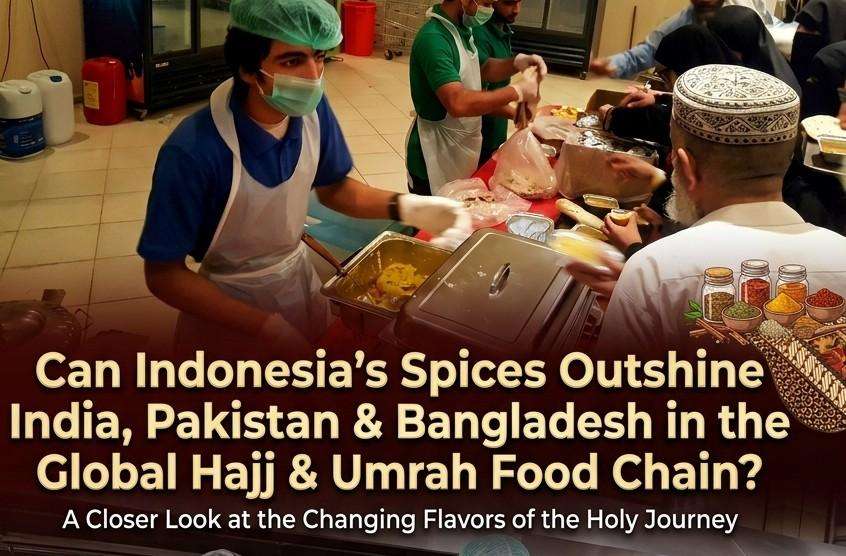
Indonesia is strategically repositioning itself to become a dominant force in the global Hajj and Umrah food supply chain, exploiting a massive opportunity that raises questions about the future roles of established food-exporting giants like India, Pakistan, and Bangladesh.
The ambitious drive is spearheaded by the Ministry of Hajj and Umrah's Director General for the Hajj and Umrah Economic Ecosystem Development, Prof. Dr. Jaenal Effendi. He asserts that Indonesia's potential extends far beyond its status as the world's largest sender of pilgrims, focusing instead on transforming the nation into a primary production hub for the commodities consumed by millions in the Holy Land.
At the Indonesia–Saudi Arabia Partnership Forum 2026, organized by the Amanah Hajj and Umrah Association of the Republic of Indonesia (ASHURI) in Jakarta, Effendi laid out a comprehensive vision. He noted that Hajj and Umrah catering requirements encompass a vast range of commodities, from rice and cooking oil to meat, fish, vegetables, and spices, not merely ready-to-eat meals. "The ecosystem we are building should not only improve services for pilgrims but also create multiplier effects for the wider economy," he told journalists, emphasizing the need to integrate domestic farmers, livestock breeders, and fishermen into the global supply chain.
Industry experts suggest that Indonesia's success hinges on factors that could give it a competitive edge over South Asian rivals. While Indian, Pakistani, and Bangladeshi cuisines are globally renowned, Indonesia is leveraging its robust standardization of halal and food safety protocols, massive agricultural scale, and the logistical efficiency of a consolidated national export consortium. ASHURI Chairman Nur Faidzin highlighted the strategic value of this approach. "We believe the success of Hajj and Umrah is not only determined by the quality of worship services but also by the strength of the supporting ecosystem," he stated during the forum. He argued that this initiative creates "added value for farmers, MSMEs, the food industry, and the entire national supply chain".
The Daily Dazzling Dawn has learned that the Forum is not merely a diplomatic event but a concrete business platform. Saudi importers and logistics companies like Daleel Alzowar, Jar Al Bait Company, and Safwat Al Wessam Group have been directly engaged with Indonesian producers. Upcoming action includes finalizing memoranda of understanding (MoUs) aimed at securing long-term contracts. Furthermore, the Ministry is actively encouraging the establishment of export consortiums coordinated by competent exporters to guarantee supply continuity and quality standards set by the Saudi market.
Looking ahead, the focus is shifting to scaling this initiative from annual Hajj logistics to year-round Umrah operations and retail expansion. Following the successful pilot export of over 2,000 tonnes of Indonesian rice for Hajj, discussions are already underway with Saudi retail giants like BinDawood and Lulu to introduce Indonesian produce to the broader consumer market. This strategic move is expected to significantly improve Indonesia's trade balance, particularly by curbing the persistent services deficit linked to reliance on foreign logistics and catering providers.
The forum, held under the theme "Building Strategic Partnerships for a Sustainable Pilgrim Supply Chain," served as a strategic platform bringing together government officials, business players, exporters, importers, logistics companies, Hajj and Umrah service providers, investors, and various stakeholders from Indonesia and Saudi Arabia. Effendi said the forum serves not only as a platform for business meetings but also as a foundation for building a strong ecosystem that enables Indonesian producers, micro, small, and medium enterprises (MSMEs), and exporters to enter the Saudi Arabian market while fostering long-term partnerships that support the Hajj and Umrah economy.
Indonesia possesses great potential as a global producer of high-quality halal food. Various commodities, such as rice, cooking spices, cooking oil, processed foods, and beverages, as well as catering raw materials, hold significant potential to fulfill the consumption needs of millions of Hajj and Umrah pilgrims annually. This initiative would not only boost national exports but also generate added value for farmers, MSMEs, the food industry, logistics companies, and the entire national supply chain, he continued.
The forum offers business players opportunities to present their products, engage in business discussions, explore potential partnerships, and also sign Memorandum of Understanding (MoU) between Indonesian and Saudi Arabian companies. At the same event, representatives from Saudi Arabian importers expressed their commitment to strengthening cooperation with Indonesian producers by importing food raw materials and halal food products to meet the dietary needs of Hajj and Umrah pilgrims, particularly those from Indonesia.