




.svg)
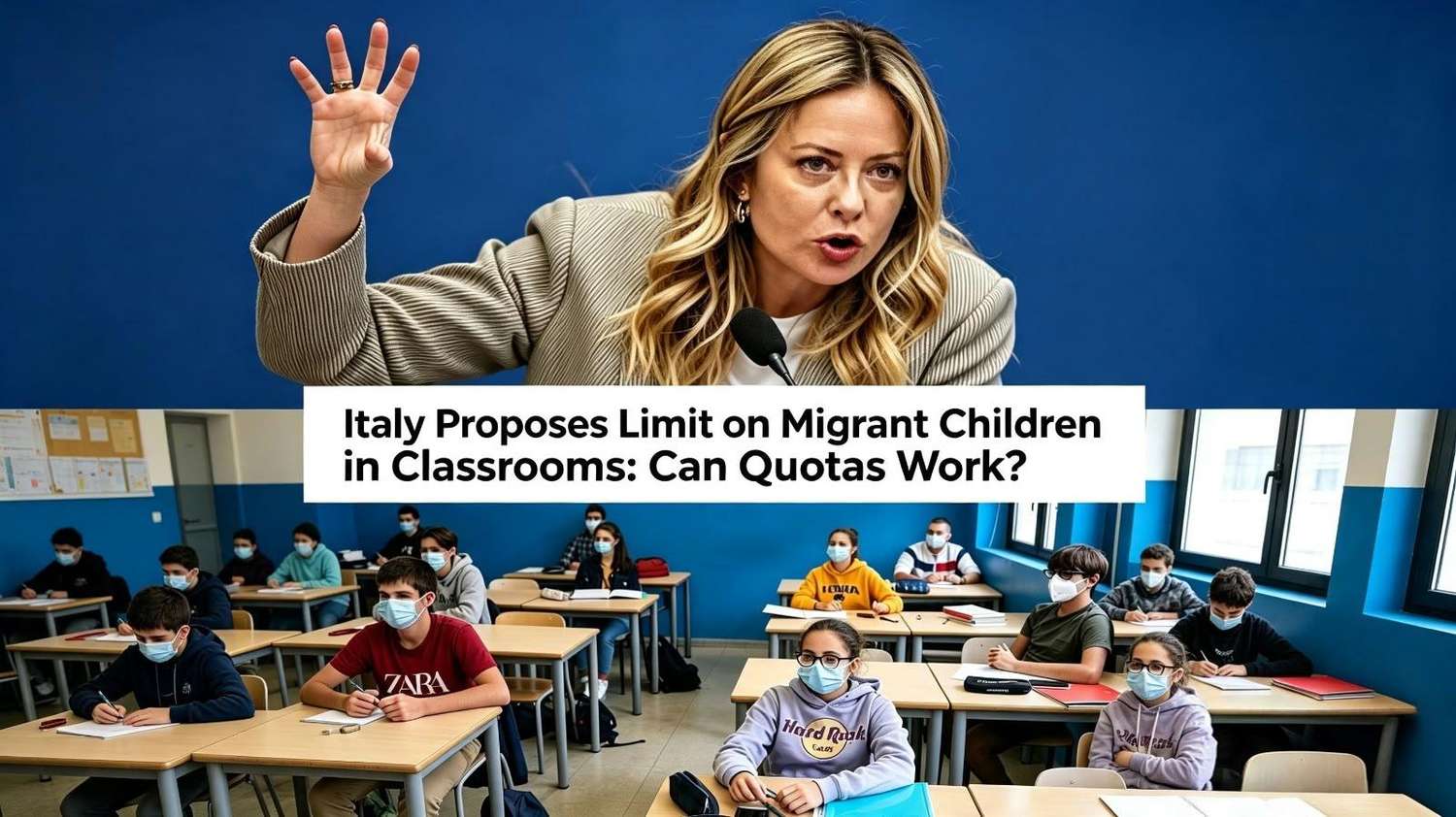
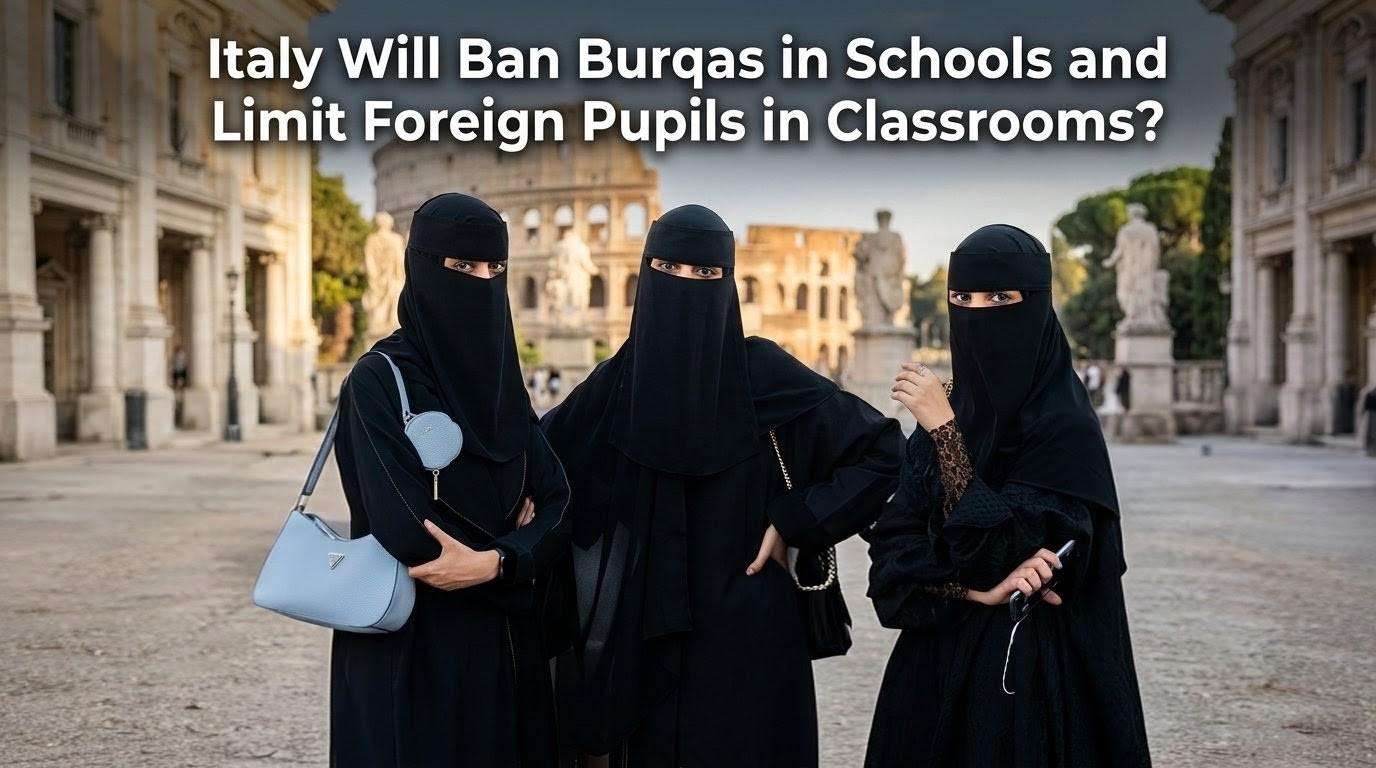
The Italian government is preparing sweeping legislative reforms to enforce a blanket ban on full-face Islamic veils in schools and impose strict caps on the proportion of non-Italian pupils per classroom, Prime Minister Giorgia Meloni announced at a national assembly in Rome. Speaking before party members, Meloni outlined draft provisions scheduled for imminent presentation to the Council of Ministers, which will legally prohibit the wearing of the burqa and niqab across state educational institutions, establish numerical limits on foreign student admissions in single cohorts, and introduce mandatory Italian language training for migrant parents whose children face severe academic integration barriers.
Meloni justified the intervention on instructional and civic grounds, warning that high concentrations of pupils lacking local linguistic fluency transform classroom environments from instruments of social advancement into centres of institutional neglect. Under current administrative frameworks, foreign-origin minors represent roughly 11.6 per cent of total school enrolments across Italy, according to data documented by the Milan-based research institute Fondazione ISMU. Italian public order statutes have historically relied on a 1975 anti-terrorism measure prohibiting helmets and garments that mask identification without justifiable cause, an arrangement clarified by the Council of State in 2008 to permit religious veiling provided individuals submit to periodic identity checks. The prospective decree marks a definitive departure from that judicial precedent, seeking to ban religious face coverings within school grounds outright.
Rising Anxiety Across Muslim Communities
The proposed sanctions have stirred profound anxiety and grief amongst Italy's diverse Muslim population, where community representatives express fear that the political focus on Islamic attire will further marginalise observant families. Community advocates note that young girls and women wearing traditional garments already endure mounting social hostility, and an outright classroom prohibition risks driving young Muslim women out of mainstream state education entirely. In grassroots community spaces from Lombardy to Sicily, parents have voiced deep anguish, feeling that their religious traditions and cultural identity are being turned into political battlegrounds rather than addressed with genuine educational support, language tutors, and social investment.
Within Islamic theology, debates regarding facial covering centre primarily on interpretations of scripture. In Surah An-Nur, the text instructs believing women regarding modesty: "And tell the believing women to reduce [some] of their vision and guard their private parts and not expose their adornment except that which [necessarily] appears thereof and to draw their veils over their chests" (Quran 24:31). A companion passage in Surah Al-Ahzab directs: "O Prophet, tell your wives and your daughters and the women of the believers to bring down over themselves [part] of their outer garments. That is more suitable that they will be known and not be abused" (Quran 33:59). Classical and contemporary Islamic jurisprudence remains divided on whether these passages mandate the niqab or whether covering the hair, neck, and torso while leaving the face and hands visible satisfies religious obligations, rendering state-enforced bans deeply sensitive for those who regard the veil as a fundamental tenet of devotion.
The European Precedent and Legislative Context
Italy’s draft policy arrives amidst a broader wave of restrictions across the European continent. France enacted a total ban on conspicuous religious symbols in state schools in 2004, followed by a nationwide public ban on full-face veils in 2010. Belgium implemented comparable public prohibitions shortly thereafter, whilst Denmark, the Netherlands, and Switzerland maintain strict statutory restrictions on face coverings in public buildings, transport systems, and municipal schools. In recent parliamentary sessions across Central Europe, Austria expanded restrictions on headcoverings for primary pupils under 14 years of age, citing child safeguarding, whilst Portugal enacted public-space identification statutes prohibiting concealment garments.
The legislative push also reflects domestic electoral dynamics within Rome's governing coalition. Both Meloni's Brothers of Italy and Matteo Salvini's League face competitive pressure from further-right opposition factions, which have campaigned aggressively for total prohibitions on Islamic dress. Human rights organisations and legal scholars contend that restricting personal attire in academic settings infringes fundamental liberties guaranteed under the European Convention on Human Rights, specifically freedom of thought, conscience, and religion. As the draft legislation heads toward formal cabinet scrutiny, Italian education unions and civil liberties organisations are preparing constitutional challenges, warning that capping pupil numbers by nationality risks contravening constitutional guarantees of universal access to public schooling.