





.svg)
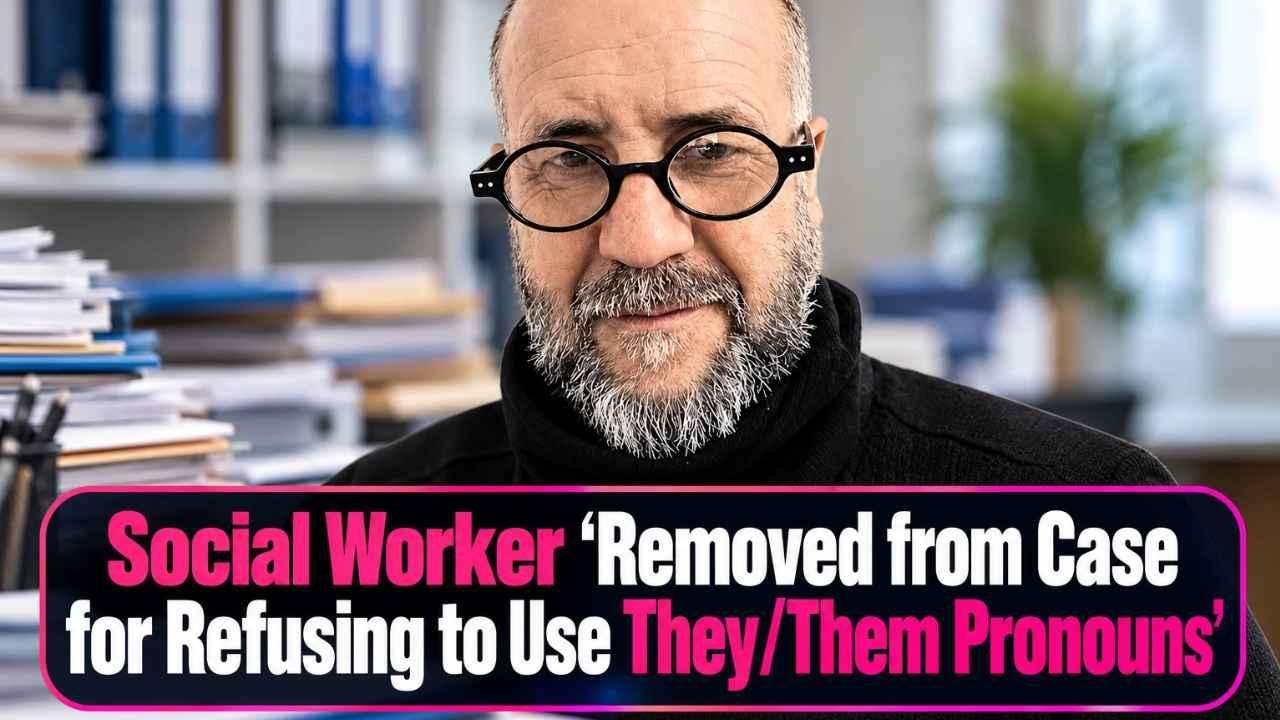
A social worker has claimed he was removed from a case for refusing to use "they/them" pronouns in official records, asserting that non-binary language renders child safeguarding documents "incomprehensible." Charles Plummer, a veteran practitioner, alleges he was stripped of his role as a guardian after declining to adopt gender-neutral terminology when documenting cases involving children.
Daily Dazzling Dawn understands the dispute centres on the use of plural pronouns to describe individual minors within sensitive safeguarding documentation, a practice that has become increasingly common across British public services in recent years. Mr Plummer contends that such language compromises the clarity and precision required in legal and administrative records concerning vulnerable children.
The case emerges amid a broader national conversation about the intersection of gender identity language and professional standards within Britain's public sector. Social workers operate under strict guidelines requiring accurate documentation that can withstand legal scrutiny, particularly in proceedings involving child protection, custody arrangements, and care planning.
Daily Dazzling Dawn learned that Mr Plummer's objections were not rooted in personal prejudice but in a professional concern that altering established linguistic conventions could create ambiguity in records that may later be examined by courts, local authorities, and safeguarding review boards. The use of "they/them" for a single individual, while increasingly accepted in general discourse, presents particular challenges in legal contexts where singular subjects must be clearly identified.
The circumstances surrounding Mr Plummer's removal raise significant questions about how public institutions balance inclusivity policies against the operational requirements of professions dealing with vulnerable individuals. Local authorities across England and Wales have adopted varying approaches to gender-neutral language, with some issuing detailed guidance while others leave discretion to individual practitioners.
Speaking to journalists, sources familiar with the matter indicated that the decision to reassign the case was made on procedural grounds rather than as a disciplinary measure. However, the outcome has intensified debate about whether professional experience and linguistic precision are being subordinated to ideological considerations within social care.
The British Association of Social Workers has previously published guidance encouraging practitioners to respect service users' preferred pronouns while maintaining accurate records. The tension between these two objectives remains unresolved in many operational contexts, particularly where children are too young to express gender identity preferences or where parental views conflict with institutional policy.
This case reflects growing friction between established professional practice and evolving equality frameworks across the United Kingdom's public sector. Similar disputes have arisen in education, healthcare, and policing, where officers and practitioners have faced consequences for declining to adopt gender-neutral language.
Daily Dazzling Dawn understands that Mr Plummer had served in his role for a considerable period before the dispute arose, and his removal from the case has prompted concern among colleagues who view the decision as disproportionate. The matter also raises questions about whether social workers retain the right to exercise professional judgement in documentation practices that may affect legal outcomes for children and families.
Legal commentators have noted that safeguarding records frequently form part of evidence submitted to family courts, where precision in identifying individuals is paramount. Any ambiguity introduced through unconventional pronoun usage could potentially complicate proceedings or provide grounds for challenge by legal representatives.
It remains unclear whether Mr Plummer intends to pursue formal grievance procedures or seek legal remedy for his removal from the case. The local authority involved has not publicly commented on the specifics of the decision, citing confidentiality obligations regarding individual cases and personnel matters.
The outcome of this dispute may establish precedent for how similar cases are handled across the social care sector, particularly as institutions continue to navigate the complex terrain between inclusive language policies and the operational requirements of professions serving vulnerable populations. Daily Dazzling Dawn will continue monitoring developments as this case progresses through any formal channels.