





.svg)
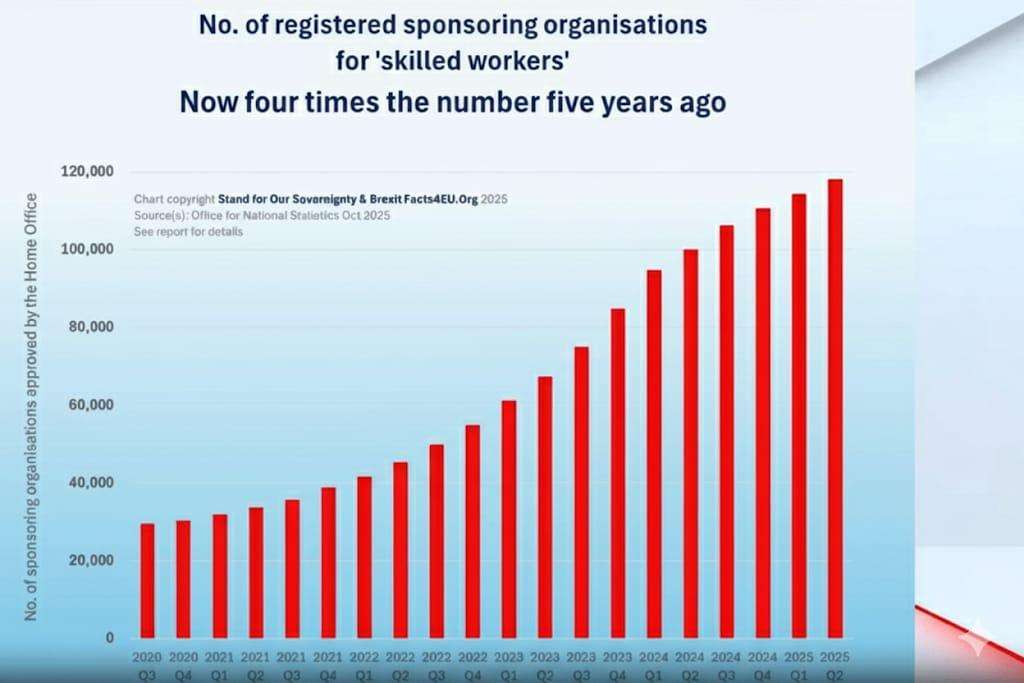
A staggering surge in the number of companies registered to sponsor "skilled worker" visas in the UK is raising serious questions about the integrity of the nation's immigration system. New analysis indicates that the figures have quadrupled in just five years, jumping from approximately 30,000 to nearly 120,000, creating what critics describe as an environment ripe for exploitation where unscrupulous brokers and sponsors allegedly amass vast wealth at the expense of vulnerable migrant workers.
The revelations, compiled from recent data analysis, paint a concerning picture of how the "skilled worker" designation is being applied. Over 400 minicab and delivery firms, almost 1,000 corner shops and mini markets, and more than 250 hair and barber shops are now listed as approved sponsors. This proliferation has led many to question the actual "skill" level required for these roles and if the system is genuinely serving the UK's economic needs, or simply facilitating a massive influx for profit.
"We were fundamentally misled about the true nature of these skilled worker visas," a prominent commentator stated, reacting to the data. "The sheer volume of businesses, many of which traditionally do not require highly specialized international talent, exposes a significant loophole."
Research directors from migration control think tanks have lauded the efforts to bring this information to light, stressing that the public is often "not regularly being told" the full story behind immigration figures. "We are constantly told that immigration is indispensable and that every individual arriving on an entry visa is a huge economic asset," one director remarked. "But when you see the number of sponsoring companies explode fourfold in five years, it compels us to scrutinize the reality."
The current system, critics argue, grants approved sponsors "carte blanche" power, with visa approvals often following quickly once an individual is associated with a registered sponsor. This ease of access is believed to be a primary driver behind the "explosion" in visa grants observed in 2022 and 2023.
Experts suggest the identified figures are more than likely an "underestimate," as many other businesses in sectors like takeaways and convenience stores may be sponsoring visas without being explicitly identifiable as such in public data. This hidden layer of sponsorship further complicates efforts by authorities to manage immigration numbers effectively.
"The Home Office is effectively relinquishing sovereign control of our borders to vape shops, corner shops, and takeaways," one director lamented, highlighting the absurdity of the situation. "The notion of a 'skilled worker' – traditionally understood to mean nurses, teachers, engineers, or brain surgeons – is being made a mockery of."
While the current framework evolved under previous administrations, there is a growing demand for all political parties to address these systemic issues. Calls are mounting for a thorough review of the criteria for sponsor eligibility and a redefinition of "skilled worker" to ensure the system genuinely attracts high-value talent rather than facilitating potential exploitation.
However, some commentators argue that many individuals arriving from abroad are often "more willing to work" and fill vital roles. They contend that if the government's definition of "skilled worker" is flawed, it is a failure of policy, not of the migrants themselves. "These individuals are providing services, contributing to businesses, and injecting money into the economy," a commentator explained, emphasizing the supply-and-demand dynamics at play and the need for a clearer, more equitable system that benefits both the country and its workers. The debate continues, but the urgency for reform is undeniable as the human and economic costs of the current system become increasingly apparent.