






.svg)
The days of fumbling for passports at the UK border may soon be over, marking a colossal leap forward in the efficiency of international travel. Leveraging cutting-edge AI-powered facial recognition, the UK's Border Force is engineering a revolutionary, passport-free entry system that promises to fundamentally change the experience for millions of returning British citizens.
This dramatic innovation moves beyond the frustration of long airport queues and replaces it with a seamless, contactless border crossing. The shift is part of a broader government drive to modernise the immigration system, placing the UK at the forefront of digital border security alongside pioneers like Dubai.
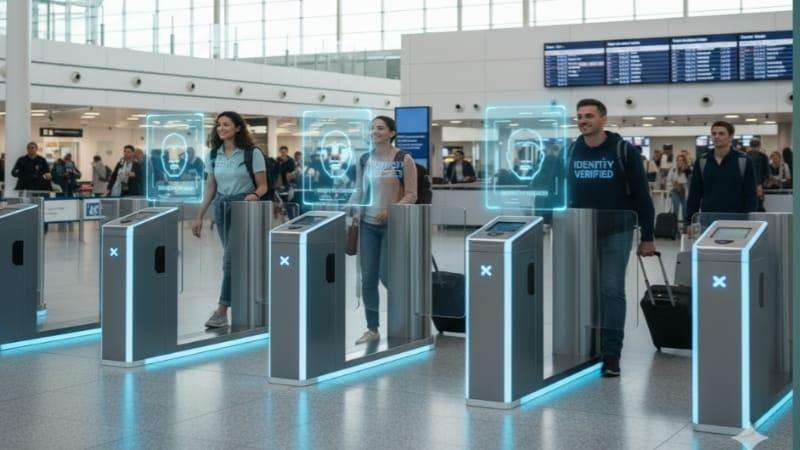
The successful trial at Manchester Airport in October 2025 offered compelling proof of concept. British passport holders returning from international trips were able to breeze through specially upgraded e-gates. Instead of presenting a physical document, their faces were instantly scanned and verified against a secure government database. Border Force Director-General Phil Douglas affirmed the trial’s success, highlighting the significant reduction in processing time and a more effective management of passenger flow, particularly during high-volume travel periods. Crucially, a robust safety net remains, with any unverified travellers seamlessly redirected to an officer for traditional checks.
The Digital Border Revolution and National Rollout
The ambition is clear: to render traditional passport gates obsolete. This passport-free experience is expected to be fully operational for British citizens across the country’s major air and potentially sea ports by 2026.
To facilitate this massive technological pivot, the Home Office is already building the foundational digital architecture. The introduction of the Electronic Travel Authorisation (ETA) scheme in 2025 is a key preparatory step. This scheme mandates that most non-British visitors who don't require a visa must pre-register and submit biometric details—including a facial image and passport data—before they even leave for the UK. By digitising the immigration system and pre-screening visitors, the groundwork is laid for the ultimate contactless border experience.
This shift in focus from document verification at the border to pre-vetting travellers is central to enhancing security. As Douglas noted, the system will provide officers with a wealth of advance information, allowing them to focus resources on higher-risk individuals rather than routine checks, thereby making the border both faster and more secure.
While the initial trial focused solely on British nationals, the successful implementation is expected to pave the way for its eventual expansion to other eligible traveller groups, likely starting with countries whose citizens already benefit from the existing e-gate infrastructure, such as EU, US, and Canadian citizens. Furthermore, the government has even been exploring a digital passport wallet for mobile phones, which would run in parallel with the biometric scanning system to further streamline identification processes.
While concerns regarding potential chokepoints at baggage claim are being addressed through complementary airport infrastructure improvements, the overwhelming consensus is that this technological leap represents a major milestone. The UK is not just improving an existing system; it is designing the future of travel, promising a quicker, more welcoming, and undeniably more secure journey for its citizens and eventually, the world.