




.svg)
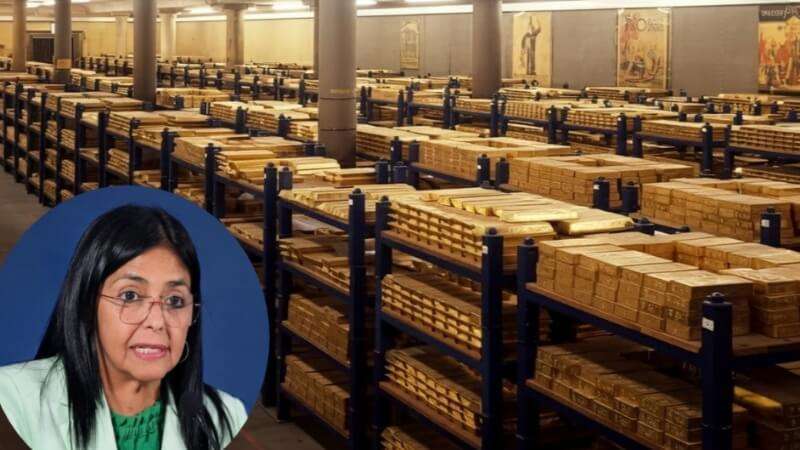
The dramatic capture of Nicolás Maduro by United States special forces has sent shockwaves from the streets of Caracas to the financial heart of London, reigniting a fierce legal and diplomatic battle over the fate of 31 tonnes of gold held in the Bank of England’s underground vaults. Valued at approximately $4.8 billion (£3.6 billion) following a historic surge in precious metal prices, the bullion represents nearly 15% of Venezuela’s foreign reserves. While the "Maduro era" may have ended in a New York courtroom where the former leader faces narco-terrorism charges, the transition to his successor, interim president Delcy Rodríguez, has only deepened the UK's "gold conundrum."
The Sanctioned Successor and the Recognition Trap
The ascension of Delcy Rodríguez to the interim presidency has placed the British government in a precarious diplomatic position. Despite her new title, Rodríguez remains a sanctioned individual under UK law, a status she has held since 2020 for allegedly undermining democracy and targeting political opponents. Foreign Secretary Yvette Cooper confirmed this week that the UK continues to withhold recognition of the current Venezuelan administration, citing a lack of progress toward a democratic transition. This refusal to recognize the Caracas leadership serves as the primary legal barrier preventing the release of the gold, effectively keeping the reserves frozen as a bargaining chip for future democratic reforms.
A New Chapter in the Legal Tussle
The legal battle for the gold, which began in 2020 when the Maduro administration sued for the funds to fight the pandemic, has entered a complex new phase. Previous rulings were complicated by the UK's recognition of Juan Guaidó, a figure who has since faded from the political forefront. Now, the High Court must decide if a government led by a sanctioned interim president possesses the legal standing to claim sovereign assets. Lawyers for the Venezuelan Central Bank have previously labeled the withholding of the bars as "blatant piracy," while British officials maintain that the Bank of England’s independence and the UK’s commitment to the rules-based international order demand a cautious, recognition-based approach.
Global Market Volatility and the Shift to Security
The ripple effects of the US intervention have manifested clearly in global markets. Gold prices surged to a one-week high of $4,444.52 an ounce immediately following the raid, as investors sought safe-haven assets amidst the uncertainty. In London, the stock market saw a notable lift in defense contractors, with BAE Systems and Babcock shares rising significantly. This "security-first" market reaction highlights a growing trend among nations to prioritize national defense and asset security. Analysts warn that the immobilization of Venezuelan reserves could accelerate a global movement toward the repatriation of overseas gold, as nations wary of Western sanctions look to protect their sovereign wealth from similar freezes.
Dazzling Dawn Analysis: The Venezuelan Shockwave and the British Purse
The fallout from the Venezuelan crisis is far more than a distant diplomatic dispute; it is a catalyst for economic shifts that will be felt directly within the UK economy throughout 2026. At the core of this impact is the "safe-haven" premium on gold. As the Bank of England holds these assets in a state of perpetual limbo, the resulting spike in global gold prices bolsters the UK's status as a global financial hub but simultaneously signals a breakdown in international trust. If more central banks decide that London’s vaults are no longer a "neutral" sanctuary, the City could face a long-term decline in its role as the world’s secondary gold storage hub, threatening thousands of high-value jobs in financial services.
Furthermore, the volatility in the energy sector serves as a double-edged sword for the British consumer. While Donald Trump’s suggestion that US taxpayers could be reimbursed via Venezuelan oil wealth points toward a potential future increase in global supply, the immediate instability has kept crude prices sensitive. Any sustained disruption in the Caribbean basin risks keeping UK fuel prices elevated, adding pressure to an economy already struggling with "zombie" companies and rising business costs. The UK’s decision to remain lockstep with US sanctions policy ensures that while London maintains its moral and diplomatic standing, it also remains exposed to the inflationary shocks of a world where sovereign assets are increasingly used as weapons of statecraft.