


.svg)
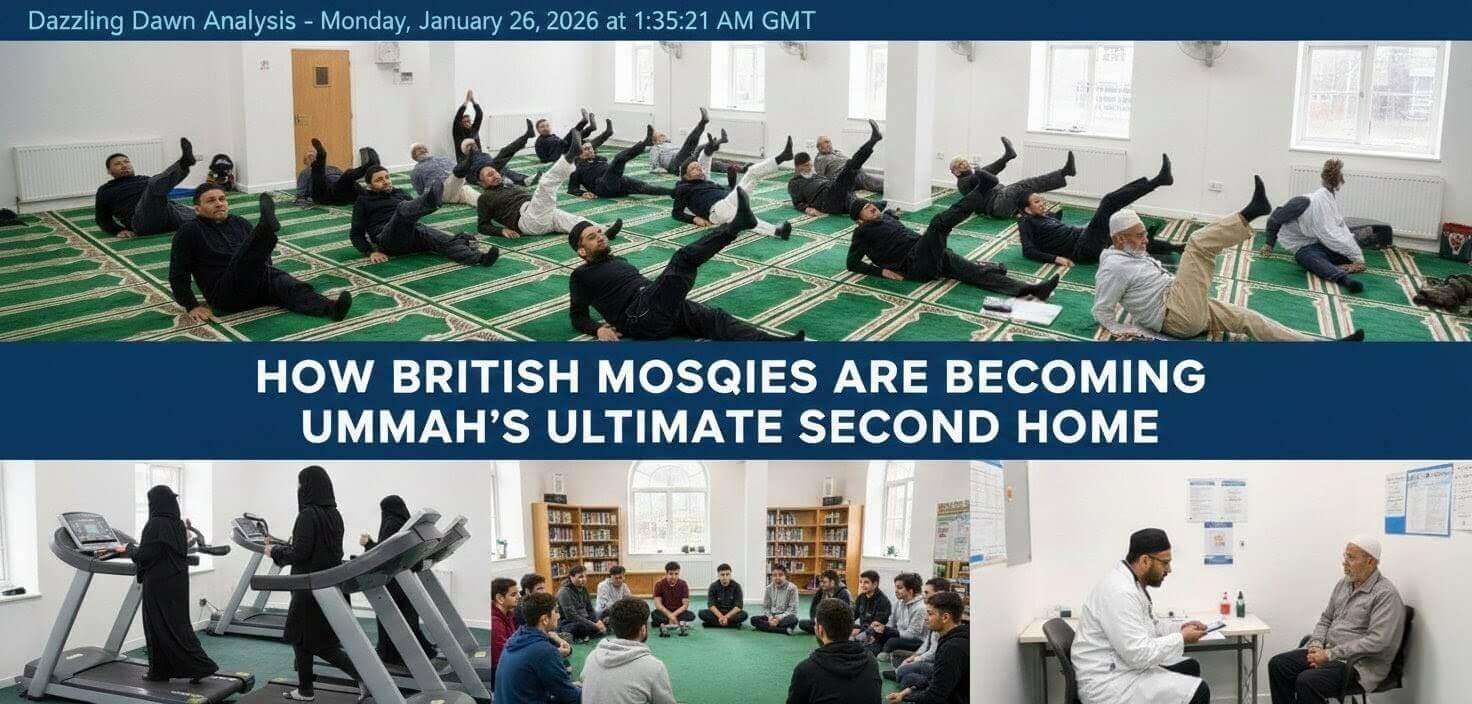
The traditional image of the UK mosque is rapidly shifting from a part-time prayer hall to a 24/7 lifeline. Historically, many of the UK’s 2,164 active masjids have been forced into a "locked-door" policy, closing their gates immediately after Jamat to protect against the rising risks of anti-Muslim vandalism and opportunistic theft. However, a new wave of visionary leadership is reclaiming these spaces as a "second home" for the 4.4 million Muslims living in Britain in 2026. By integrating fitness and mental health into the sacred architecture, institutions like the Jamia Usmania in Bradford are proving that the mosque is not just a place to pray, but a place to live, heal, and thrive, Daily Dazzling Dawn realized.
The Data Behind the Spiritual Sanctuary-The urgency of this transformation is highlighted by the numbers. With the British Muslim population reaching 4.4 million—making up over 6.5% of the UK population—the pressure on existing infrastructure is immense. There are currently approximately 1,893 established mosques across England, Wales, and Scotland, meaning each masjid theoretically serves an average of over 2,300 people. While mosques represent only a fraction of the UK's total places of worship, they boast the highest regular engagement levels. However, health data from 2024 shows that men from Asian backgrounds are still roughly 6% less likely to meet physical activity guidelines than the national average. This "health gap" is precisely where the mosque can intervene, transforming underutilized halls into life-saving community assets.
Analysis: Reclaiming the Prophetic ‘Third Space’- Deep analysis from the "Dazzling Dawn" perspective suggests that the current "padlock culture" is a byproduct of security concerns that have inadvertently created a social vacuum. To truly serve the Ummah, the mosque must move beyond being a "commuter space" and return to the Prophetic model of the Masjid al-Nabawi—a center that served as a hospital, a social court, and a site for physical training. By hosting activities like the viral "Mosque Pilates" sessions, which have now amassed over 2 million views on TikTok, mosques are providing a culturally safe "third space" where the elderly and youth alike can focus on their mental and physical resilience without the intimidation of a mainstream gym.
The Step-by-Step Mosque Wellness Toolkit for Small Spaces- Recognizing that many UK mosques are converted residential or commercial buildings with limited room, a new "Wellness Toolkit" is being adopted to maximize impact in tight quarters. The first step involves Temporal Repurposing, where the main prayer hall is used for low-impact mat-based exercises, such as Pilates or Yoga, specifically during the long gaps between the Dhuhr and Asr prayers. The second step focuses on Active Sunnah Integration, utilizing existing hallways or small basements for "Chair Exercises" or mental health "Coffee and Counseling" circles that require zero equipment. The third step is Digital Outreach, where mosques use high-quality CCTV and volunteer "Peace Wardens" to keep doors open safely, allowing the youth to use the space for study and indoor sports. Finally, Community Partnerships allow small mosques to link with the NHS for faith-sensitive health screenings, turning the "Wudu area" or small side rooms into temporary consultation clinics that bridge the gap in public health.
Divine Mandate: Health as a Form of Ibadah-
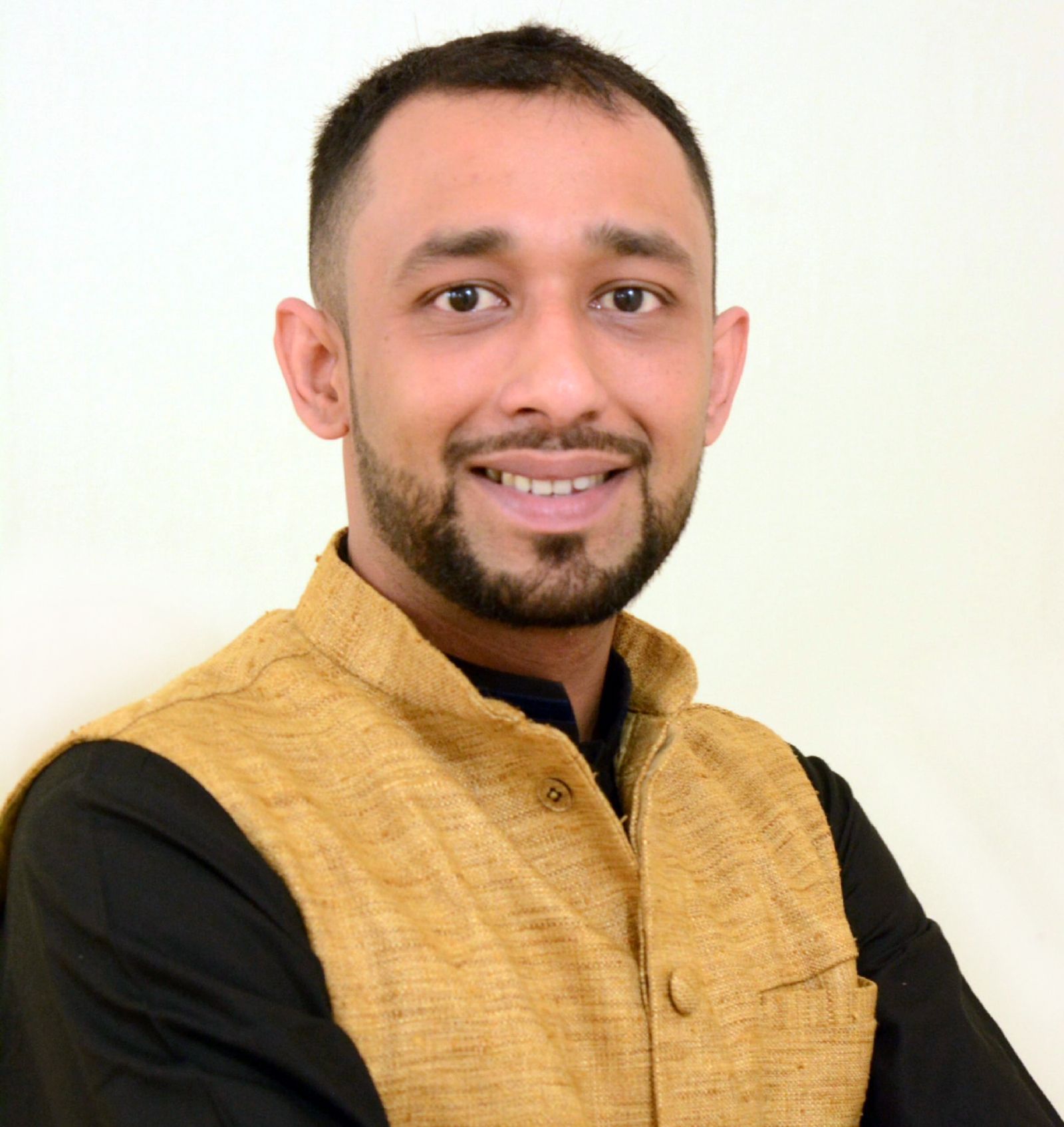
Maulana Nazmul Haque, the Imam of South Woodford Islamic Centre in London, spoke to Daily Dazzling Dawn. He said, this movement is firmly anchored in the Quran and Sunnah. The Prophet Muhammad (peace be upon him) famously taught, "Your body has a right over you" (Sahih Bukhari), framing physical health as a spiritual trust. In a powerful narration from Sahih Muslim, he emphasized that "The strong believer is better and more beloved to Allah than the weak believer." Furthermore, the Quranic principle of "Shifa" (healing) is central to this mission. By addressing the silent epidemic of loneliness and physical decline through mosque-based initiatives, the community is fulfilling a religious obligation to care for the "Amanah" (trust) of the soul and body. This evergreen approach ensures that the British mosque remains the beating heart of the community for all of mankind.