






.svg)
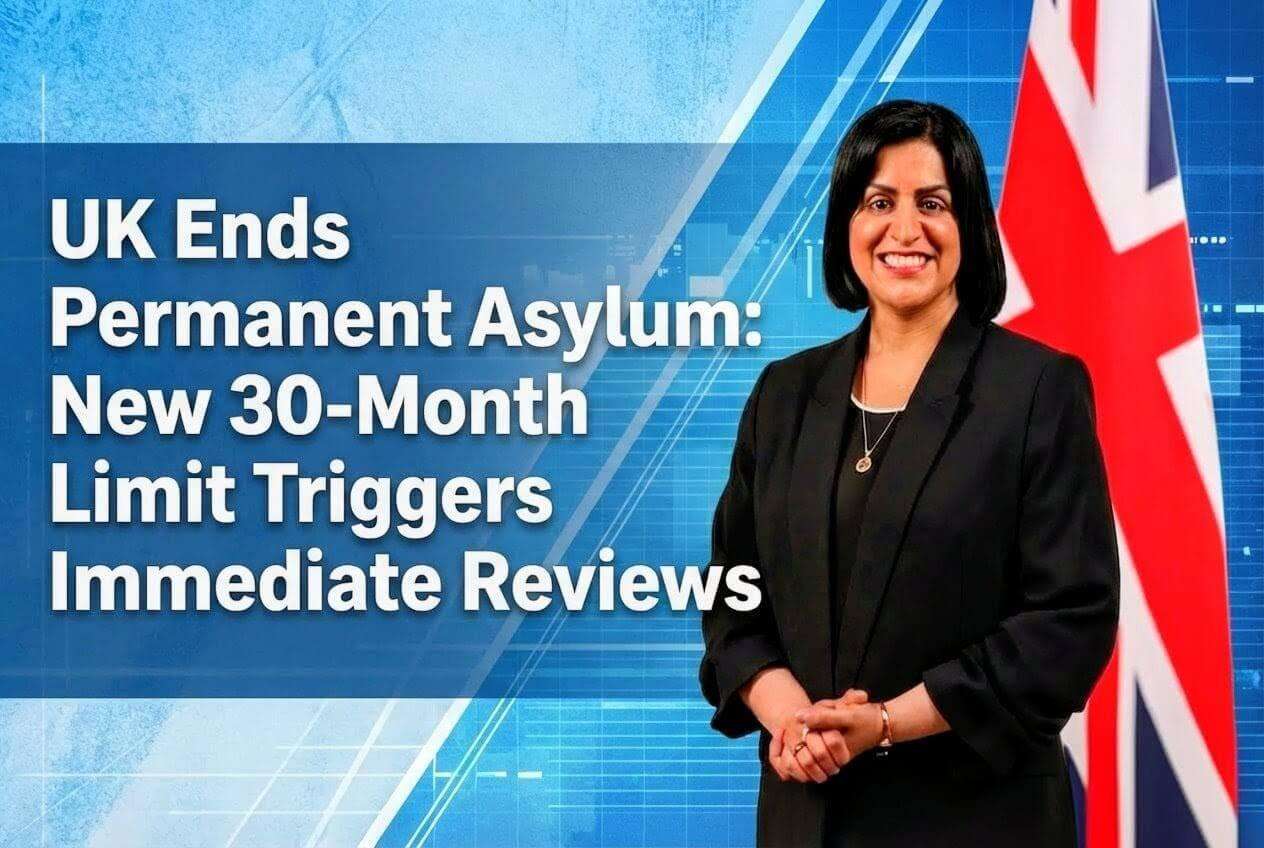
Today, Monday, March 2, 2026, marks the official commencement of a seismic shift in British immigration policy that effectively ends the era of permanent sanctuary for refugees. Home Secretary Shabana Mahmood has formally triggered the "Restoring Order and Control" framework, mandating that every person granted asylum from this date forward will receive only a temporary 30-month stay. This policy replaces the traditional five-year path to settlement with a rolling review system, where protection is stripped away the moment a recipient's home country is deemed "safe" by the British government, Daily Dazzling Dawn confirmed.
The Bangladesh "Safe Country" Impact-A critical component of this rollout is the alignment with updated international safety standards. As of early 2026, Bangladesh has been formally integrated into the European Union’s "safe countries of origin" list, a designation the UK is now leveraging to fast-track decisions. For Bangladeshi asylum seekers currently under review, this status creates a "presumption of safety," meaning the burden of proof has shifted heavily onto the applicant to demonstrate why they personally face a unique risk that the general population does not. Applications from such "safe" nations are now subject to accelerated processing, often leading to rapid refusals and a significantly higher threshold for appeals under the new Border Security, Asylum and Immigration Bill.
Ending the 20-Year Wait for Stability-Beyond the immediate 30-month clock, the Home Office is doubling the residency requirement for permanent settlement from 10 to 20 years for those on the "Core Protection" route. This means a refugee could potentially undergo eight separate "safe country" reassessments over two decades before they can even apply for Indefinite Leave to Remain. While the rules do not apply retrospectively to those who submitted applications before today, the new "Protection Work and Study" route is being introduced as the only realistic way to bypass these long-term hurdles. This route allows refugees to switch to employment-based visas, though it requires meeting strict English language and financial contribution markers that many displaced persons struggle to reach.
The "Denmark Model" and Future Removals- The Home Secretary’s strategy draws heavily from the Danish model, which seen asylum claims drop by 90% through the use of aggressive return-home mandates. Critics, including the Refugee Council, warn that the administrative cost of conducting over 1.1 million repeat case reviews could exceed £725 million. However, the government insists that the Home Office now possesses the logistical capacity to enforce these returns. The next phase of this crackdown involves the King’s Speech in May, which is expected to introduce further limits on human rights appeals and a "contribution-based" benefits system that prioritizes those making an economic impact, effectively ending the "duty to support" for those who do not comply with the new, stricter integration rules.
Daily Dazzling Dawn: What’s Next for UK Asylum?
Speaking to Daily Dazzling Dawn, Barrister Salah Uddin Suman, a senior partner at London’s Lawmatic Solicitors, cautioned that a wave of even more stringent measures is likely to be implemented before the onset of summer.
Read more: Metropolitan Police Missing DNA Records for Nearly Half of Officers
The Monday, March 2, 2026, rollout is only the first phase of a broader "Border Security" agenda. While the 30-month temporary status is now live, several more aggressive measures are expected to trigger before the summer.
The "Safe Country" Fast-Track-Confirming the status of Bangladesh, the European Union formally added the nation to its "Safe Countries of Origin" list in late February 2026. While the UK is no longer in the EU, the Home Office is historically aligned with these designations to streamline its own "inadmissibility" rulings. For Bangladeshi asylum seekers whose applications are currently under review, this means a likely shift to the "Accelerated Asylum Route." Expect decisions to be issued in weeks rather than months, with a legal presumption that the applicant does not need protection unless they can provide "extraordinary evidence" of personal persecution.
The End of Human Rights Appeals-Coming in May 2026, the Border Security, Asylum and Immigration Bill is set to "reinterpret" the European Convention on Human Rights (ECHR). Specifically, the government plans to restrict Article 8 (Right to Family Life) so it can no longer be used as a "get out of jail free card" to block the deportation of those who have overstayed their 30-month protection. A new "one-stop shop" for appeals will also be introduced: once a single appeal is lost, all further legal avenues will be exhausted, allowing for immediate removal.
Financial and Integration Barriers- By autumn 2026, the "Earned Settlement" framework will become the standard. Refugees will no longer simply wait for time to pass; they will be required to meet a B2 level of English (up from B1) and demonstrate consistent National Insurance contributions. Those who remain on state benefits for more than 12 months may see their pathway to permanent residency extended to a staggering 20 years.


.jpg)



_2.jpg)