





.svg)
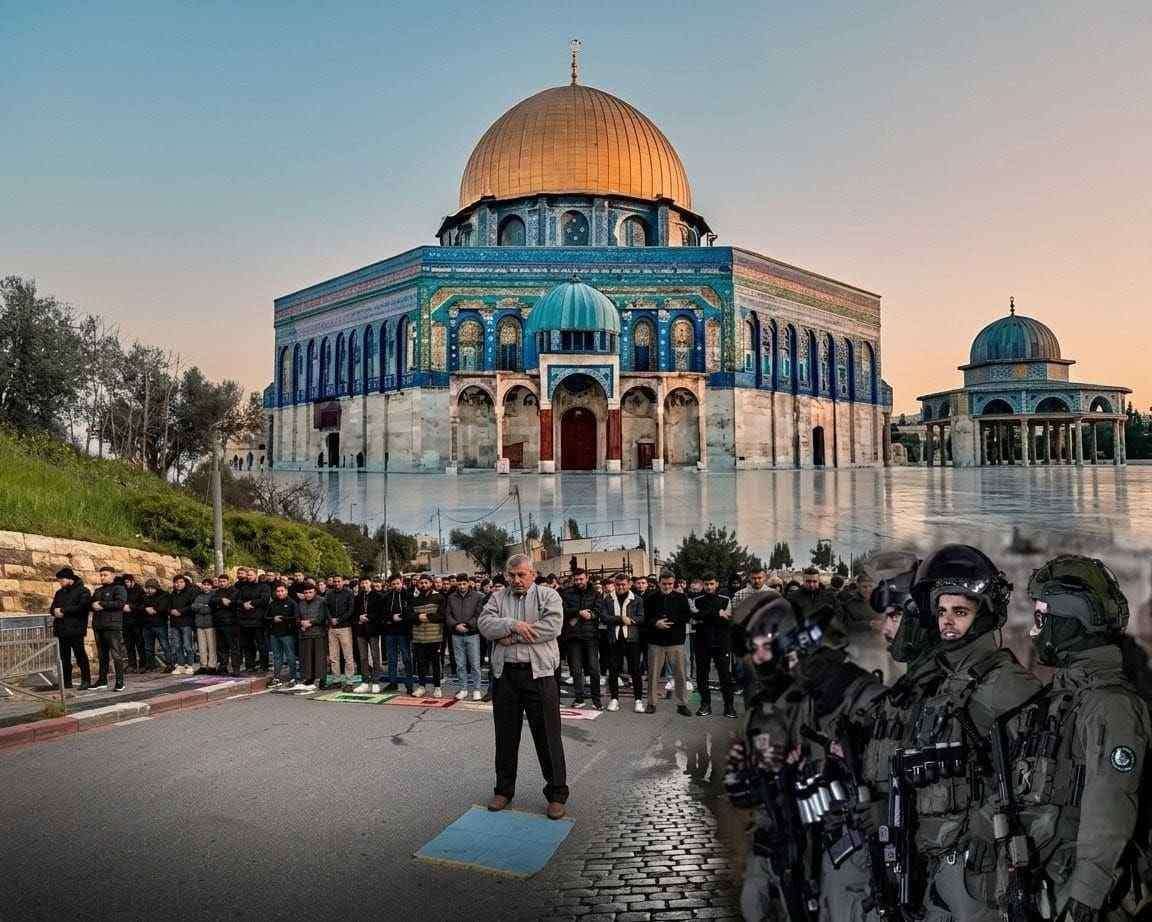
The spiritual heart of the Muslim world was met with a devastating silence today as the gates of Al-Aqsa Mosque remained padlocked for Eid al-Fitr, the first time since the 1967 occupation that the sanctuary has been entirely closed to the faithful for the holiday. In what is being described as a "dark new chapter" for the holy city, thousands of worshippers who arrived at the crack of dawn were forced by heavily armed security forces to perform their Eid prayers on the cold concrete of the streets outside the Old City walls.
The Silent Sanctuary of Al-Quds
Jerusalem, usually vibrant with the chants of Labbaik and Allahu Akbar during the morning of Eid, has been transformed into a ghost town. For 20 consecutive days, including the holiest final nights of Ramadan, the Israeli occupation has enforced a total blockade of the 144-dunum Al-Haram al-Sharif complex. While the closure was officially framed as a "security measure" linked to the regional conflict with Iran, the Palestinian community and the global Ummah recognize this as a strategic move to entrench control over Islam’s first Qibla.
The impact has reached far beyond the Levant, deeply affecting the thousands of British Muslim pilgrims who traditionally flock to Jerusalem for the final ten days of Ramadan. Travel agencies in London and Manchester report that hundreds of British nationals are currently stranded in hotels in East Jerusalem, unable to reach the mosque they traveled thousands of miles to visit. For these pilgrims, the "saddest day" is marked by being within sight of the Dome of the Rock but barred by steel barricades from entering its blessed courtyards.
Pretext of War and a Changing Status Quo
Religious leaders, including Sheikh Ekrima Sabri, have issued an urgent fatwa encouraging the faithful to maintain their presence by praying at the closest possible point to the gates. This act of spiritual defiance comes as the Organization of Islamic Cooperation (OIC) and the African Union Commission condemned the closure as a "grave violation of the historical and legal status quo."
There are growing fears among the Waqf (Islamic Endowment) officials that this "temporary" closure is a precursor to more permanent changes. Reports have surfaced of occupation forces installing advanced electronic surveillance and AI-driven camera systems inside the prayer halls during the lockdown, potentially aiming to monitor every movement of the faithful once the gates eventually reopen.
Gaza and the Wider Ummah: Eid Amidst the Ashes
While Jerusalem remains silent under locks, Gaza marks Eid under the shadow of persistent bombardment and a famine that has turned a day of feasting into a struggle for survival. In the tent cities of Deir al-Balah and the ruins of Khan Younis, displaced families held their Eid prayers in the open air, surrounded by the rubble of their homes and the graves of their loved ones. The "Takbir" of Eid was often interrupted by the roar of drones and the distant thud of strikes. Despite the hunger and grief, the resilience of the Gazan people remains a beacon; children were seen sharing scraps of bread as if they were sweets—a defiant display of dignity that no occupation can extinguish.
The suffering extends across the Middle East, where millions of refugees in Lebanon, Syria, and Yemen mark another Eid in displacement, their hearts heavy with the dual burden of their own exile and the desecration of Al-Aqsa. In refugee camps, the joy of the holiday is a distant memory, replaced by a collective prayer for the liberation of their lands and the protection of their sanctities.
The Global Response and Next Steps
The closure has triggered an emergency session among Arab League nations, with calls for immediate international intervention to protect Al-Aqsa. As the sun sets on this somber Eid, the focus shifts to the streets of London, New York, and Istanbul, where massive solidarity rallies are expected tonight. The central question remains: will the gates of Al-Aqsa open tomorrow, or is the Ummah witnessing the beginning of a permanent siege on its holiest sites?