.jpg)
.jpg)

.jpg)


.svg)
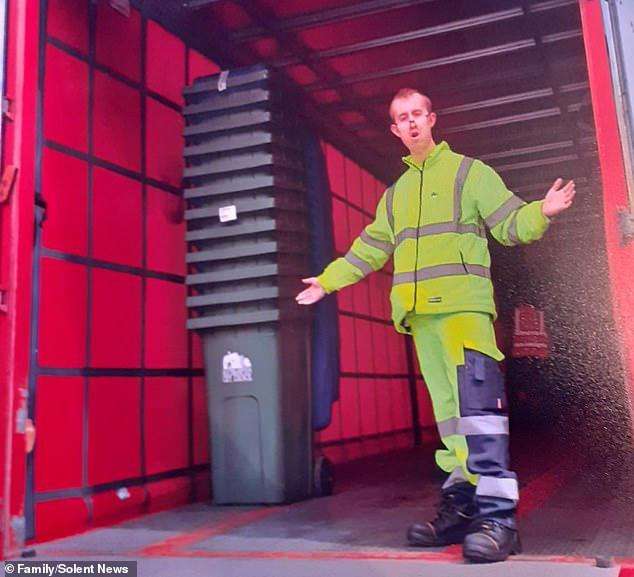
Southampton’s employment landscape is under fresh scrutiny as the story of 21-year-old Bryan Rowe moves into a critical new phase of advocacy and policy review. While the initial news focused on the disappointment of a young man rejected for a permanent role after a nine-month unpaid internship, the narrative has shifted toward a broader investigation into how local authorities bridge the gap between "supported internships" and long-term payroll. Sources close to the family indicate that the next steps involve a formal review of the council’s recruitment metrics, specifically looking at how practical, on-the-job performance is weighted against traditional interview scoring for neurodivergent candidates.
The Economic Choice of Service
A verified fact often overlooked in the initial discourse is Bryan’s eligibility for state support. Under current UK Department for Work and Pensions (DWP) guidelines, an individual with Myotonic Dystrophy and ADHD would typically qualify for Universal Credit and Personal Independence Payments (PIP) without the immediate requirement to seek intensive labor. However, Rowe has explicitly expressed a desire to forgo a life of total benefit dependency in favor of manual labor. This choice highlights a significant "willingness-to-work" factor that advocates say should be prioritized in social value procurement contracts by local governments.
Impending Policy Shifts in Southampton
Following a formal complaint by the Rowe family, Southampton City Council has confirmed that its recruitment services are now under an internal review. This move suggests that the "fair and equitable" standards currently in place may be evolving to better accommodate candidates who excel in physical trials but struggle with the high-pressure environment of formal interviews. For Rowe, the window for this physical role is uniquely pressing; Myotonic Dystrophy is a degenerative condition, meaning his window of peak physical capability is a precious resource he is eager to utilize before his mobility is impacted in the future.
Challenging the Disability Employment Gap
The public response has moved beyond simple sympathy, pivoting toward a demand for "working interviews" or "practical assessments." Industry experts note that for roles such as waste management loaders, a nine-month successful internship serves as the ultimate "probationary period." The fact that Rowe maintained perfect attendance and received praise from senior team members during his placement is becoming a focal point for those questioning why he was deemed "not good enough" only when the process shifted to a desk-based interview.
Next Steps for the Waste Sector
As the council reviews its intake processes, private sector waste firms and neighboring local authorities are being urged to view the nine-month stint as a pre-verified qualification. The narrative is no longer just about a rejection; it is about the systemic failure to capture motivated talent that is already trained and ready to serve. Advocates are now looking toward "Social Value" clauses in government contracts as a potential pathway to ensure that interns like Rowe are not left in a cycle of perpetual "experience gathering" without the security of a contract.