






.svg)
As of March 24, 2026, a quiet revolution is taking place within the Android ecosystem as power users discover a massive "hidden" storage reserve sitting right under their noses. While the world focuses on the recent March 5 launch of the Pixel 10a and the looming shadow of the Pixel 11, a specific system component known as AICore has become the center of a performance debate.
The Hidden 7GB Tax on Your Pixel
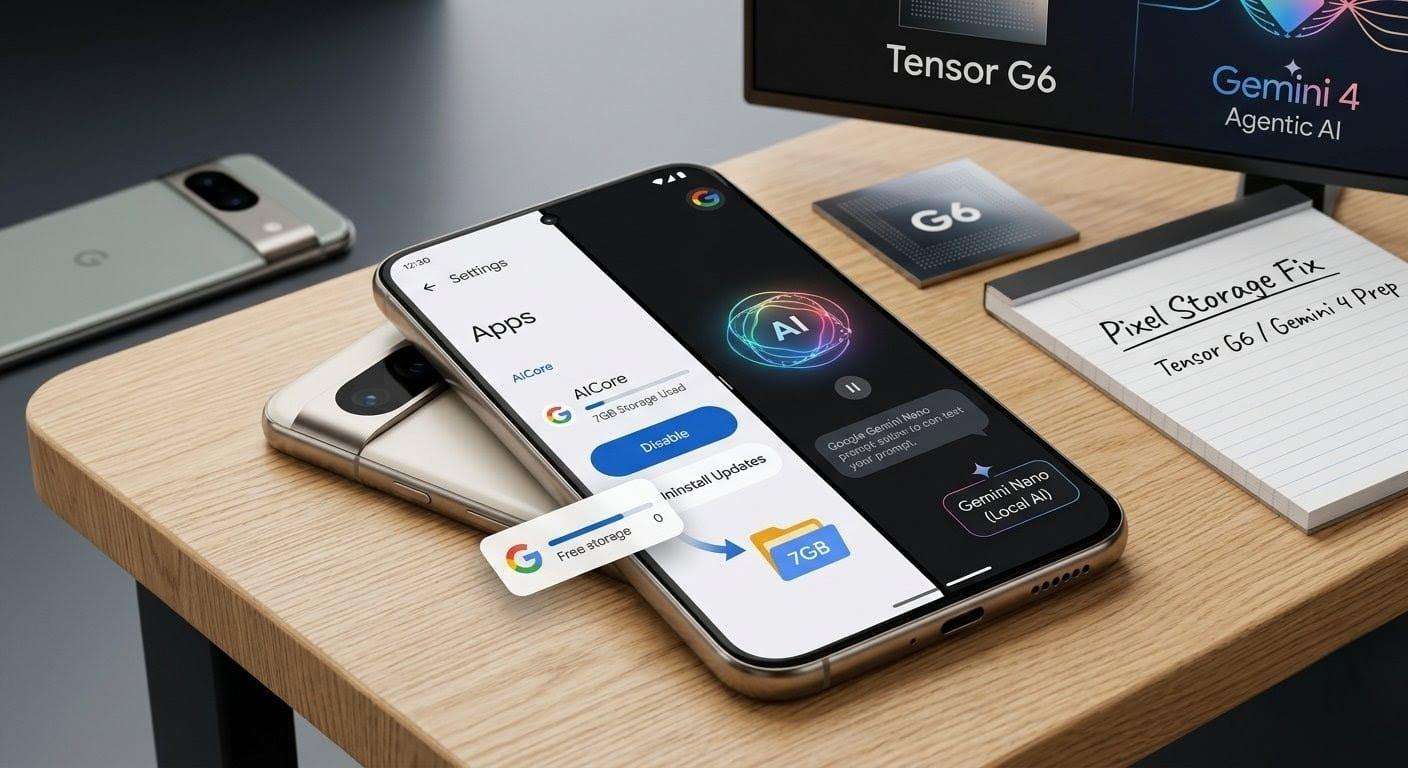
Modern Pixels are essentially hardware shells for Google’s ambitious AI vision, but that vision comes with a heavy physical cost. AICore is the silent engine running Gemini Nano locally, but it isn't just a background process—it is a storage squatter. By reserving roughly 7GB of UFS storage and up to 3GB of dedicated RAM on devices like the new Pixel 10a, AICore ensures features like Magic Compose and Recorder summaries are instant. However, for the millions of users who rely on the cloud-based Gemini 3 or the upcoming Gemini 4, this local "tax" is increasingly seen as an unnecessary anchor on system fluidity.
The Professional’s Performance Override
While Google positions AICore as essential, the reality for a streamlined experience is different. Disabling the app via the system settings and, crucially, selecting "Uninstall updates" from the hidden three-dot menu, forces the device to relinquish its hold on that 7GB block. This isn't just about making room for more photos; it’s about freeing the Tensor G4 chip from the overhead of managing local Large Language Models (LLMs) that many users never trigger. This move effectively converts a "smart" phone back into a high-speed performance machine, eliminating the lag often misattributed to hardware aging.
What’s Next: The Tensor G6 and Gemini 4
The storage struggle is about to shift gears with the anticipated August 2026 debut of the Pixel 11 series. Leaked CAD renders and internal documents suggest the next generation will pivot to the Tensor G6 chip—Google's first 2nm powerhouse. This new silicon is rumored to utilize a "7-core" architecture designed to handle the upcoming Gemini 4 "System 2" reasoning models. Unlike current versions, Gemini 4 is expected to introduce "Deep Reasoning," allowing the AI to "think" before it speaks. While this promises unprecedented logic, it also signals a future where AICore may demand even more than the current 7GB, making these manual storage reclamation tricks vital for the year ahead.
The Horizon of Agentic AI
Looking toward the late 2026 "Pixel Drop" updates, Google is preparing to transition Gemini from a chatbot to an agent. This "Agentic" shift will allow your Pixel to perform background tasks like booking cabs or managing grocery lists autonomously. As these features roll out, the tension between local storage and cloud efficiency will reach a breaking point. For now, the professional consensus is clear: if you aren't using the local AI toolkit daily, reclaiming that 7GB is the single most effective "free" upgrade available for any Pixel owner today.