




.svg)
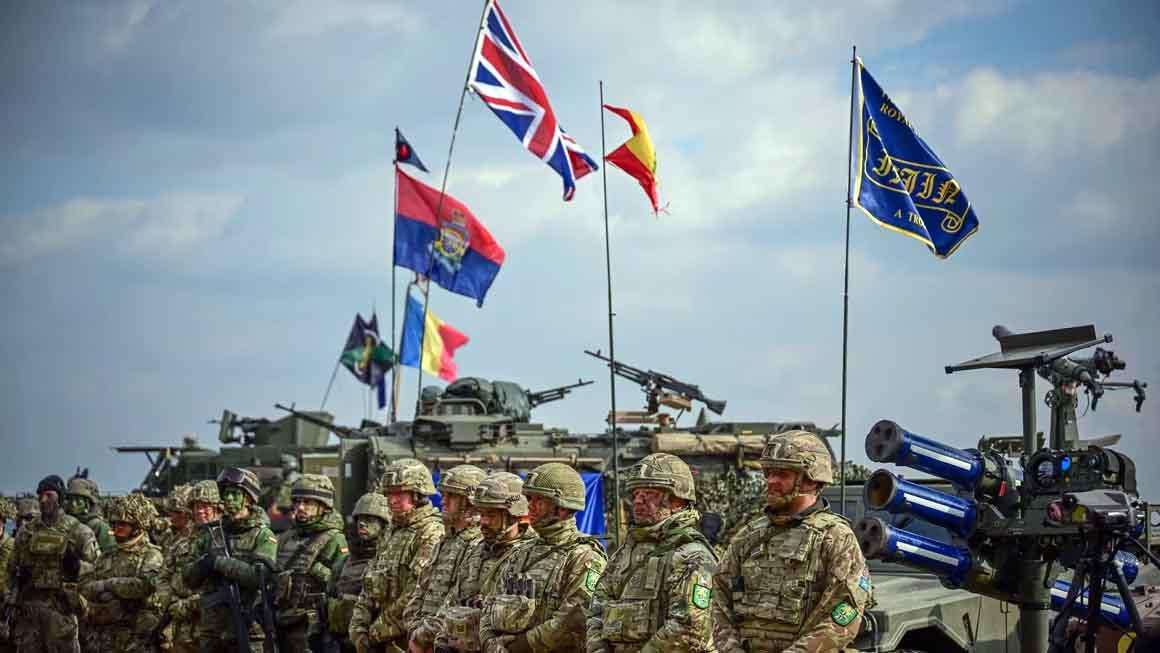
A stark warning from Westminster has intensified debate over the future of European security: Britain and its NATO partners must now seriously prepare for a scenario in which the United States no longer guarantees their defence.
A new report by the Joint Committee on the National Security Strategy argues that long-standing assumptions underpinning the transatlantic alliance are being fundamentally shaken—particularly amid renewed tensions involving Donald Trump and the government of Keir Starmer.
Strategic Shock: Questioning Article 5
At the heart of the concern lies NATO’s Article 5—the collective defence clause that has defined Western security since 1949. The committee suggests that political signals from Washington are eroding confidence in this guarantee.
Trump’s recent rhetoric—criticising European allies for limited military contributions and openly questioning NATO’s value—has revived fears that US support may become conditional or even absent in a future crisis.
This marks a historic shift. For decades, European defence planning has assumed overwhelming US military backing, from nuclear deterrence to satellite intelligence and advanced combat systems.
Britain’s Unique Vulnerability
The UK is particularly exposed due to its deep integration with US defence infrastructure. The report highlights several critical dependencies:
- Nuclear Deterrence: The UK’s Trident missile system relies heavily on US technical support and maintenance.
- Advanced Combat Systems: Britain’s participation in the F-35 Lightning II programme depends on US supply chains and software integration.
- Intelligence Sharing: The UK’s role within the Five Eyes network is anchored by US capabilities.
- Submarine Development: Joint programmes such as AUKUS could face disruption if political trust weakens.
The committee warns that these dependencies could become strategic liabilities if Washington chooses to leverage them during political disagreements.
Trump’s Pressure Politics and NATO Fractures
Tensions have escalated further following Trump’s criticism of European allies over conflicts in the Middle East, including his remarks about NATO’s limited role in confronting Iran. His dismissal of Britain’s aircraft carriers as “toys” underscores a broader scepticism toward European military capability.
Such rhetoric is not merely symbolic—it signals a potential shift toward a transactional US foreign policy, where security guarantees are tied to political alignment and burden-sharing.
For European leaders, this unpredictability is forcing a reassessment of defence assumptions that have remained largely unchanged since the Cold War.
The Push for European Strategic Autonomy
In response, the committee calls for a gradual but decisive transition toward “greater European leadership” within NATO. This aligns with growing discussions across the EU and allied states about strategic autonomy—the ability to act militarily without US support.
Key priorities include:
- Increased Defence Spending: Many European states are now accelerating commitments beyond NATO’s 2% GDP benchmark.
- Independent Capabilities: Investment in satellite systems, cyber warfare, and missile defence to reduce reliance on US assets.
- Command Structure Reform: Reconsidering the tradition of always appointing an American as NATO’s Supreme Allied Commander Europe.
Countries like France and Germany have already signalled support for stronger European defence integration, though political divisions remain over how far to go.
A More Fragmented Alliance?
Despite these concerns, the report stops short of advocating a break from Washington. Instead, it emphasises a dual-track approach: maintaining cooperation with the US while preparing for reduced reliance.
This reflects a broader reality—while Europe can enhance its capabilities, replacing the full spectrum of US military power would take years, if not decades.
The risk, analysts suggest, is that a partially rebalanced NATO could become less cohesive, with varying levels of commitment among members and increased geopolitical uncertainty.
What This Means Going Forward
The committee’s warning is less about an imminent US withdrawal and more about strategic prudence. It signals a turning point in Western defence thinking:
- The “special relationship” between the UK and US can no longer be assumed as unconditional.
- NATO’s unity is increasingly shaped by political dynamics in Washington.
- Europe must prepare for greater responsibility in its own defence—whether by necessity or design.
For Britain, the challenge will be particularly complex: balancing its historic transatlantic ties with the emerging need for European-led security frameworks.



.jpg)