


.svg)
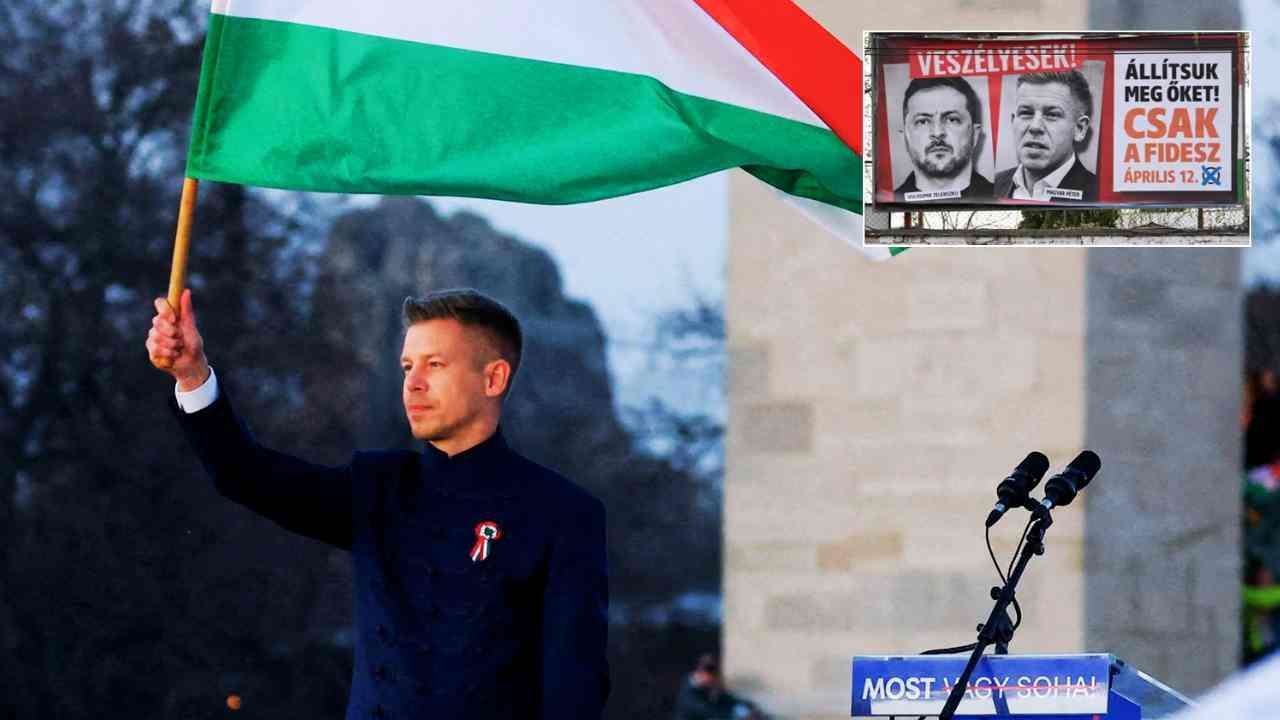
As a young boy in Budapest, Péter Magyar admired Viktor Orbán, once a leading figure in Hungary’s pro-democracy movement, even keeping his poster on his bedroom wall. Decades later, Magyar has emerged as one of Orbán’s most serious political challengers, leading a fast-growing movement aimed at reshaping Hungary’s future.
Now 45, Magyar has become the face of a new opposition force through his Tisza party. His sudden rise has surprised many political observers, with analysts noting that no political group in post-communist Hungary has gained traction so quickly. His campaign has been marked by relentless travel and frequent public speeches, drawing large and energetic crowds across the country.
Those who know Magyar often describe him as both driven and demanding. While supporters praise his discipline and ability to mobilize people, others point to a sharp temperament and a sometimes confrontational style. Still, some believe his intensity matches the urgency of Hungary’s current political moment.
Magyar’s background is closely tied to the ruling Fidesz party. He previously moved within its inner circles, held government roles, and was married to former justice minister Judit Varga. His connections to key political figures gave him insider knowledge of how the system operates.
His political breakthrough came in 2024 following a controversial pardon case linked to a child abuse scandal. The fallout led to major resignations, including that of the country’s president. Magyar publicly criticized the government, accusing it of shifting blame and exposing what he described as deeper systemic problems.
Following this, he began speaking out more forcefully, portraying the ruling party as a carefully constructed political machine that had prioritized power and wealth over public interest. His message struck a chord with many Hungarians struggling with rising living costs, weakened public services, and stagnant wages.
Large protests soon followed, with tens of thousands attending rallies he led. This momentum helped launch his political movement, though his past ties to Fidesz have left some voters uncertain about fully trusting him.
Despite doubts, many supporters see him as a necessary alternative. Some voters admit backing him out of frustration with the current system, hoping he will bring meaningful change even if his leadership remains untested.
Magyar has promised to restore democratic institutions, improve relations with the European Union, and combat corruption. He has also pledged to reduce dependence on Russian energy in the coming years. However, many details of his policies remain unclear, as he has maintained a tightly controlled campaign strategy.
Experts say this approach may help him avoid attacks in a media environment largely influenced by the ruling party. Still, questions remain about how much change he could realistically deliver, especially given the entrenched influence of Fidesz across state institutions.
Without a strong parliamentary majority, implementing major reforms could be difficult. Yet, despite these challenges, Magyar has managed to inspire significant public support.
For many Hungarians, he represents both uncertainty and hope — a figure who, despite his flaws and unanswered questions, could potentially bring an end to Orbán’s long dominance in Hungarian politics.




.jpg)