




.svg)
Riyadh Deploys Hidden AI Infrastructure and Missile Interceptors to Safeguard Over 1.5 Million Worshippers on the Day of Arafah.
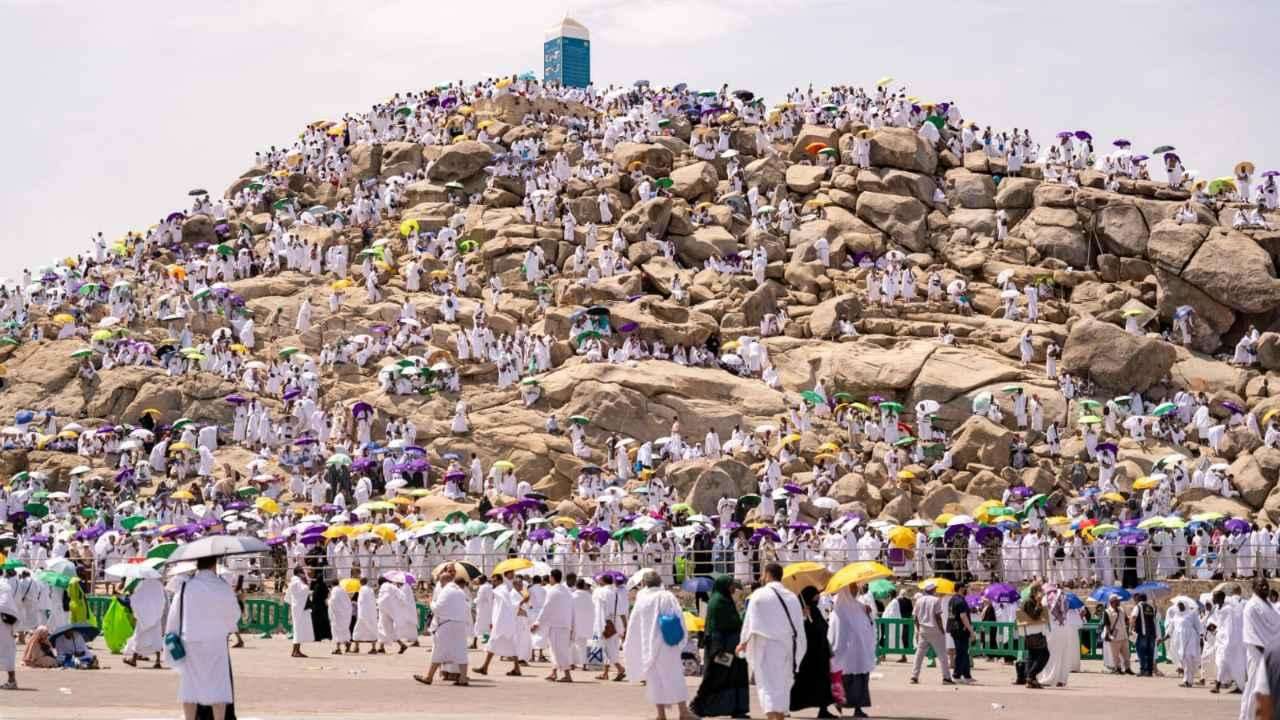
As more than 1.5 million Muslim pilgrims converged on the rocky slopes of Mount Arafat today to mark the sacred Day of Arafah, the visible narrative of devotion unfolded against an unprecedented, invisible matrix of high-tech security and geopolitical tension.
While public attention remains fixed on the spiritual peak of the annual Hajj pilgrimage, an investigation reveals that the host nation has quietly transformed the holy sites into a heavily fortified enclave. To safeguard the massive influx of international worshippers, authorities have activated a sophisticated, multi-layered defense infrastructure that bridges space-age digital crowd surveillance with frontline military readiness.
A Citadel in the Desert
The 2026 pilgrimage is unfolding under a fragile diplomatic shadow, following an unstable ceasefire between global superpowers and regional actors, alongside an ongoing international energy crunch. Behind the scenes, the stakes could not be higher. Security analysts closely monitoring the region note that the geopolitical climate has forced a quiet but monumental shift in how the mass gathering is protected.
A verified video recently verified by military analysts confirms that advanced air defense batteries have been strategically positioned on the rugged outskirts of Mecca. These missile interception systems form a protective canopy over the sprawling tent city of Mina and the plains of Arafat.
"The operational mandate this year extends far beyond standard municipal logistics," an independent regional security official told a journalist on condition of anonymity. "The presence of defensive military hardware signals a proactive strategy to guarantee absolute security against external volatility, providing a hard shield over what is fundamentally an international zone of peace."
The Artificial Intelligence Grid
On the ground, the transformation is equally profound. Moving far past the legacy infrastructure of the jet-age boom, the modern iteration of the pilgrimage is governed by an extensive artificial intelligence network. Beneath the surface of the rituals, automated crowd-monitoring systems actively analyze pedestrian densities in real time, utilizing predictive algorithms to prevent the dangerous bottlenecks that plagued the large-scale gatherings of previous decades.
Worshippers navigating the holy route are unconsciously interacting with a digital biosphere. The state-sponsored "Nusuk" mobile application and smart ID bracelets do more than track logistics; they serve as data nodes fed into a centralized command-and-control center. This technology allows authorities to read the flow of human movement like fluid dynamics, managing the movement of hundreds of thousands of people between holy sites with surgical precision.
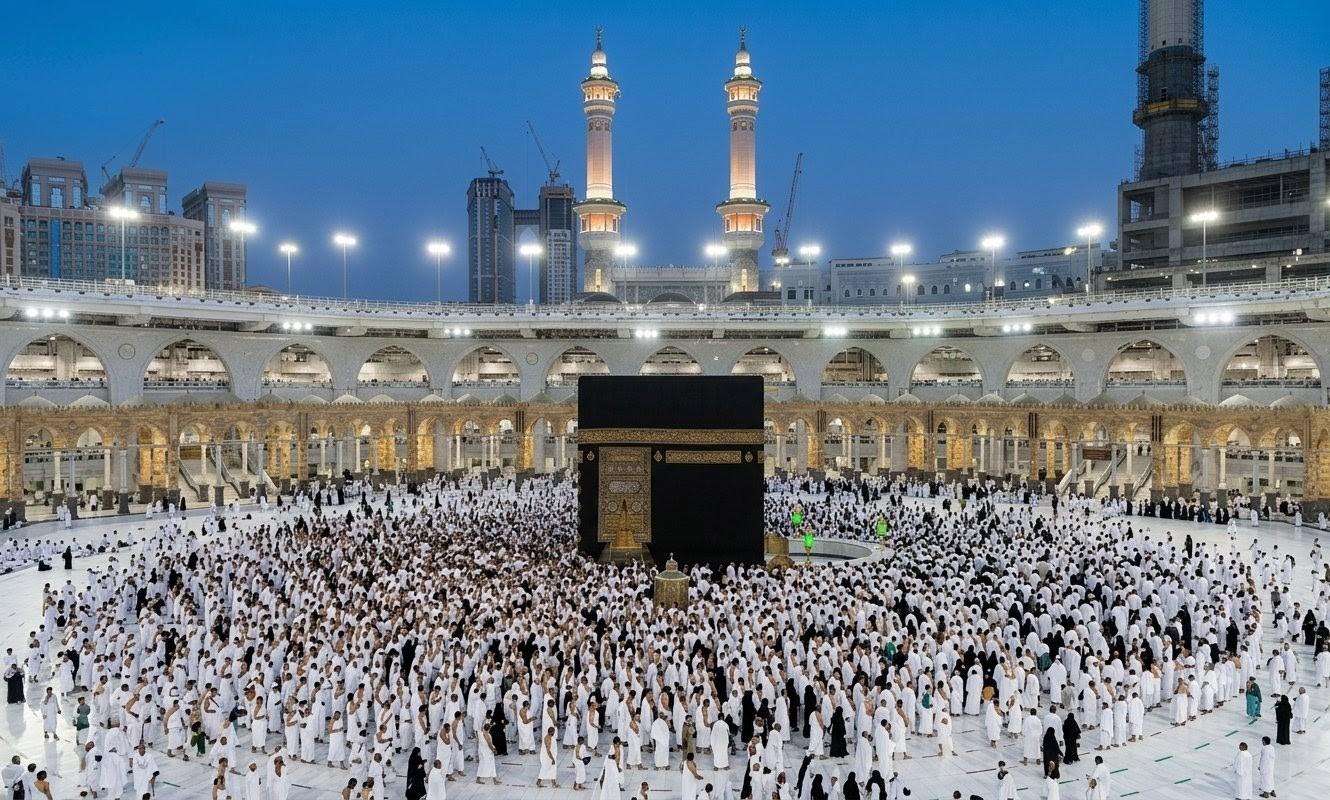
Further reinforcing the interior safety operation is a secondary battle against nature. With ambient temperatures soaring toward a blistering 48°C, a medical contingent of 50,000 healthcare professionals and 3,000 ambulances has been deployed. Specialized automated units roam the polished marble floors of the Grand Mosque, sanitizing surfaces and distributing chilled Zamzam water to stave off extreme thermal exhaustion.
Geopolitical Realignments
The underlying currents of this year's Hajj also highlight shifting diplomatic fault lines across the Middle East. Despite intense geopolitical friction, over 30,000 Iranian pilgrims successfully arrived in Medina via overland convoys through Iraq and subsequent air corridors, following months of complex, back-channel negotiations. Worshippers from across the globe have expressed profound hope that the current, delicate de-escalation will pave the way for a permanent regional settlement.
"The war has rippled across the global economy and affected every community," an Egyptian pilgrim in his late 50s told a journalist while exiting the Grand Mosque. "Nobody wants further harm to countries or peoples. Standing here proves that unity is still possible."
Concurrently, international political maneuvers continue to press upon the region. Statements emerging from Washington indicate a renewed push to mandate regional signatures onto the Abraham Accords, with an ultimate, ambitious vision to eventually integrate broader regional powers into a normalized diplomatic coalition.
As sunset approaches, the sea of pilgrims will begin moving toward the open plains of Muzdalifah to collect stones for the symbolic stoning ritual, stepping out from the immediate perimeter of the AI-monitored grid. While the faithful focus entirely on ancient rites of devotion, the vast apparatus of modern statecraft and defensive technology remains quietly vigilant, ensuring that one of humanity’s oldest traditions endures uninterrupted by the modern world's volatile crosscurrents.