





.svg)
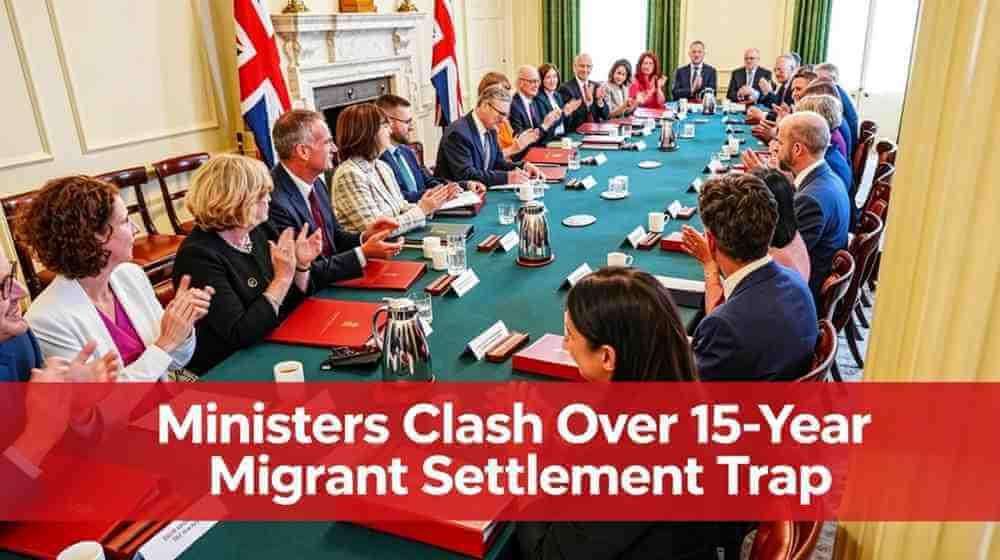
A profound ideological fracture has emerged at the highest levels of government over sweeping proposals to overhaul the UK's immigration system, transforming what was intended as a routine policy shift into a high-stakes constitutional and economic battle.
At the heart of the dispute is the Home Office’s proposed "earned settlement" framework. The policy seeks to dismantle the traditional five-year pathway to Indefinite Leave to Remain (ILR), replacing it with a tier-based system that could force low- and medium-skilled migrant workers—most notably those in the social care sector—to wait up to 15 years to secure permanent residency.
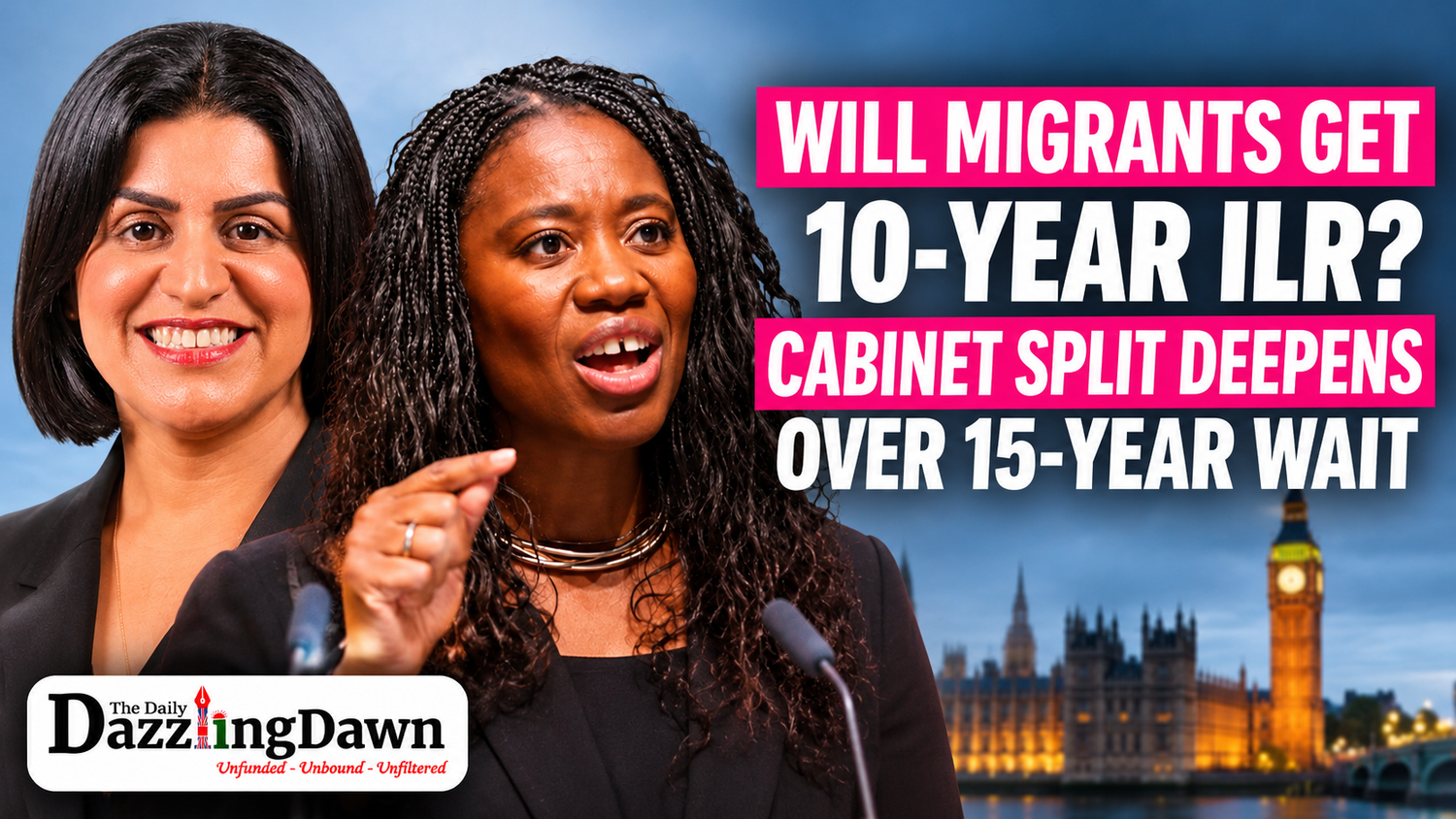
The political calculations behind the tightening measures have triggered an extraordinary domestic backlash. Objections have intensified following an intervention by Angela Rayner, who openly condemned the prospect of applying these stringent rules retrospectively to individuals already residing and working in the country. Speaking to an audience of trade union members, the prominent political figure branded the retrospective implementation as "wrong" and fundamentally "un-British," arguing that moving the goalposts for individuals who arrived under a clear legal understanding undermines core principles of fair play.
The internal executive friction reflects a broader mathematical and ethical debate gripping Westminster. Home Secretary Shabana Mahmood has aggressively championed the reforms, framing them as a fiscal necessity designed to curb net migration and protect the welfare state. Home Office projections claim the measures could yield a £10 billion saving by delaying or restricting access to public funds for newly settled individuals.
However, independent economic analyses have cast serious doubt on these figures. Reports from the Institute for Public Policy Research (IPPR) and prominent labor market economists suggest the actual fiscal benefit could be as negligible as £600 million. Critics note that the government's equations fail to account for the catastrophic vacancies plaguing the social care sector, which has already seen overseas recruitment dry up following earlier visa restrictions.
Data compiled by Daily Dazzling Dawn reveals that an estimated 1.3 million migrants currently in the UK could find themselves caught in an extended legal limbo if transitional exemptions are not codified. Under the blueprint, anyone sponsored under Regulated Qualifications Framework (RQF) Level 6—predominantly frontline care staff—faces a baseline wait of 15 years. Conversely, high-earning corporate entities and individuals pulling in salaries above £125,140 will see their pathway accelerated to just three years.
Furthermore, the consultation explored controversial clauses that would enforce a permanent "No Recourse to Public Funds" (NRPF) status even after settlement is granted, effectively barring non-citizens from accessing state safety nets during periods of illness or economic hardship.
"We cannot expect to resolve a structural social care crisis by treating the very people who sustained our health services during the pandemic as temporary, expendable labor," a senior labor union representative told journalists on condition of anonymity. "Extending the path to security to a decade and a half creates an underclass of vulnerable workers tied indefinitely to specific employers, vastly increasing the risk of workplace exploitation."
As Downing Street attempts to manage the growing mutiny from backbench MPs and regional leaders, policy advisers are reportedly scrambling to engineer substantial concessions. Insiders suggest the Prime Minister is actively considering carving out sweeping exemptions for public sector employees, NHS staff, and those within months of hitting their original five-year milestone.
With the formal consultation period concluded, the executive branch faces a precarious deadline. The Home Office intends to begin phased rollouts of the new immigration rules over the coming months. Whether the administration will capitulate to internal demands for robust transitional arrangements, or press forward with a retrospective policy that legal experts warn could face immediate challenges in the courts, remains the defining question for the country's post-transition economic identity.