





.svg)
Downing Street has been plunged into an acute administrative crisis following a coordinated double resignation at the Ministry of Defence that reveals a fundamental gridlock within the Labour government over national security funding.
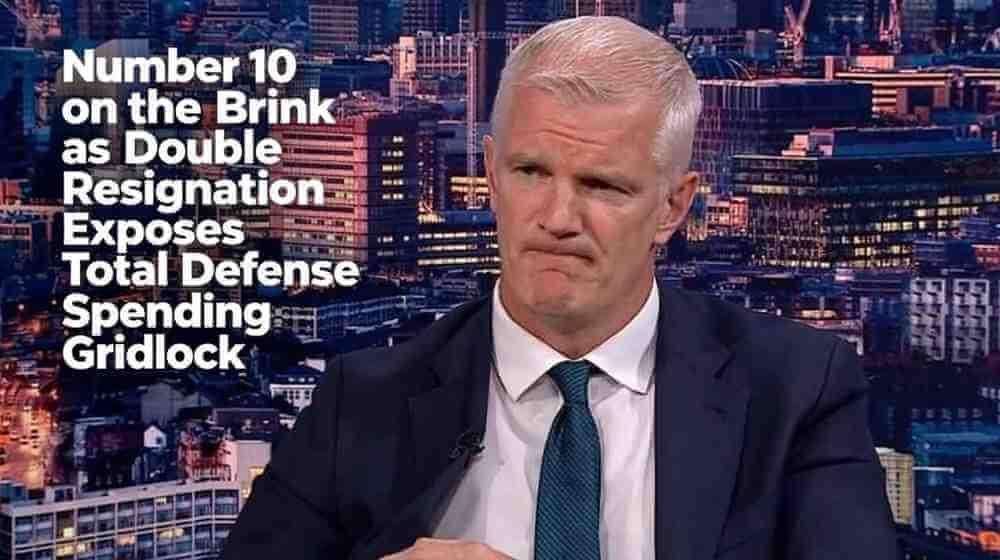
Armed Forces Minister Al Carns DSO OBE MC MP resigned his frontbench post this evening, less than an hour after delivering a highly critical broadcast interview. His departure directly followed the dramatic resignation of Defence Secretary John Healey, leaving the government’s military leadership hollowed out at a moment of heightened international volatility.
Information obtained by journalists indicates that the catalyst for the historic rupture was the finalisation of the long-delayed Defence Investment Plan (DIP). A bitter ideological feud has been quietly raging between the Ministry of Defence and Chancellor Rachel Reeves. Healey and Carns had aggressively lobbied the Treasury for an immediate, legally binding commitment to raise defense spending to 3% of GDP by 2030, citing expanding British operational vulnerabilities in Ukraine, the Arctic, and the Strait of Hormuz.
Instead, the spending blueprint delivered to the MoD by the Treasury allocated a fiscal package where spending would crawl to just 2.68% by 2030. Officials close to the negotiation revealed that while the Prime Minister attempted to broker a compromise by offering a £13.5 billion top-up, Treasury technicians confirmed that only £10 billion represented genuinely "new" money. The remainder was clawed back from existing departmental allocations. A senior Treasury source defended the fiscal restraint, stating that the defense chiefs were effectively demanding "deep, unpalatable cuts to schools and hospitals" at a time when the administration is fighting for its political survival.
Beyond the immediate budgetary warfare, the dual departures are intrinsically bound to a widening factional rift within the Labour Party over the handling of the Northern Ireland Troubles Bill. Carns, a decorated former Royal Marine colonel who was fast-tracked into government after winning Birmingham Selly Oak, used his departure to unleash a blistering critique of the legislation.
The row centers on the administration's decision to drop the legal appeals defending the previous government's Legacy Act. By caving to human rights challenges in the courts, the government’s new Bill strips away long-promised immunity frameworks for elderly veterans who served during the Troubles. This legal shift has triggered immense fury within the military establishment. Carns had privately presented a series of safeguards designed to shield former service personnel from what he characterized as a "retrospective legal wild west," but those amendments were flatly rejected by Downing Street to protect the government's delicate joint framework agreement with the Irish Government.
This policy impasse occurs against a backdrop of severe electoral anxiety. The Prime Minister’s authority has been visibly draining away following significant local election losses last month, which already triggered the resignation of Wes Streeting as Health Secretary. Speculation is now mounting among backbenchers that the double resignation is timed to maximize political leverage ahead of next Thursday’s critical Makerfield by-election. Westminster insiders suggest that if Greater Manchester Mayor Andy Burnham secures a decisive victory, it could act as the catalyst for a formal leadership challenge against a Prime Minister increasingly viewed as a caretaker executive.
In highly charged correspondence delivered to the Prime Minister, the exiting ministers painted a damning picture of institutional paralysis. The departing Armed Forces Minister warned that the very machinery of government has been left to decay, noting that decisions that should take days now take months due to inter-departmental warfare. He stated that he could no longer stand at the dispatch box in good conscience to defend a level of investment he knows to be inadequate to the task.
The operational fallout was echoed by former defense officials who remarked to journalists that if Downing Street refuses to listen to its own senior defense command, the state's strategic credibility within NATO is profoundly compromised. The immediate challenge for Number 10 is not merely filling the sudden vacuum at the top of the MoD, but preventing a broader legislative contagion as the defense blueprint moves to the Commons floor.
The Prime Minister must now move instantly to resolve a growing succession crisis at the Ministry of Defence to restore baseline stability. While Minister of State Luke Pollard is currently the most senior figure remaining in the department, appointing an alternative candidate who possesses the political weight to placate a furious defence select committee has become a critical necessity for Number 10.
Simultaneously, a major legislative rebellion is already gathering pace on the backbenches. Emboldened by the high-profile exits, a coalition of Labour MPs is organizing to lay down formal amendments to the Defence Investment Plan in an explicit attempt to force the 3% GDP target into statutory law.
Ultimately, all immediate political calculations remain tethered to the outcome of next Thursday's crucial Makerfield by-election. The final verdict from voters will determine whether the current executive layout can survive, or if regional power brokers will use the momentum to trigger an immediate, organized challenge to the leadership.