






.svg)
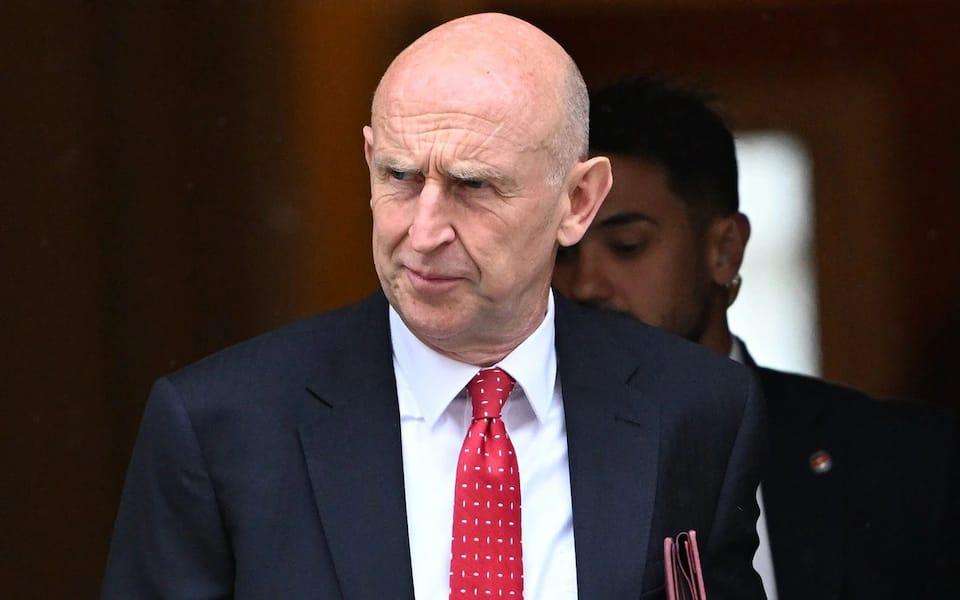
In a development that reshapes the political landscape, Secretary of State for Defence John Healey has resigned from the Cabinet over deep systemic fractures regarding the nation's fiscal priorities and military readiness.
Information obtained by journalists at Daily Dazzling Dawn reveals that the resignation followed a months-long, bitter behind-the-scenes confrontation involving No. 10, the Ministry of Defence (MoD), and Chancellor Rachel Reeves’s Treasury. The critical inflection point occurred on Monday afternoon, when Mr Healey was presented with the final funding allocations for the long-delayed Defence Investment Plan (DIP).
A Career Defined by Strategic Realism
Born in Wakefield, John Healey, 66, has been a pillar of the Labour mainstream for nearly three decades. First elected as the Member of Parliament for Wentworth and Dearne in 1997, he held crucial ministerial portfolios under Tony Blair and Gordon Brown, serving as Financial Secretary to the Treasury and Minister for Housing.
Appointed Shadow Defence Secretary by Sir Keir Starmer in 2020, Mr Healey was widely credited with repairing Labour's relationship with the military establishment and the domestic defence manufacturing sector. Upon taking office last year, he moved decisively to orchestrate a comprehensive Strategic Defence Review, which concluded in January. He successfully secured an initial commitment to raise defence spending to 2.5% of GDP by 2027, financed via a reallocation of the international aid budget. However, that agreement was contingent on a provisional understanding with No. 10 that the MoD would not seek supplementary funding during this parliamentary term.
The Hidden Catalyst: New Global Commitments
The operational calculus shifted dramatically in recent months. Senior defence sources speaking to journalists noted that the Prime Minister's recent decisions to commit British forces to enhanced roles—specifically leading international stabilization forces in post-peace-deal Ukraine, expanding security operations in the Arctic High North, and deploying naval assets to the crisis-hit Strait of Hormuz—rendered the previous funding framework obsolete.
The friction intensified when the Treasury insisted on backloading the new DIP allocations. While Mr Healey argued that immediate operational pressures required front-loaded capital injections over the next two years to enhance frontline combat readiness, the final Treasury model deferred the vast majority of spending until the end of the decade.
The Structural Mechanics of the GDP Dispute
The baseline trajectory under existing investment commitments was already projected to push United Kingdom defence spending to 2.6% of GDP by next year. Under the newly devised Treasury settlement, funding would increase to just 2.68% of GDP by 2030, representing a net increase of a mere 0.08% over a five-year period. This stood in stark contrast to the targets championed by the MoD, where Mr Healey had aggressively lobbied for a firm, cross-party commitment to reach 3.0% of GDP by 2030, a benchmark designed to match the rapid rearmament cycles currently undertaken by European NATO allies.
The Strategic Dilemma: Compromising Readiness
In a highly critical resignation correspondence delivered to the Prime Minister, the outgoing Defence Secretary argued that the financial blueprint failed to align with current geopolitical realities, referencing the Prime Minister’s own prior warnings that international intelligence points to a potential state-on-state conflict risk by the end of the decade. Mr Healey stated:
"Your DIP financial settlement falls well short of what is required for defence and the country at this dangerous time. The extra support is backloaded when the pressure of operations and imperative to speed up readiness to fight is in the first two years. Without a DIP that meets the moment, I am being forced to make decisions that would reduce the readiness of our forces and increase the risk to personnel on operations."
The political fallout was immediate. Representatives from the defence industrial base expressed deep concern, noting that the persistent delays in finalizing the DIP have paralyzed long-term corporate procurement strategies and capital investments. Public sentiment appears similarly strained; a newly released YouGov tracker poll indicates that 51% of voters believe the administration is handling military issues poorly, compared to 27% who view their performance favorably.
Political opponents have quickly capitalised on the Cabinet split. Speaking to journalists, opposition figures questioned the government's budgetary choices, suggesting that alternative fiscal avenues, such as restructuring welfare budgets or foreign aid, should have been explored before restricting the resources available to the armed forces.
The Structural Realignment
With the Prime Minister scheduled to formally unveil the Defence Investment Plan tomorrow, Downing Street must now urgently find a successor capable of managing an increasingly disillusioned defense establishment. The immediate challenge for the incoming secretary will be executing the structural changes mandated by the Strategic Defence Review. This includes a controversial centralization of the military command structure that compels individual service chiefs to report directly to the Chief of the Defence Staff, all while operating under a financial ceiling that the outgoing secretary has explicitly warned leaves the nation less secure.


.jpg)