





.svg)
Drivers dropping off family members or friends at many of the UK's busiest airports are now paying significantly more, with new analysis showing that terminal drop-off charges have increased by around one-third over the past year.
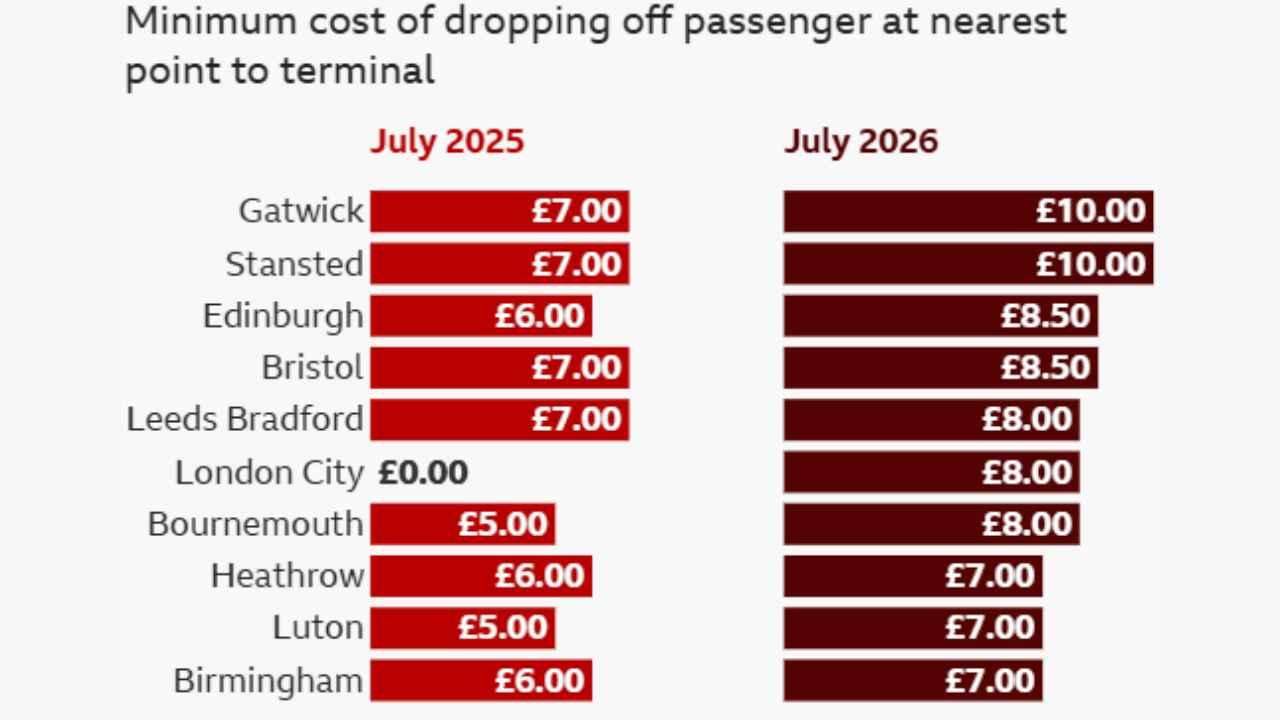
Research by the RAC found that 16 of the UK's 20 busiest airports have raised their drop-off prices since last summer. On average, motorists now pay £7 to use designated drop-off zones near terminal entrances, up from around £5.30 a year ago.
Among the country's busiest airports, London Gatwick now has the highest charge, asking drivers to pay £10 for up to 10 minutes outside its terminals. London Stansted also charges £10, although motorists are allowed 15 minutes in its express drop-off area.
On a per-minute basis, London City Airport is the most expensive. The airport introduced drop-off charges this year, with drivers paying £8 for just five minutes, equivalent to £1.60 per minute.
In comparison, Birmingham Airport offers the lowest cost among the major airports surveyed, charging £7 for up to 15 minutes, or approximately 47 pence per minute.
The RAC noted that the situation is very different across Europe. According to its research, none of the ten busiest airports in the European Union currently charge drivers to drop passengers off at terminal entrances.
While many UK airports provide free alternatives, these are usually located in long-stay car parks some distance from the terminals and often require passengers to use shuttle bus services.
The RAC criticised what it described as growing "farewell fees," arguing that airports should not take advantage of travellers who have limited alternatives.
The organisation also warned motorists to be cautious when using barrier-free drop-off zones, where drivers must pay online or by phone after leaving. Missing the payment deadline could result in a parking penalty notice.
Airport operators insist the fees are designed to reduce congestion around terminals, improve air quality and encourage passengers to use public transport instead of private cars.
A spokesperson for Airports UK, the industry's trade body, said airports have a responsibility to manage traffic levels while meeting environmental and climate targets set by government and local authorities.
Gatwick Airport also defended its pricing policy, saying the charges have encouraged more passengers to choose trains, buses and other transport options. The airport highlighted its rail links to more than 120 stations across London and southeast England, alongside several 24-hour bus routes.
Passengers can still be dropped off free of charge at Gatwick's long-stay car parks, where shuttle buses operate to the terminals. Blue Badge holders remain exempt from the drop-off fee.
Environmental campaigners believe the charges play an important role in cutting traffic and reducing pollution around airports.
The Aviation Environment Federation said encouraging travellers to use public transport could help lower harmful emissions and improve air quality for nearby communities.
The group also suggested that revenue generated from drop-off charges could be invested in improving local bus and rail services rather than simply increasing airport profits.
Business representatives, however, argue the rising charges are placing additional financial pressure on travellers and companies.
The Business Travel Association said airports have offered different explanations for the fees over the years, including environmental concerns, congestion management and funding infrastructure, leaving many businesses questioning the real purpose behind the increases.
Experts recommend checking airport drop-off rules before travelling, as fees and payment methods vary between airports. Travellers can often reduce costs by using free long-stay car parks with shuttle buses or choosing public transport where available.
Drivers are also advised to monitor the time carefully in drop-off zones and confirm whether taxi fares include any airport access charges.