


.jpg)


.svg)
An urgent operational review is underway after a Metropolitan Police armed response vessel struck Westminster Bridge, throwing several officers into the River Thames and injuring five personnel.
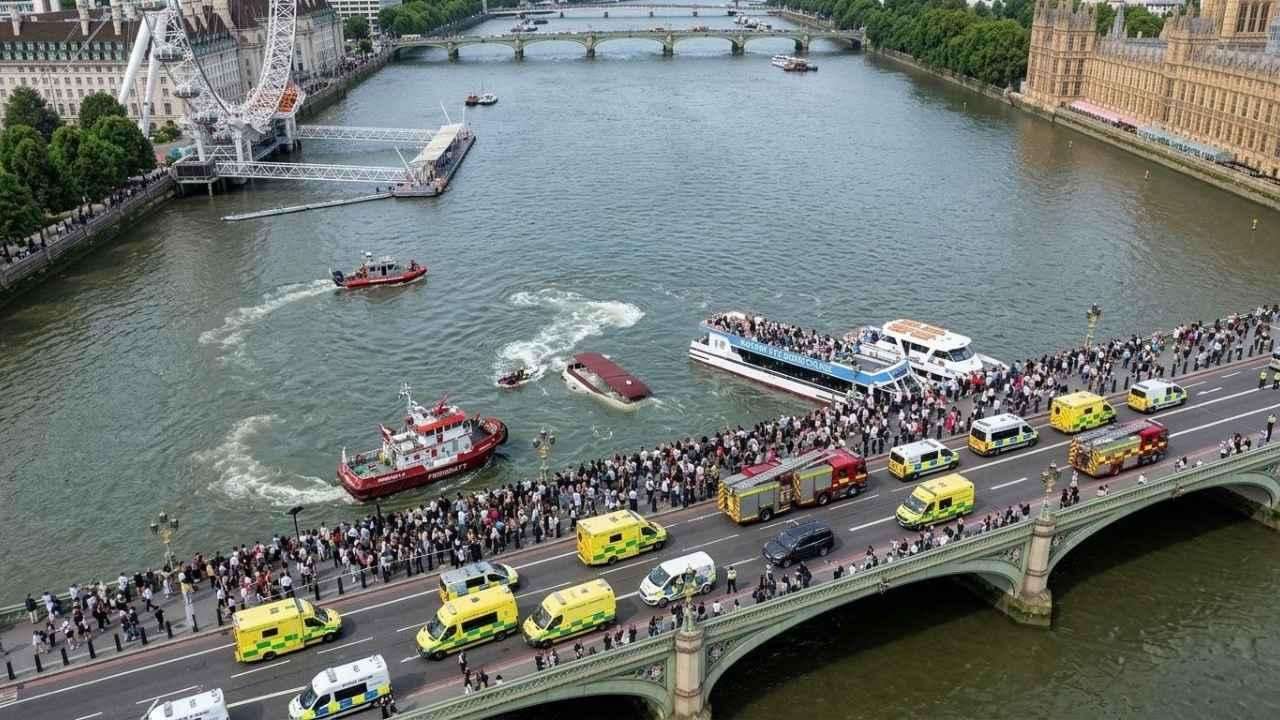
The incident, which occurred shortly before 3:45 pm, triggered a rapid multi-agency emergency deployment directly beneath the shadows of Parliament. A tactical vessel assigned to the Metropolitan Police Marine Policing Unit collided with the bridge structure during routine operations, sending officers into the water before emergency crews pulled them to safety.
Casualties received immediate triage on a rigid inflatable boat moored along the embankment while a police air unit and London's Air Ambulance provided overhead support. Transport for London subsequently restricted access to two entrances at Westminster Underground station, while police cordoned off sections of the bridge to manage crowd control and preserve the scene for forensic examination.
Reporting for Daily Dazzling Dawn, observers noted that emergency responders focused heavily on securing the river corridor while managing substantial crowds gathering along the parapets.
"At around 3.45pm on Friday, July 24, a boat from the Met's Marine Policing Unit struck Westminster Bridge," a Metropolitan Police spokesperson told journalists. "A number of officers entered the water but were recovered. Additional officers responded alongside the London Ambulance Service and London Fire Brigade. We understand five officers were injured and are receiving treatment. We await an update on the extent of their injuries. At this stage, we don't believe any members of the public were involved or injured. The circumstances of the incident will be thoroughly reviewed, but at this stage our priority is the wellbeing of the officers involved."
"We are aware of an incident involving a police vessel at Westminster Bridge," a Port of London Authority spokesperson told journalists. "We are supporting the response by providing river traffic management assistance where needed and are working closely with the Metropolitan Police, HM Coastguard, and partner agencies to manage the situation."
The investigation now shifts toward assessing structural impact and navigational telemetry to determine whether mechanical failure, hydrographic conditions, or sudden maneuvering contributed to the crash.
The Marine Accident Investigation Branch (MAIB) and internal Metropolitan Police professional standards bodies are expected to examine speed logs, radio communications, and tidal flow data. Marine experts point to the complex currents near Westminster Pier as a primary area of focus, especially during high-speed tactical maneuvers common to river patrol units.
Structural engineers will also inspect the historic masonry of Westminster Bridge to confirm its integrity following the impact, while maritime safety regulators assess potential updates to river patrol safety protocols.

_1.jpg)