



.svg)
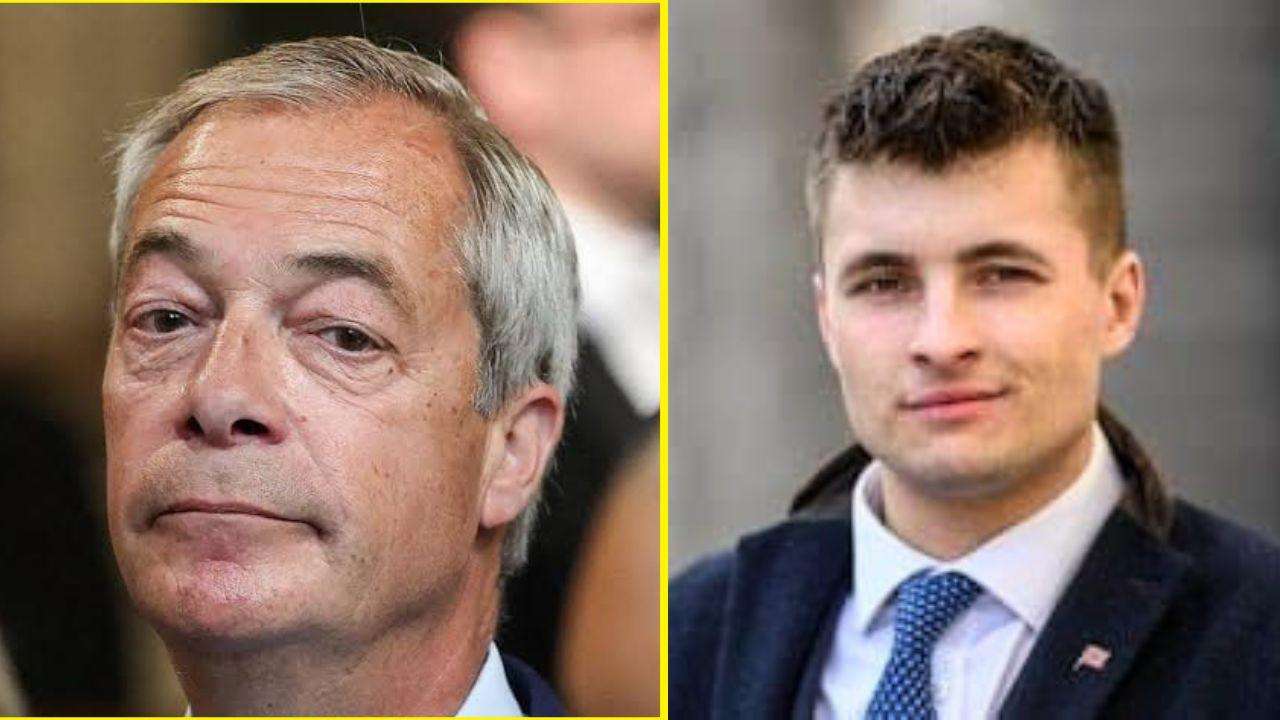
Restore Britain spokesman Charlie Downes under fire for image suggesting Reform UK leader was influenced by Jewish backers, as new polling reveals party's core support base and reconciliation talks collapse.
The controversy erupted when Charlie Downes, 25, a co-founder and spokesman for the fledgling nationalist party Restore Britain, responded to a February post by Nigel Farage on X without a single word of text. Instead, he shared a photograph of Farage speaking at the launch of the Reform Jewish Alliance—the Reform UK leader standing behind a podium bearing the group's logo, with a Star of David clearly visible in the background.
Farage had written: "I can't be bullied. I can't be bought. I've stood for the same principles for many decades." The visual reply, critics argue, invoked one of the oldest and most pernicious antisemitic tropes: that Jewish people secretly wield financial and political influence over public figures.
Alex Hearn, spokesman for the advocacy group Labour Against Antisemitism, told a journalist: "Restore Britain's spokesman insinuated that Nigel Farage had been bought by Jews—the oldest smear about money and influence, delivered as a picture so that nothing could be quoted back at him."
The Campaign Against Antisemitism questioned whether Downes would apply the same logic to other constituency groups. "If Charlie Downes is suggesting that Reform or Mr Farage have somehow been 'bullied' or 'bought' by Jews, would he say that veterans have done the same? Or is it just Jews for whom this pernicious imputation is reserved?" the organisation stated.
The group added that conspiracy theories alleging Jewish control over politics have historically been promoted by extremist movements ranging from the Soviet Union to Nazi Germany and called on Restore Britain to clarify the meaning of Downes' post or apologise.
Party's Ideological Contours Under Scrutiny
This is not the first time Downes' comments have drawn criticism. He has previously stated that Restore Britain believes "Britain is a people defined by indigenous British ancestry and Christian faith"—a definition that Jewish advocacy groups argue would exclude Jews and other minorities regardless of how long their families have resided in Britain.
The party, which formally registered as a political entity earlier this year after operating as a pressure group from June 2025, has distinguished itself from Reform UK by advocating significantly tougher immigration policies, including the mass deportation of millions of migrants—including some who are legally resident in Britain. The party has repeatedly warned that white Britons risk becoming a minority in the coming decades, a prospect Downes has previously described as "terrifying."
On Thursday, Downes also attacked Allister Heath, editor of The Sunday Telegraph, calling him "a traitor to the British people" after Heath published a column accusing Lowe of embracing white nationalist rhetoric. Responding on X, Downes wrote that he made "no apology for demanding demographic security for my people in our own homeland" and accused Heath of being "an agent of the anti-white establishment."
Billionaire Elon Musk, who has previously expressed support for Restore Britain, replied to Downes' post with a brief response: "True. Heath is a traitor."
New Data Reveals Party's Support Base
Fresh polling data from YouGov, released on 27 July 2026, offers unprecedented insight into the psychology of Restore Britain supporters. The party, which has consistently polled at between 3-4% in recent months, attracts a base primarily made up of 10% of those who voted for Reform UK at the last election.
The survey reveals that 90% of Restore supporters view immigration as one of the most important issues facing the country, compared to 86% of current Reform UK voters. However, significant differences emerge in other areas: Restore supporters are less likely to see defence (22% vs 34%), welfare benefits (16% vs 23%), or the NHS (10% vs 20%) as pressing concerns, but more likely to prioritise crime (33% vs 25%), political reform (12% vs 4%), and poverty (8% vs 2%).
Crucially, the data reveals the personal dynamics driving the party's appeal. An overwhelming 57% of supporters cite Restore being "the only party honest about the issues" as a primary reason for their support, while 48% trust the party to manage immigration. Nearly four in ten (37%) cite Rupert Lowe's leadership as central to their choice.
The enthusiasm among Restore's base is exceptional—61% say they have no reservations about their party of choice, compared to just 43% of Reform UK voters. Furthermore, 88% hold a very favourable opinion of Lowe, while only 49% of Reform UK voters feel the same about Farage.
Personal Rivalry Drives Political Split
The animosity between Lowe and Farage appears to be a primary driver of Restore's existence. Just 30% of Restore supporters hold a positive opinion of the Reform UK leader, while 67% view him unfavourably—a net score of -37, comparable to Farage's standing among the general public. Restore supporters are roughly as likely to have a favourable opinion of Kemi Badenoch (37%) as they are of Farage.
This personal antipathy has created a complex political dynamic. Despite the bitter split, Lowe publicly reached out to Farage in recent days, urging him to unite the right and form what he described as a "patriotic government" after the next general election. Farage responded by saying he was "open-minded" about discussions, although no formal talks have yet taken place.
Daily Dazzling Dawn has learned that behind-the-scenes tensions remain high. One insider described the relationship as "toxic," with Lowe reportedly demanding that Farage make the first move. As one podcast analysis put it: "Nigel hates Rupert but needs him and Rupert wants Nigel to beg."
Farage Rejects Reconciliation Bid
The prospect of a united right-wing front has now collapsed entirely. Dan Wootton revealed on his Outspoken podcast that talks between Restore Britain and Reform UK have broken down after Nigel Farage refused to pick up the phone to Rupert Lowe. This development comes despite Lowe's public overtures and his insistence that the two parties should work together.
The breakdown is significant for both parties. With Reform UK and Restore Britain splitting the right-wing vote, Labour stands to benefit substantially. As one Restore Britain supporter commented on social media: "80,000 split over the country will achieve a split vote giving Labour a fantastic boost."
Restore Britain has rejected accusations that it tolerates extremism, saying media organisations are conducting a smear campaign against the party.
Extremist Links and Denials
The scrutiny on Restore Britain intensified after The Telegraph reported earlier this year that some of the party's supporters include white supremacists with links to banned neo-Nazi organisations. Among those identified was Steve Laws, founder of the campaign group Remigration Now, which advocates the removal of all non-white and Jewish people from Britain.
Laws has publicly said he joined and donated to Restore Britain and has claimed to be in regular contact with Lowe's team—an assertion Lowe denies. He has also encouraged supporters to join the party to influence its policies from within.
Laws has made repeated comments praising aspects of Adolf Hitler's rule, saying that if he had lived in Germany in the 1930s he would have supported the Nazi regime because it had "some good policies." He has also cast doubt on the accepted death toll of the Holocaust, saying he questioned the credibility of the historical evidence while adding that he did not support killing people but favoured removing them from Britain.
Restore Britain has not publicly disavowed all of the individuals cited by critics, while maintaining that allegations linking the party to extremism are politically motivated.
Lowe's BBC Interview Disaster
In a separate development that has further damaged the party's credibility, Lowe suffered a catastrophic interview on BBC Radio 4's Today programme on 6 August. Confronted by veteran presenter Nick Robinson over his claims that "Britain is rapidly becoming an Islamic country," Lowe was unable to provide any substantive evidence to support his assertion.
The interview, described by one outlet as a "disaster" and a "complete public relations catastrophe," saw Lowe repeatedly evade the question, offering no statistics or factual basis for his claim. Robinson pressed him relentlessly, refusing to allow the Restore Britain leader to pivot to broader immigration issues.
The exchange has been widely circulated on social media, with views exceeding one million. Political analysts suggest the interview may have significant consequences for Lowe's credibility and the party's electoral prospects.
Lowe also drew criticism this week during the BBC interview when he declined to say King Charles III should be considered a white Briton because the monarch has one foreign-born parent. Asked about reports defining white Britons as people whose parents were both born in the United Kingdom, Lowe said there were "different interpretations" of the term. He has repeatedly warned that white Britons could become a minority by 2063, describing the trend as "demographic vandalism."
The coming weeks will be critical for both Restore Britain and Reform UK. With Farage reportedly unwilling to engage in talks, Lowe's party faces the challenge of maintaining momentum while managing a series of controversies that threaten to define its public image.
The YouGov data suggests that Restore Britain's support base is intensely loyal but relatively narrow. The party has grown rapidly—reporting 80,000 members in February—but sustaining this growth while deflecting accusations of extremism may prove difficult.
For Farage and Reform UK, the challenge is different. The Restore Britain split has fractured the right-wing vote, potentially benefiting Labour in key constituencies. The question remains whether Farage can neutralise this threat without alienating his own base or appearing to capitulate to a rival he has publicly clashed with.
The Electoral Commission has confirmed that Restore Britain is now fully registered as a political party, meaning it can field candidates in future elections. With the next general election expected within the next two years, the pressure on both parties to resolve their differences—or risk handing victory to Labour—will only intensify.