


.svg)
The British justice system stood convicted alongside Simon Levy yesterday as the 40-year-old sexual predator was found guilty of murdering two women and violently raping a third – each killing a devastating consequence of opportunities squandered.
Wearing sunglasses to conceal the sight lost in his right eye, Levy showed no emotion as the verdicts were delivered. In the public gallery, families of Carmenza Valencia-Trujillo, 53, and Sheryl Wilkins, 39, wept openly, their anguish a stark contrast to the killer's chilling indifference.
Levy now faces a whole life order when sentenced next Wednesday – a punishment that would ensure he dies behind bars. But for the families, and for a nation questioning how this monster was allowed to strike repeatedly, the verdict brings only partial closure.
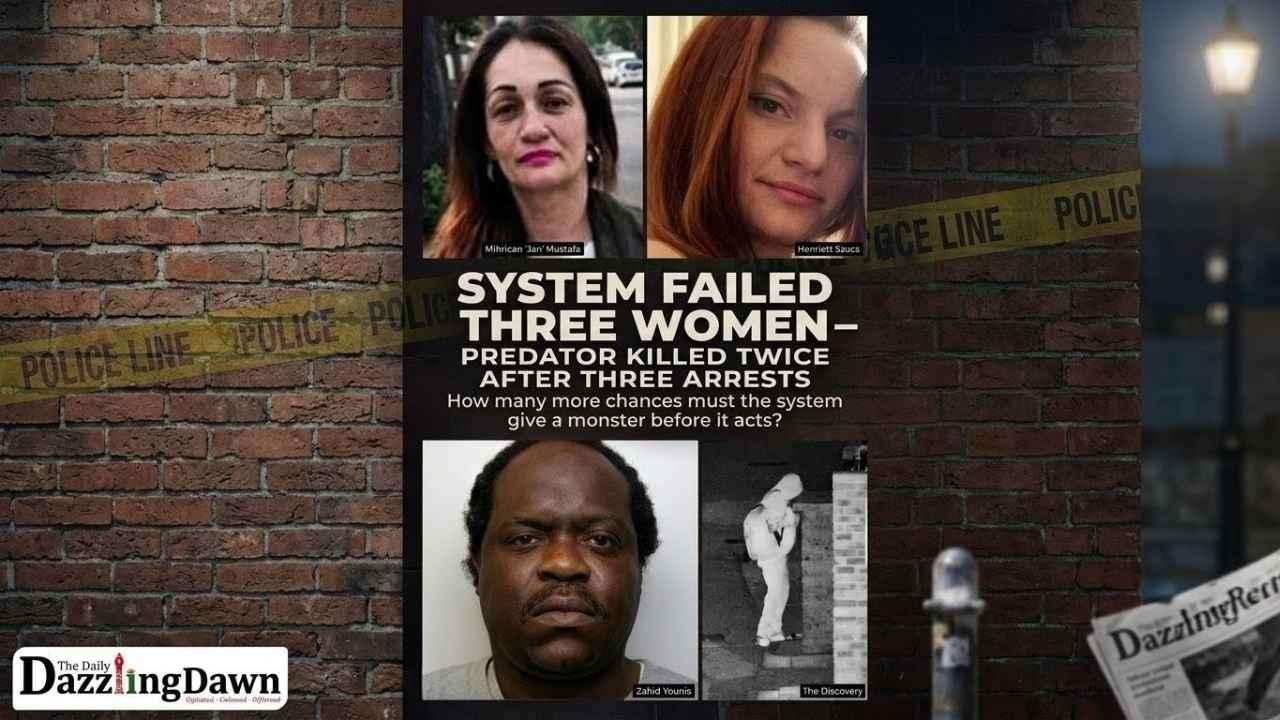
The question that haunts this case is devastatingly simple: How many more chances must the system give a predator before it acts?
The Old Bailey heard harrowing evidence of a "string of missed chances" spanning nearly three years. Levy was arrested, charged, bailed and released multiple times – each occasion representing a lost opportunity to prevent his escalating violence.
Tom Little KC, prosecuting, described Levy as living in "a world of sex offending, a world of rape, strangulation, suffocation, violence and also dishonesty". His victims, all vulnerable women working as sex workers, were subjected to what prosecutors called "a series of attacks" that escalated from sexual assaults to murder.
The Metropolitan Police has referred itself to the Independent Office for Police Conduct amid serious questions about whether more should have been done. Two Met officers are currently under investigation. The Crown Prosecution Service has been forced to issue a humiliating apology for its own shortcomings.
Lisa Ramsarran, CPS Chief Crown Prosecutor, told the Daily Dazzling Dawn: "We recognise the level of concern around this case. Our actions fell short of the standards that victims, families and the public are entitled to expect. We cannot know what decisions the courts would have made had different or stronger representations been advanced, but we recognise our responsibility and we are sorry."
Perhaps most damning of all were the repeated failures by British Transport Police, who had Levy in their grasp on multiple occasions but allowed him to slip through their fingers.
Levy was arrested three times by BTP over a string of sexual assaults on London's public transport network. Incredibly, on each occasion he was either granted police bail or bailed by magistrates – despite being charged with multiple serious offences.
In November 2024, after his first BTP arrest, officers handed back a stolen bus driver's Oyster card that provided free travel. This very card was later used by Levy to travel to and from the scene of Ms Valencia-Trujillo's murder.
When Levy was arrested again by BTP on 1 May last year, the card – last used on 16 June – was once again returned to him, despite the force being aware of his offending history.
Assistant Chief Constable Charlie Doyle, speaking to journalists, conceded: "It is clear that opportunities to expedite the investigation were missed and we have amended our procedures to address these issues to ensure that repeat offenders are dealt with expeditiously, and that linked offences are prioritised more effectively."
The trail of lost opportunities stretches further. Levy had been sentenced to three years in September 2021 for sexually assaulting two women, serving his time at HMP Brixton. While there, he attacked a prison officer in 2022 – yet this did not prevent his eventual release in February 2023.
He was recalled to prison in May 2024 after being arrested on suspicion of rape, but that case was closed due to a lack of evidence. He was freed again at the end of his licence period in August 2024.
By the time of his arrest for the first murder in April last year, Levy had become a known quantity to police. His DNA had been found on Ms Valencia-Trujillo's body, discovered in the stairwell of Wendover House, a mostly condemned block of flats in Southwark.
Yet he was released under investigation – one of seven suspects at the time.
When the CPS finally charged him with five sexual offences, police requested remand, informing prosecutors about the rape and murder accusations. Despite this, Levy was granted bail at Highbury Magistrates' Court, a decision the CPS had agreed to.
He was bailed again on 21 June after prosecutors applied for remand – a decision the CPS now admits was made without all relevant information being put before the court.
Levy failed to attend a plea and case management hearing at Inner London Crown Court on 11 August last year – just 13 days before he murdered Sheryl Wilkins. Despite him not attending two previous hearings, the Crown Prosecution Service did not apply for an arrest warrant after his lawyers cited a mental health issue.
Ms Wilkins was killed in the early hours of 24 August in the same car park near Levy's home in Tottenham where he had raped his surviving victim just seven months earlier.
CCTV footage captured the final moments of her life – Ms Wilkins walking behind a wall in the service yard of the B&M car park, with Levy in a dark hooded top and sunglasses following her.
The trial heard that Levy's offending had been "deliberate, persistent and carefully orchestrated" over a three-year period. He sexually assaulted 10 women on busy rush-hour underground or overground trains between 24 October 2023 and 29 May last year.
During his earlier trial at Inner London Crown Court, prosecutor Will Martin had warned: "Levy's desire to assault women seems to be on the verge of compulsive or pathological."
Judge Martin Evans KC described Levy's actions as "a deliberate, persistent and carefully orchestrated campaign of targeted assaults on women."
A document found on Levy's computer entitled "my sex record" revealed what prosecutors described as his "attitude to women" – a chilling glimpse into the mind of a predator who viewed his victims as objects for his gratification.
The woman who survived Levy's brutal attack – and whose bravery in coming forward helped bring him to justice – cannot be identified for legal reasons. She was raped in a car park near his home on 21 January last year and left with a broken collarbone when Levy bore down on her with all his weight.
She told police: "I never thought this man would be so evil."
Yet even her allegations were mishandled. When she first came forward to the Met after being arrested on an unrelated matter days later, she provided a description of Levy and details of where he lived. However, she was withdrawing from drugs and deemed unfit for interview.
She was arrested again in May 2025 but released before she could be questioned. Another officer spoke to her later that month, but the investigation was dropped in June without her being formally interviewed.
Levy will be sentenced next Wednesday at the Old Bailey, with Judge Sarah Munro KC considering whether his crimes merit a whole life order. Such a sentence would mean Levy never leaves prison, joining the ranks of Britain's most notorious killers.
DCI Neil John, who led the investigation for the Metropolitan Police, told journalists outside the Old Bailey: "Simon Levy is a dangerous and predatory offender. His crimes were calculated, cruel and deeply disturbing."
Policing minister Sarah Jones described the case as "horrifying" and commended "the survivor who bravely came forward and helped bring this monster to justice." She added: "The fact that Levy was able to inflict such devastating harm after being freed by police and the courts is deeply concerning. It raises serious questions that require urgent answers."
The IOPC investigation continues into the management of Levy from his first conviction in 2021 up to his arrest in September last year. Two Met officers remain under investigation for their handling of the case.
For the families of Carmenza Valencia-Trujillo and Sheryl Wilkins, no amount of inquiries can bring back their loved ones. But as Levy faces the prospect of dying behind bars, there is at least the knowledge that he will never harm another woman again.
The question that must now be answered is fundamental: How many more warnings does the system need before it takes violence against women seriously enough to act?