





.svg)
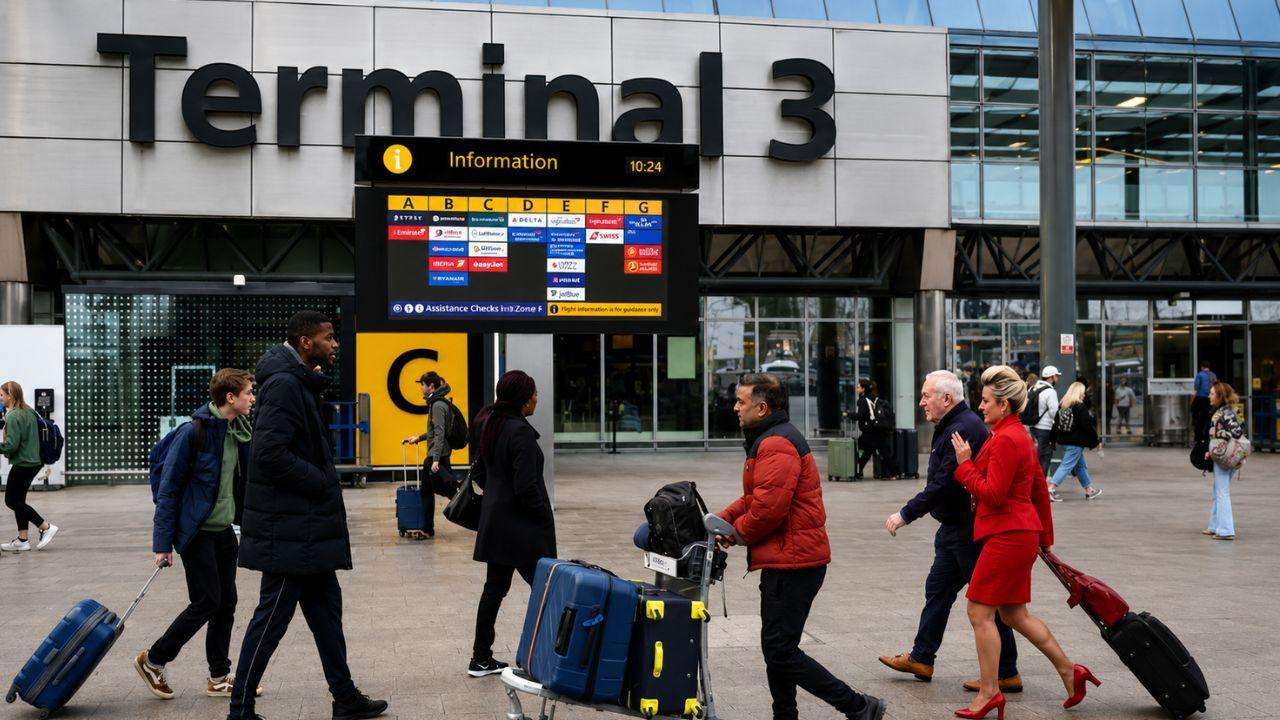
Heathrow Airport has warned passengers that access to Terminals 2 and 3 is currently restricted following flooding in the central terminal area.
The airport has advised anyone travelling to or from either of these terminals not to travel by road because of the disruption.
Passengers are being strongly encouraged to use rail and London Underground services instead of cars when travelling to the airport.
Those who have no choice but to travel by car are being advised to use the Park and Ride facilities, travel to Terminals 4 or 5 and then use the free rail services to reach the affected terminals. Passengers can also change trains at nearby local railway stations.
Heathrow said: “Our teams are working to resolve the situation as quickly as possible, we apologise for any disruption caused.”
The disruption comes during the school summer holidays, traditionally the busiest period of the year for Heathrow and airports across the UK, when large numbers of people are travelling for holidays.
On 19 July, Heathrow recorded around 267,000 passengers travelling through its terminals, making it the airport's busiest day of the year so far.
The flooding disruption also comes shortly after the Civil Aviation Authority (CAA) announced that it had given Heathrow Airport permission to recover £320 million it has spent on plans for a third runway since the beginning of last year.
In November, the government backed a £33 billion proposal to construct a third runway at Heathrow. The airport has said the project will be 100% privately financed, with the cost covered through higher charges to airlines and no taxpayer money being used to build the runway or related infrastructure.
Under the CAA's decision, Heathrow will be able to recover the money through increased airline charges over a period of around 20 to 25 years. These additional costs are typically passed on to passengers through higher air fares.
The regulator said its decision will increase the maximum airport charge per passenger by around 15p in 2028, with the increase expected to reach an estimated 30p per passenger in the following years.

.jpeg)