





.svg)
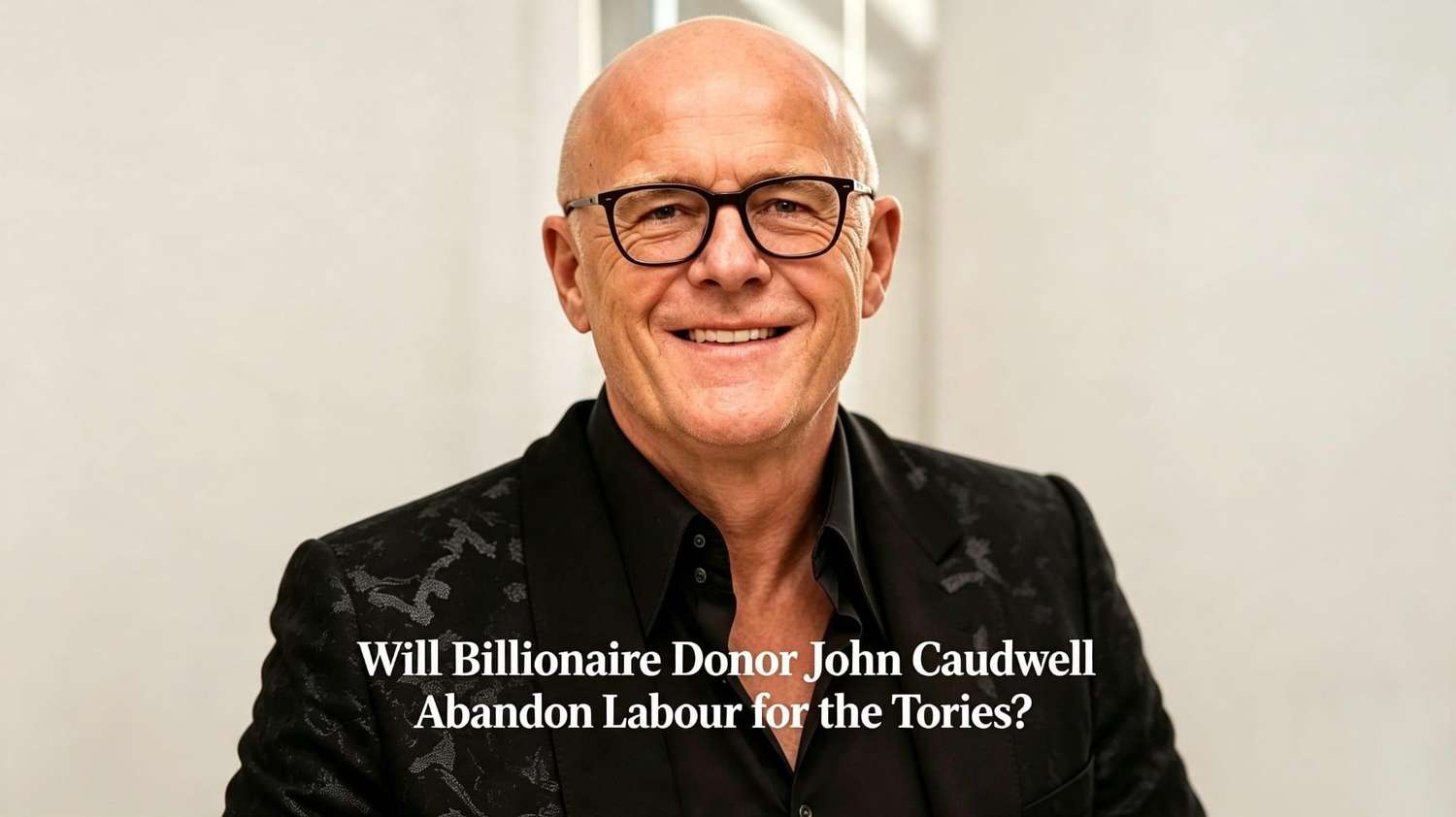
Billionaire entrepreneur John Caudwell has declared he is actively considering withdrawing his allegiance from the Labour Party to return to the Conservatives, branding the opposition under Kemi Badenoch as the country's only viable electoral force. The founder of mobile retail giant Phones 4u, who previously handed £500,000 to Boris Johnson’s Conservatives before throwing his financial and public weight behind Sir Keir Starmer ahead of the 2024 general election, confirmed that successive tax increases have severely undermined British commercial vitality. Speaking to journalists in London, the Staffordshire-born philanthropist voiced profound disappointment with the governing administration, warning that escalating fiscal burdens are driving wealth creators and vital private capital out of the United Kingdom.
The Fractured Alliance with Labour
Mr Caudwell’s prospective departure represents a notable blow to Downing Street’s relationship with the domestic business community. Ahead of the 2024 general election, his high-profile endorsement of Sir Keir Starmer served as a cornerstone of the administration’s strategy to convince corporate leaders that Labour had permanently transformed into a pro-enterprise party. The tycoon had originally backed the administration on explicit promises to stimulate long-term economic expansion and transform Britain into an international clean-energy powerhouse.
However, that relationship has deteriorated over the course of two years of tax adjustments and legislative friction. Daily Dazzling Dawn understands that Mr Caudwell now views Labour's commercial strategy as fundamentally compromised, stating that the government has failed to build the investment-friendly environment it pledged. As detailed in previous commentary covered by The Guardian, the billionaire has repeatedly voiced misgivings over fiscal interventions that risk suffocating enterprise, concluding that the party has rendered itself unelectable through anti-growth policies.
Tax Raids and the Commercial Backlash
The tycoon's vocal discontent forms part of a wider revolt emerging across Britain’s commercial landscape. Mr Caudwell has joined more than one hundred prominent company directors and parliamentarians—including former Marks & Spencer executive Lord Rose of Monewden and Pimlico Plumbers founder Charlie Mullins—in demanding urgent revisions to recent fiscal changes. The coalition argues that statutory increases to employer National Insurance contributions, coupled with adjustments to capital gains tax and the erosion of business property reliefs, represent a crippling cumulative burden on commercial balance sheets.
To halt wealth flight and stimulate organic domestic expansion, Mr Caudwell has advocated for a restructuring of the capital taxation framework. He has called on policymakers to reinstate a 10 percent capital gains tax rate for entrepreneurs who build and retain British companies organically over a 20-year horizon, compared to the standard rates of 18 percent and 24 percent. At the same time, the businessman has taken an unconventional fiscal stance by recommending a 10p increase in fuel duty, maintaining that global pump price volatility allows motorists to absorb such adjustments while providing essential public funds. In analysis published on the John Caudwell Official Portal, he has additionally argued for targeted taxation on online betting and unhealthy commodities to protect society while lowering levies on productive enterprises.
Net Zero as an Economic Commercial Engine
Despite his willingness to rejoin the Conservative fold, Mr Caudwell has placed explicit policy conditions on any formal financial backing for Mrs Badenoch. The entrepreneur, who built and sold the Caudwell Group for £1.5 billion in 2006, remains an ardent champion of environmental sustainability and rejects traditional political divisions surrounding climate policy.
Daily Dazzling Dawn learned that Mr Caudwell intends to lobby Mrs Badenoch directly to place decarbonisation at the heart of Conservative economic planning. While acknowledging that the current opposition leadership has yet to fully embrace environmental technologies, he insists that net zero must be treated as a profitable commercial venture rather than a regulatory overhead. His strategy calls for aggressive tax reductions designed to attract international green-technology firms to Britain, turning decarbonisation into a premier driver of gross domestic product.
Dismissal of Short-Term Interventions
The billionaire was equally unsparing regarding regional initiatives and interim relief policies championed by figures such as Greater Manchester Mayor Andy Burnham. Mr Caudwell dismissed measures including the £2 bus fare cap, the removal of VAT from domestic electricity bills, and localized crackdowns on illicit barbershops or vape vendors as superficial piffle that fails to address the root causes of economic stagnation.
With the political parties preparing for future fiscal battles, Mr Caudwell’s potential defection illustrates how the competition for boardroom confidence remains volatile. Unless Downing Street implements decisive measures to restore business confidence, the billionaire warned that Britain risks prolonged capital flight and sustained economic deceleration.