






.svg)
Domestic abuse survivors across the United Kingdom face continuous, undetected surveillance due to fundamental design and operational failures in consumer counter-surveillance tools, according to landmark research conducted by computer scientists at University College London. The study warns that commercial detectors—frequently marketed to detect hidden lenses, microphones, and wireless trackers via radio-frequency scanning, infrared reflection, and Bluetooth monitoring—routinely generate confusing readings and dangerous false positives. This technological vulnerability arises alongside national demographic data from the Office for National Statistics (ONS) and the Crime Survey for England and Wales (CSEW), which document that individuals from Mixed ethnic backgrounds experience the highest prevalence of domestic abuse in the country, while British South Asian communities face distinct cultural and systemic barriers to reporting tech-facilitated coercive control.
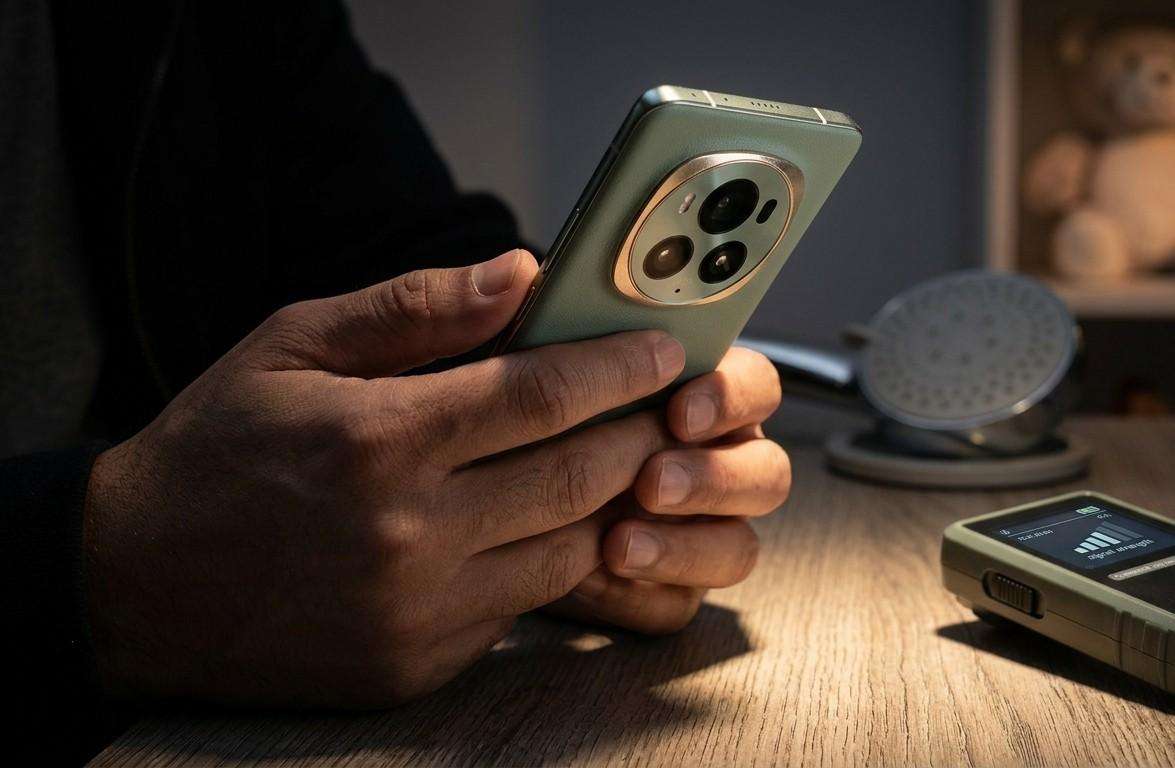
University College London investigators led by Akhil Polamarasetty catalogued approximately 1,000 covert recording devices and 500 commercial detection tools widely circulating across major British e-commerce platforms, including Amazon, eBay, and AliExpress. The research revealed that miniature cameras and listening bugs are routinely embedded into innocuous household utilities such as wall-socket adaptors, USB chargers, digital bedside clocks, plush children's toys, and even replacement showerheads. The findings underline a dangerous technological imbalance: while commercial spying equipment has become exceptionally compact and simple to deploy under the guise of home security or pet monitoring, consumer-grade detection apparatus remains crude, complex to operate, and prone to severe error.
Controlled Trials Reveal High Failure Rates
Rigorous empirical trials conducted within a simulated domestic living room demonstrated the operational failure of existing detection products. In controlled testing involving 34 human participants, individuals conducting manual visual searches without technical assistance missed 67 per cent of concealed surveillance gadgets. When provided with active commercial detection instruments, the miss rate fell only marginally to 59 per cent—representing an eight per cent difference that leaves victims exposed to persistent digital monitoring.
Beyond failing to detect active bugs, the evaluated commercial tools frequently misidentified benign household electronics, triggering intense panic and false alarms among test subjects. Daily Dazzling Dawn understands that multiple detection devices emitted piercing audio alerts upon encountering ambient radio signals, introducing acute physical peril for victims cohabiting with an abuser. Akhil Polamarasetty noted that commercial manufacturers fail to consider high-risk domestic dynamics, producing noisy, unintuitive gadgets that actively undermine victim safety.
National Abuse Data and Ethnic Disparities
The proliferation of tech-enabled stalking intersects with complex demographic trends documented across UK policing and statistical bodies. CSEW figures establish that individuals identifying as Mixed ethnicity experience the highest rate of domestic abuse in England and Wales at approximately 7.5 per cent, compared to 5.1 per cent among White populations, 3.4 per cent among Black groups, and 3.2 per cent across Asian demographics.
Within British South Asian demographics—specifically British Pakistani, British Indian, and British Bangladeshi groups—headline prevalence rates of around 3 per cent understate the true severity of abuse. Frontline legal advocates and specialist charities emphasize that South Asian survivors often encounter multi-perpetrator coercive control involving extended family networks, dowry extortion, immigration status manipulation, and severe honour-based intimidation. These pressures create substantial under-reporting, while Crown Prosecution Service and police data confirm that domestic abuse complaints originating within Asian communities result in lower charge and conviction rates due to evidential and institutional hurdles.
Regulatory Gaps and Industry Accountability
Frontline British advocacy groups report a sharp escalation in tech-facilitated abuse cases. Bo Bottomley, policy manager at leading domestic abuse charity Refuge, told journalists that low-cost, easily accessible surveillance technology has allowed perpetrators to weaponise everyday objects as instruments of psychological entrapment. Bottomley urged immediate government intervention to mandate safety-by-design standards for all connected consumer electronics.
Co-author Dr Leonie Tanczer emphasised that manufacturers must take preemptive responsibility for product misuse, highlighting that no legitimate domestic use-case exists for concealing surveillance hardware within items such as showerheads or power sockets. While online marketplaces have faced mounting criticism—with eBay confirming the removal of multiple illicit listings—institutional observers speaking to Daily Dazzling Dawn stressed that commercial takedowns remain reactive. In response, the Home Office reiterated its commitment to updating statutory guidance on coercive control and strengthening criminal penalties for installing covert monitoring devices without consent.