






.svg)
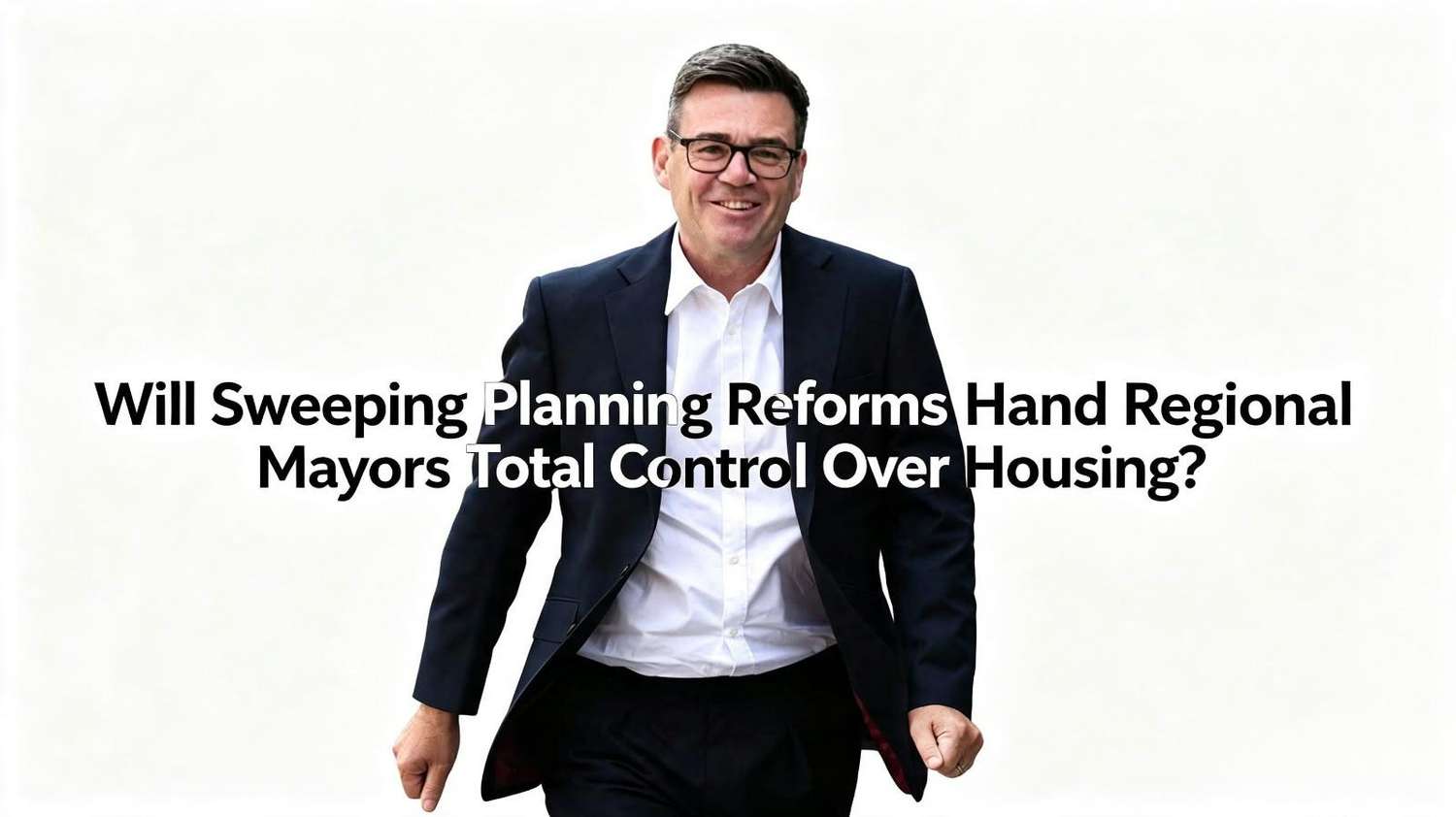
A radical overhaul of English planning legislation will grant metro mayors extensive legal powers to seize control of local property developments and approve large-scale residential schemes. The legislative framework, scheduled for formal ministerial presentation, aims to eliminate administrative paralysis and bypass obstinate local authorities in a concerted bid to meet the national target of constructing 1.5 million homes before the end of the current parliament. Under the blueprint, regional combined authority leaders will gain direct call-in mechanisms to greenlight substantial schemes or reject inappropriate municipal approvals across England.
Daily Dazzling Dawn understands that the incoming framework establishes explicit developmental thresholds to govern when mayoral intervention can take place. Strategic authority will apply directly to any residential proposal exceeding 150 homes, commercial developments spanning more than 15,000 square metres, or commercial and residential structures reaching 30 metres or higher. Metro mayors will also possess the legal prerogative to issue upfront planning permissions, permitting commercial housebuilders to commence construction immediately without enduring protracted municipal committee cycles.
The policy architecture fundamentally mirrors the statutory mechanisms already granted to the Mayor of London, Sadiq Khan, which were established as emergency provisions to unlock stalled metropolitan developments. Ten of England’s 14 devolved regional mayors have formally backed the transfer of planning sovereignty. The reform package additionally awards combined authorities enhanced discretion over how central capital from Homes England is allocated regionally, alongside the legal authority to levy infrastructure charges to fund supporting transport and utility networks.
Government figures maintain that robust mayoral call-in powers represent a necessary corrective to entrenched suburban obstructionism that has historically stymied regional growth. Nevertheless, ministers stress that mayoral authority will operate as a two-way statutory instrument rather than a blanket rubber stamp for commercial developers. Speaking on the broader implications of the policy, figures close to the discussions told journalists that regional leaders require statutory powers to challenge poor municipal planning decisions that fail local communities just as much as they need the authority to counter reflexive nimbyism.
While regional governance advocates welcome the administrative consolidation, the proposals face fierce resistance from parliamentary opponents and local government bodies. Critics argue that transferring unilateral decision-making authority to regional mayors disenfranchises ward councillors, planning committees, and residential communities. Daily Dazzling Dawn learned that parliamentary opposition figures have characterised the proposals as a direct erosion of local democracy, warning that overriding municipal committees risks imposing unsuitable infrastructure burdens without adequate local consent or civic consultation.
The impending planning consultation forms part of a wider administrative push to accelerate structural delivery amidst tightening macroeconomic conditions. With national homebuilding output currently tracking at just over one-quarter of the government's multi-year target, Whitehall departments are under intensifying pressure to dismantle statutory barriers. Ministers will retain reserve backstop powers to intervene in decisions that conflict with national spatial policy or established statutory local plans.
The planning package arrives during a pivotal governing period marked by shifting economic forecasts and broader policy recalibrations across Whitehall. As central government prepares for an austere fiscal autumn, regional devolution remains the administration's primary vehicle for stimulating private capital investment without expanding direct state borrowing. The forthcoming consultation paper will formally outline the statutory parameters, operational guidelines, and legal appeal processes before draft legislation enters parliament.










.jpg)