





.svg)
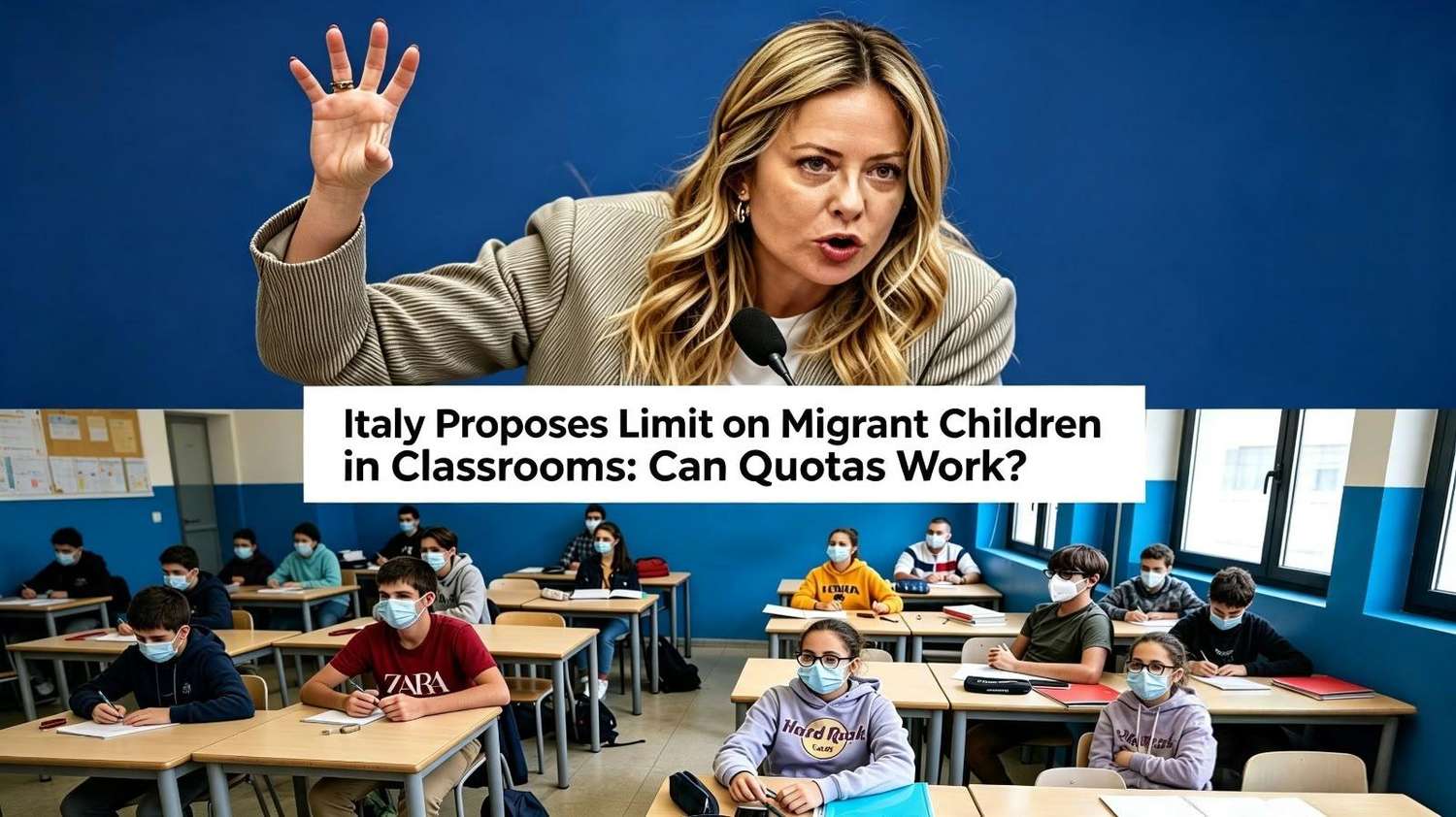
Italian Prime Minister Giorgia Meloni’s governing coalition has triggered fierce international debate after proposing a strict 30 per cent quota on foreign-born pupils across state classrooms. The measures, put forward by Education and Merit Minister Giuseppe Valditara, aim to overhaul integration by curbing ethnic concentration in urban schools, introducing an outright ban on Islamic face veils, and mandating Italian language instruction for foreign parents whose children underperform academically. Failure by parents to ensure their children attend compulsory education would carry severe criminal penalties under the draft framework, including potential prison terms of up to two years.
The legislative push reflects mounting domestic pressure as demographic data shows foreign minors now account for roughly 930,000 pupils—amounting to nearly 12 per cent of Italy's entire school-age cohort, up substantially from just 3.5 per cent two decades ago. In industrial northern hubs where migrant labour remains concentrated, specific municipal schools report non-native enrollments exceeding 60 per cent. Government officials maintain that high concentrations of pupils with limited Italian fluency hinder academic progression and foster insular communities, citing an alarming 26 per cent absenteeism rate among foreign students compared to 6 per cent among native Italian peers.
Compulsory Measures and Legal Penalties
Under the ministerial guidelines, state schools would actively redistribute incoming registrations to prevent individual classes from surpassing the 30 per cent diversity threshold. Minister Valditara emphasised that domestic language immersion forms the bedrock of community values, noting that foreign pupils who do not speak Italian at home face severe long-term educational regression. Daily Dazzling Dawn understands that the proposed parental sanctions will target chronic absenteeism through coordinated reporting between municipal school boards and regional prosecutors.
The administrative burden of enforcing parental language courses and class quotas has raised immediate constitutional and logistical concerns across regional authorities. Daily Dazzling Dawn learned that municipal education directors in Lombardy, Emilia-Romagna, and Veneto warn that rigid percentage ceilings could force long-distance busing schemes, separating siblings and overwhelming transport networks. Educational researchers also point out that nearly two-thirds of so-called foreign pupils were actually born on Italian soil, possessing high conversational fluency despite holding non-EU passports under Italy's strict citizenship laws.
Widespread Backlash and Implementation Challenges
Opposition lawmakers and major educational bodies have rejected the initiative, arguing that statutory quotas risk isolating vulnerable communities rather than integrating them. Italy’s primary educational trade union, FLC-CGIL, condemned the punitive measures against parents as short-sighted, arguing that criminalisation will alienate migrant families rather than encourage institutional trust. Civil rights organisations have likewise warned that capping admissions based on national origin directly infringes upon European non-discrimination conventions and Italy’s constitutional guarantee of universal public education.
The proposed reforms will face formal scrutiny during a national education conference scheduled in Rome this autumn, where union representatives, student councils, and regional leaders intend to challenge the statutory mechanics. Similar distribution quotas implemented in select European municipalities over the past decade have yielded mixed outcomes, frequently resulting in bureaucratic gridlock, geographic gerrymandering, and heightened social tension without demonstrably raising core literacy metrics.
Hard-Right Pressure Reshapes Coalition Priorities
The hardline educational agenda is widely viewed by political observers as a calculated effort by the Meloni administration to counter surging electoral support for rival right-wing figures. The emergence of the National Future movement, led by former army commander Roberto Vannacci, has pulled the governing coalition toward stricter cultural and security platforms. With polling indicating significant voter demand for stricter migration oversight, the battle over Italian school curricula, classroom demographics, and secular civic standards has established education as the central ideological battleground of Rome's political landscape.


.jpg)
.jpg)