


.svg)
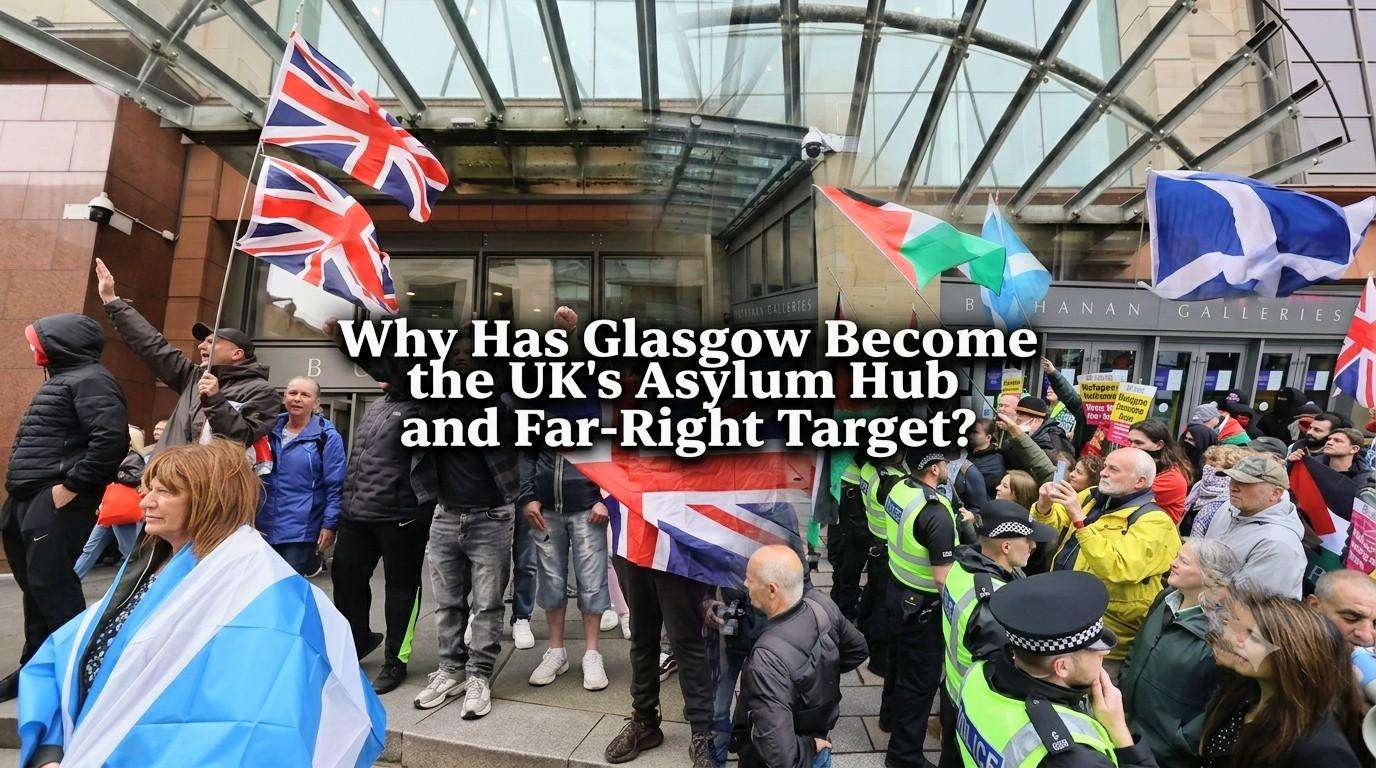
Glasgow has emerged at the centre of Britain’s immigration debate, hosting more asylum seekers per capita than any other local authority in the United Kingdom while facing escalated targeting by far-right demonstrators. The Scottish metropolis currently accommodates more than 3,900 asylum seekers—surpassing the collective totals of Wales, Northern Ireland, and South-West England combined. However, an acute municipal housing shortage, combined with divergent homelessness legislation between Scotland and England, has placed unprecedented strain on local social infrastructure and ignited significant civil unrest across the city.
Street Clashes and Escalating Community Tensions
Recent demonstrations in Glasgow city centre saw far-right activists attempt to march on the city's central mosque, prompting running skirmishes between police forces and masked youths. During the unrest, Muhammad Jawad Yaqoob, a delivery courier from Pakistan, suffered racial abuse and was assaulted with a traffic cone—an incident that circulated widely on social media and resulted in a man being charged with racially aggravated assault. Mr Yaqoob told journalists that the traumatic encounter left him deeply distressed and fearful of returning to his job.
Further unrest emerged in northern districts such as Possilpark, where hundreds of local residents blocked a major intersection near Saracen Street. Masked agitators led hostile chants, attributing rising inner-city crime and drug activity to new arrivals. Demonstrators associated with groups such as "Scottish Crusade" explicitly told journalists that causing public disturbances was an intentional strategy designed to compel government intervention on immigration levels.
Historical Dispersal Policy and Demographic Imbalance
Glasgow’s prominent role in Britain’s asylum architecture stems from more than two decades of participation in the national dispersal system. For over twenty years leading up to 2022, Glasgow stood as the only Scottish local authority voluntarily taking in individuals relocated from southern English hubs such as London. This willingness was rooted in a civic history of integration dating back to significant Commonwealth arrivals during the 1950s and 1960s. Many modern arrivals, including displaced Syrian families arriving during the 2011–2024 conflict, specifically sought refuge in Scotland due to perceived social tolerance and lower reported levels of racism.
Official statistics from the House of Commons Library confirm that Glasgow supports more than 60 asylum seekers per 10,000 residents. This rate is roughly a quarter higher than any comparable UK council and approximately four times higher than London.
Housing Pressures and Statutory Divergence
The core catalyst behind local grievances is the acute shortage of residential accommodation. Although small-boat arrivals across the English Channel dropped to a seven-year low between June and August, the Home Office’s accelerated clearance of the national asylum processing backlog since 2023 has rapidly transitioned thousands from state support into municipal homelessness safety nets.
Scotland’s statutory homelessness framework provides universal temporary accommodation rights to all unhoused individuals without requiring them to prove strict vulnerability criteria. In England, single adults generally must demonstrate specific "priority-need" vulnerabilities, such as physical disability, to secure emergency housing. Consequently, Glasgow has become a primary destination for individuals granted refugee status in other UK regions.
Glasgow City Council recorded 2,750 homelessness applications from refugee households in 2024–25, with projections estimating 3,500 refugee applications out of 8,000 total cases in 2025–26. Approximately 900 applicants had been granted leave to remain outside Scotland before travelling north. Glasgow City Council Leader Susan Aitken noted that the local authority is spending tens of millions of pounds annually on emergency accommodation. Describing the framework as unsustainable, Aitken stated that requests for formal discussions with the UK government had received no meaningful response.
Contrasting Political and Civic Perspectives
The convergence of economic hardship and demographic change has heightened political divisions across Scotland. Reform UK, having matched Scottish Labour's seat tally in recent Scottish parliamentary elections, has openly labelled Glasgow the "asylum capital of the UK". Scottish Deputy Leader Thomas Kerr has campaigned forcefully for prioritizing local residents over newcomers.
Civic organizations argue that blaming migrants misdiagnoses deeper structural failings. Robina Qureshi, Chief Executive of the charity Positive Action in Housing, emphasized that housing deficits date back to insufficient construction during the 1980s rather than recent arrivals. The Scottish Refugee Council similarly clarified that council allocations depend strictly on individual vulnerability and circumstances rather than immigration background.
Daily Dazzling Dawn understands that community relations remain fragile. Scottish National Party Councillor Roza Salih, Scotland's first elected refugee councillor, confirmed that minority communities increasingly fear moving alone in public spaces. While Scottish Trades Union Congress General Secretary Roz Foyer highlighted that Scotland's long-term economic prosperity relies on migrant labour, municipal authorities continue to navigate the immediate challenges of strained infrastructure and public discontent.

.jpg)