



.svg)
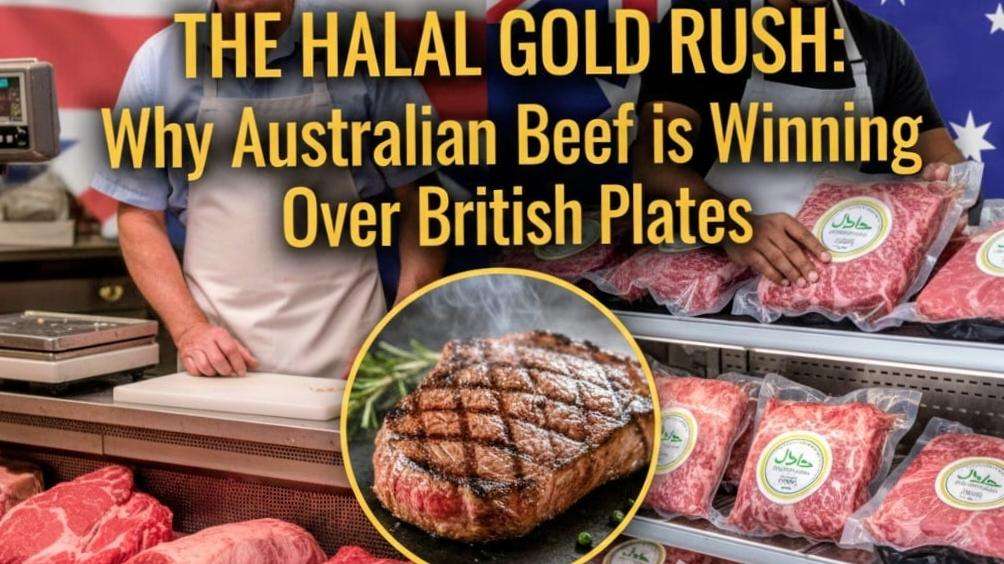
While British farmers express growing concern over the influx of Southern Hemisphere livestock, a quiet revolution is taking place within the UK’s halal meat sector. Since the UK-Australia Free Trade Agreement (FTA) came into force in mid-2023, Australian beef has transformed from a niche import into a dominant force in the British market. This shift is not merely a matter of trade policy; it is increasingly defined by the specific demands of the UK’s Muslim community, which now finds Australian produce to be an essential alternative during a period of domestic supply volatility, Daily Dazzling Dawn realized.
Why Australian Halal Beef is Entering the UK
The primary driver behind the surge of Australian beef into Britain is a combination of legislative opening and environmental necessity. Following the post-Brexit trade pivot, the UK granted Australia a significant tariff-free quota that reached 50,000 tonnes in 2025. Simultaneously, British agriculture has faced a grueling 2025 season marked by severe dry spells and record-breaking summer heat. These conditions forced many UK farmers to use winter feed reserves early, driving up the cost of domestic cattle. Australian exporters, benefiting from massive-scale outdoor grazing systems and a "destocking" phase in their own cattle cycle, have stepped in to fill the supply gap left by strained British producers.
The Gold Standard of Halal Integrity
For the UK’s Muslim consumers, the priority remains spiritual and dietary integrity. Australian beef has successfully entered this market because of the Australian Government Authorised Halal Program (AGAHP). This is a rigorous, collaborative framework jointly administered by the Australian government and recognized Islamic Societies. Unlike some decentralized systems, Australian halal exports are backed by federal law, ensuring that every carcass is processed in accordance with strict Islamic rites. Muslims in the UK can confirm the status of this meat through the mandatory "Halal" stamps applied directly to tags, wrappings, and shipping cartons. This level of state-backed transparency provides a 100% guarantee that often exceeds the patchwork of private certifications found in other regions.
Market Presence and the Butcher Shop Shift
Recent data indicates that Australian beef now accounts for roughly 4% of the total British beef market—a figure that has nearly tripled in just two years. While this may seem small in the context of the entire industry, the concentration is much higher in urban centers and within the halal trade. Local UK butchers, particularly those in London and the Midlands, have begun stocking Australian beef more frequently. While many traditional "high street" butchers pride themselves on local sourcing, the reality of the 2025 cost-of-living crisis has forced a change. Many specialized halal wholesalers now offer Australian grain-fed and Wagyu cuts, which provide a premium dining experience at a price point that British grass-fed beef struggle to match.
The Price Advantage: Why Australia is Cheaper
The economic reality is stark: Australian beef is significantly cheaper than its British counterpart. Experts point to structural differences in production. Australian farms operate with far lower overheads, utilizing year-round grazing and specialized feedlots that don't require the expensive housing and labor-intensive winter care common in the UK. Furthermore, the sheer scale of Australian stations—where one worker may manage five times the number of cattle as a UK farmer—creates an efficiency that allows them to export meat halfway across the world and still undercut local prices by as much as 30% on certain cuts.
Recognizing the Source at the Counter
For consumers who wish to know exactly what they are buying, British law provides clear safeguards. Under the Compulsory Beef Labelling Scheme, all fresh and frozen beef sold in the UK must clearly state the country of birth, rearing, and slaughter. On supermarket shelves, this is found in the small print of the label. In local butcher shops, if the meat is not pre-wrapped, the law requires that the origin be displayed on a ticket in close proximity to the meat or on a visible sign. If a tray of steak does not carry the "Union Jack" or "British Origin" mark, the "Origin: Non-UK" or "Origin: Australia" tag is the primary indicator.
As the 2025 trading year closes, it is clear that Australian beef has moved beyond being a "threat" to British farmers and has become a staple for price-conscious and religiously observant consumers alike. The challenge moving forward will be balancing the survival of the British farm with the undeniable consumer demand for affordable, high-quality halal meat.