





.svg)
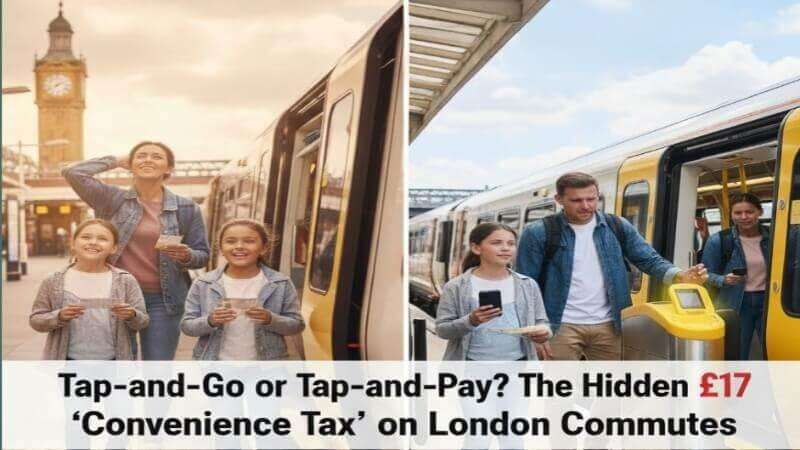
The Hidden Cost of Convenience: Project Oval’s Fare Trap for London Commuters-The recent expansion of contactless "tap-in, tap-out" technology across 50 rail stations in the Southeast was marketed as a modernization of the British railway, yet for thousands of passengers, it has quickly morphed into a financial burden. While the Department for Transport and operators like Govia Thameslink Railway (GTR) champion the move for its simplicity, the reality on the platform is far more complex. Under the banner of Project Oval, the transition has fundamentally altered fare structures, leaving families and regular commuters to navigate a system that often penalizes the very flexibility it claims to provide, Daily Dazzling Dawn understands.
Shifted Schedules and the 85 Percent Spike-For residents in commuter hubs like Reigate and East Grinstead, the introduction of contactless payment on December 14, 2025, brought an unwelcome synchronization with Transport for London’s (TfL) rigid peak and off-peak windows. This alignment has effectively pushed back the start of the morning off-peak period, forcing travelers who once caught the 8:58 am service from Reigate to wait until 9:28 am or pay a premium. The financial delta is staggering; a standard off-peak day travelcard costs £20.60, but missing that window forces a jump to the £37.10 anytime fare—an 85 percent increase for the exact same journey.
The impact is felt most acutely by those traveling during the newly restricted evening peak between 4:00 pm and 7:00 pm. Families visiting the capital who rely on these windows to return home are now facing a choice between altering their entire day’s schedule or absorbing a massive price hike. Local advocates, including Steve Trigg of the Redhill and District Rail Users' Association, have labeled the situation "ridiculous," noting that some passengers are now opting to cycle to neighboring stations like Redhill just to bypass the localized price surges.
The Disappearing Discount Dilemma-Perhaps the most significant "sting in the tail" for savvy travelers is the current inability of the contactless system to recognize Railcard discounts or child fares. Analysis by the lobby group Railfuture highlights a glaring disparity: while tapping a bank card is convenient, it frequently fails to deliver the cheapest price. For instance, a family of four traveling from Luton to London on a weekend would be charged £84 via contactless. In contrast, purchasing traditional tickets with a "Groupsave" discount would cost just £41.70—less than half the price of the "modern" alternative.
Similarly, commuters from East Grinstead using a Network Railcard can save roughly £3.60 every day by sticking to paper tickets over contactless. Despite these figures, rail ministers have maintained that the system ensures passengers get the "best fares." Critics argue this claim is misleading, as the system only calculates the "best" adult fare on the day, ignoring the millions of passengers who qualify for statutory discounts that the current tap-in readers simply cannot process.
Operational Defense vs. Passenger Reality-In defense of the rollout, GTR and the DfT insist that the changes are revenue-neutral and designed to streamline the passenger experience. They point to significant savings for specific traveler profiles, such as those making single journeys during off-peak hours where fares have dropped from £14.60 to roughly £7.50. A GTR spokesperson emphasized that the goal was to align the Southeast network with London’s "best price promise," arguing that for every passenger who sees a rise, many others will see their costs fall.
However, political pressure is mounting. Rebecca Paul, MP for Reigate, has warned that narrowing the definition of off-peak travel risks "pricing passengers out of rail altogether." As Project Oval continues its rollout toward an additional 20 stations in summer 2026, the friction between digital convenience and affordable travel remains a primary concern for the public. For now, the professional advice for any traveler remains clear: do not assume the yellow reader is your friend. Checking a train operator’s website or the TfL single fare finder remains the only way to guarantee you aren't paying a "convenience tax" that could double the cost of your commute.