


.svg)
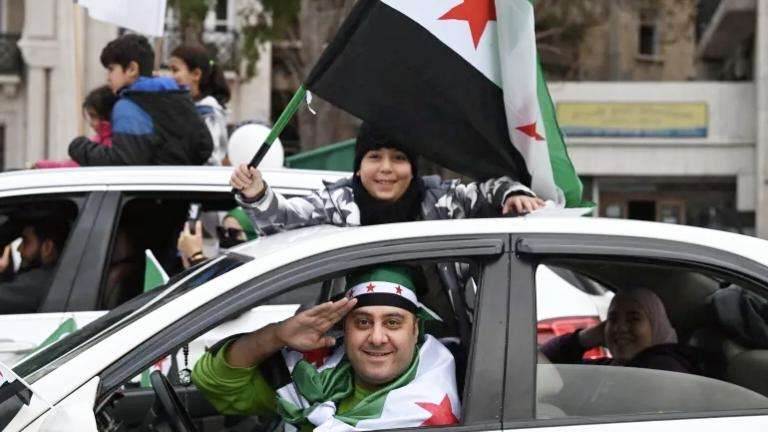
People across Syria are commemorating the 15th anniversary of the uprising that ultimately led to the fall of former President Bashar al‑Assad in late 2024. The anniversary marks a pivotal moment in the country’s modern history, when protests first erupted in 2011 and eventually transformed into a prolonged and devastating conflict.
The uprising began on March 15, 2011, when antigovernment demonstrators took to the streets in cities including Deraa, Damascus, and Aleppo. Inspired by uprisings in Tunisia and Egypt during the Arab Spring, protesters demanded political reforms and the release of detainees.
Early demonstrations were fueled by outrage after several teenage boys in Deraa were arrested and reportedly tortured for writing anti-government graffiti. As public anger grew, protests spread nationwide. In response, Assad’s government used force to suppress demonstrations, escalating tensions across the country.
By July 2011, defectors from the Syrian army formed the Free Syrian Army, marking the beginning of armed resistance. Over time, numerous rebel groups and international actors became involved in the conflict. The war that followed lasted more than a decade, killing hundreds of thousands and displacing millions.
The turning point came in December 2024 when the Islamist group Hayat Tahrir al‑Sham launched a rapid offensive that forced Assad from power. The former president fled to Russia. Following the group’s dissolution, its leader Ahmed al‑Sharaa assumed the presidency and began efforts to rebuild the country and restore state institutions.
For many Syrians, the anniversary symbolizes the end of more than five decades of rule by the Assad family. Celebrations last year saw the capital decorated with flowers to mark the first anniversary of the revolution without Assad in power.
This year’s commemorations coincide with the holy month of Ramadan. Authorities have organized a large iftar gathering in Qatana, south of Damascus, where families of those killed during the conflict will gather alongside activists and young revolutionaries. Another event is planned in the Damascus district of Barzeh.
Despite celebrations, the country continues to face significant challenges. When al-Sharaa came to power, analysts questioned whether he could overcome international sanctions and stabilize the country after years of war. However, his government has gradually built diplomatic ties with regional partners and improved relations with the United States under President Donald Trump.
Some analysts say the new leadership has gained a level of international recognition that previous Syrian governments struggled to achieve. Nevertheless, security concerns remain in parts of the country.
Residents report that while the fear of arbitrary arrests by Assad-era security forces has diminished, safety conditions are still uneven. Armed groups and criminal activity persist in some areas, and militants linked to ISIS continue to pose a threat in certain regions.
The government has also been working to extend control across the country after more than 14 years of conflict. Efforts have included strengthening authority in coastal regions, addressing violence in southern areas, and negotiating with the Syrian Democratic Forces, which previously controlled much of northeastern Syria.
Although thousands of new recruits have joined Syria’s security forces, analysts say the country still lacks sufficient personnel to ensure stability nationwide. As a result, some regions remain less secure than major cities like Damascus.
Even so, many Syrians view the anniversary as a reminder of the sacrifices made during the revolution and a hopeful step toward rebuilding a nation that endured years of war and division.


.jpeg)