
.jpg)
_1.jpg)



.svg)
The global economy is currently navigating its most volatile week since the 2022 energy crisis as the Strait of Hormuz remains functionally paralyzed following the February 28 outbreak of hostilities.
President Donald Trump has issued a stark ultimatum to European and Indo-Pacific allies, suggesting that the very utility of the NATO alliance is at risk if member states do not provide naval escorts to reopen the world's most critical oil artery. During a series of high-stakes discussions on Monday, the President characterized the protection of the Strait as a matter of "national territory" for those who consume its energy. However, the response from traditionally close partners has been one of strategic hesitation. France, Australia, and Japan have all formally declined to send warships into the conflict zone, citing the risk of immediate military escalation with Tehran.
Japan Triggers Emergency Reserves Amid Supply Chokehold
In a move reflecting the severity of the supply shock, Japan has begun a historic release of its private and state-owned oil reserves. This marks the first time Tokyo has tapped into these emergency stocks since the beginning of the Ukraine conflict four years ago. With 70% of its oil normally transiting the now-blocked waterway, the Japanese government is attempting to stabilize domestic markets as Brent crude remains volatile above $104 per barrel. Prime Minister Sanae Takaichi is scheduled to arrive in Washington later this week, where the tension between Japan’s pacifist constitution and Washington’s demand for a "Coalition of the Willing" is expected to reach a breaking point.
The Shadow Economy of the Strait
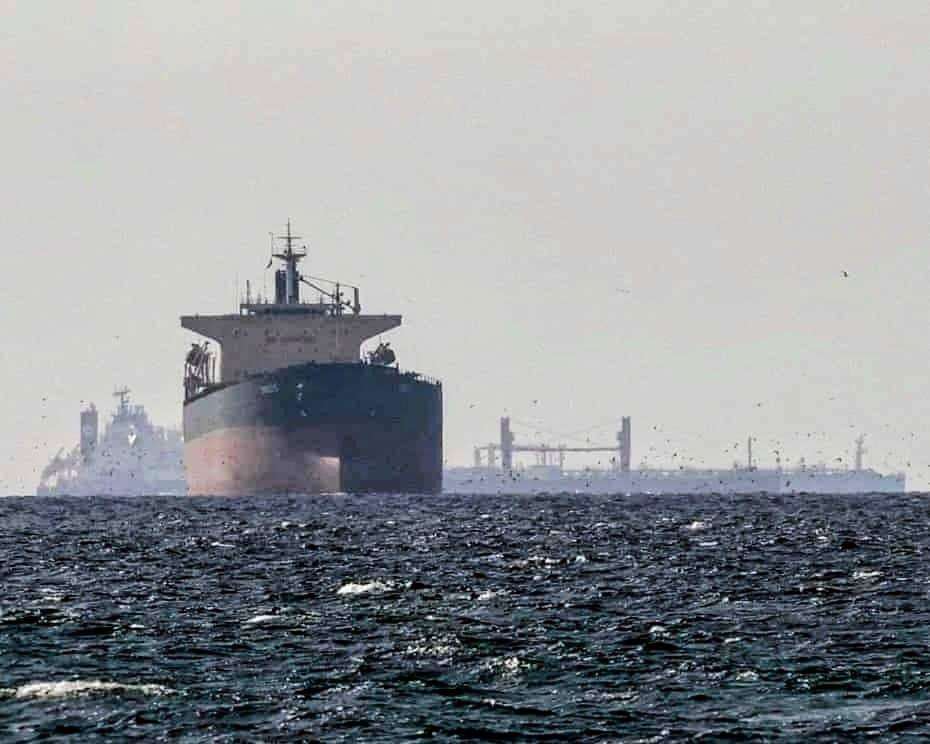
While the blockade has halted nearly all Western-aligned commercial traffic—causing shipping giants like Maersk and MSC to suspend transits—a "dark fleet" continues to operate. Satellite imagery and maritime intelligence indicate that vessels approved by Tehran are still navigating the Strait with AIS transponders deactivated. This selective blockade allows Iran to maintain a trickle of exports, primarily to China, while effectively cutting off Gulf neighbors. This dynamic has created a lopsided economic impact, where global energy prices remain high, benefiting the exporter while strangling the logistics chains of the G7 nations.
China’s Strategic Mediation and the Summit at Risk
Beijing has emerged as the central diplomatic pivot, with Special Envoy Zhai Jun conducting an intensive regional tour to mediate between Tehran, Washington, and Tel Aviv. President Trump has signaled he may delay his upcoming summit with President Xi Jinping, demanding that China use its significant leverage over Iran to guarantee the safety of international shipping before he proceeds with the visit. China, which relies on the Middle East for the vast majority of its energy needs, has urged Iran to avoid targeting Qatari LNG hubs, yet it remains unwilling to join a US-led military mission that could be seen as an act of war.
The Road Ahead: Escalation or Negotiation?
The immediate focus now shifts to Brussels, where EU foreign ministers are debating a limited expansion of "Operation Aspides." While there is talk of adding more ships to protect the Red Sea, there is currently no consensus for a direct intervention in the Strait of Hormuz. US Energy Secretary Chris Wright has expressed optimism that the conflict could resolve within weeks, but the Iranian leadership maintains a posture of "long-term defense." As insurance premiums for Gulf transits surge by 400%, the international community is watching for whether the US will act unilaterally to escort tankers or if a Chinese-mediated ceasefire will provide the necessary off-ramp for the global economy.