






.svg)
The UK’s immigration landscape is undergoing its most radical transformation in decades as Home Secretary Shabana Mahmood moves to replace permanent settlement with a "temporary protection" model. While recent headlines focused on the backlog of 100,000 appeals, the real story lies in a fundamental shift in British law: as of March 2026, the traditional five-year refugee status has been abolished. Under new rules, successful claimants are now granted only 30 months of "core protection," after which their right to remain is subject to a mandatory review of their home country’s safety.
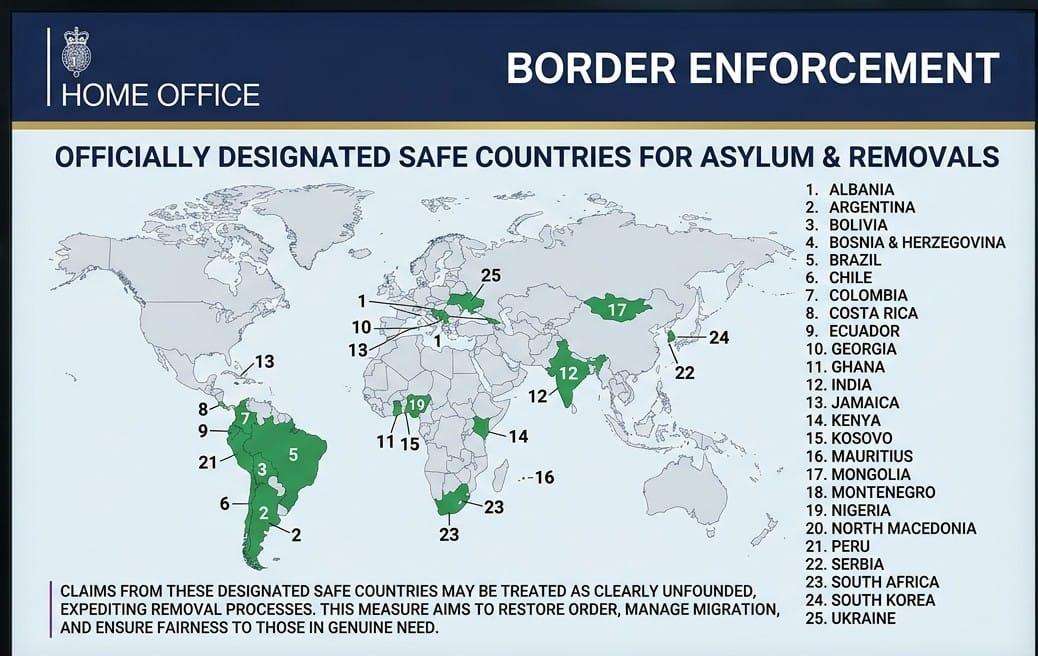
This "Restoring Order and Control" strategy specifically targets the "carousel" of repeated human rights appeals. By leveraging revived Blair-era legislation and the new Sentencing Act 2026, the Home Office is now legally empowered to deport failed asylum seekers and foreign criminals to a list of 25 "safe" countries—including India, Albania, and Nigeria—before they can even lodge an appeal. This "deport first, appeal later" mechanism is designed to immediately vacate taxpayer-funded hotel spaces, which continue to cost the public millions daily.
The End of Automatic Settlement
The Home Office has confirmed that the transition to 30-month visas is part of a broader "earned settlement" philosophy. Ministers are moving away from the assumption that asylum equals a permanent life in the UK. Instead, migrants will face a "visa brake" and stricter salary thresholds, recently adjusted to £41,700 for skilled workers to keep pace with inflation. For those who do not meet the new criteria, the government is ramping up chartered removal flights, bolstered by a fresh diplomatic fast-track agreement with Nigeria to bypass travel document delays.
Public and Political Friction
The crackdown has sparked a fierce debate over the ethics of legal funding and human rights. Julian Russell, a vocal critic of the current system, argued that the law should be changed to remove free Legal Aid for all but the first appeal. "The funding should come from the appellant, their family and friends, or those supporting them," Russell stated. "There are too many charities using public funds unwisely. If one sits on a high horse, one should not expect the public to pay for its maintenance."
Conversely, the Refugee Council warns that since two out of three appeals are historically successful, deporting people before their cases are heard risks "sending men, women, and children back to real danger." Leading Muslim charity, Islamic Relief UK, continues to advocate for the protection of vulnerable families caught in the crossfire of these policy shifts.
A Government Unmoved
Despite a brewing rebellion from the Labour Left—with Angela Rayner previously describing the reforms as "un-British"—Home Office Minister Alex Norris remains steadfast. "A firm-and-fair approach does not mean taxpayers provide for individuals with refused human rights claims," Norris said, echoing the "firm but fair" mantra of fellow official Ioannis Alexopoulos. With the Sentencing Act 2026 now in full effect as of March 22, the duty to deport any foreign national given a 12-month suspended sentence has become an automated process, leaving little room for the legal maneuvers that once stalled removals for years.