
.jpeg)
.jpg)


.svg)
The sentencing of four men marks a somber milestone in a case that has redefined local concerns over street violence.
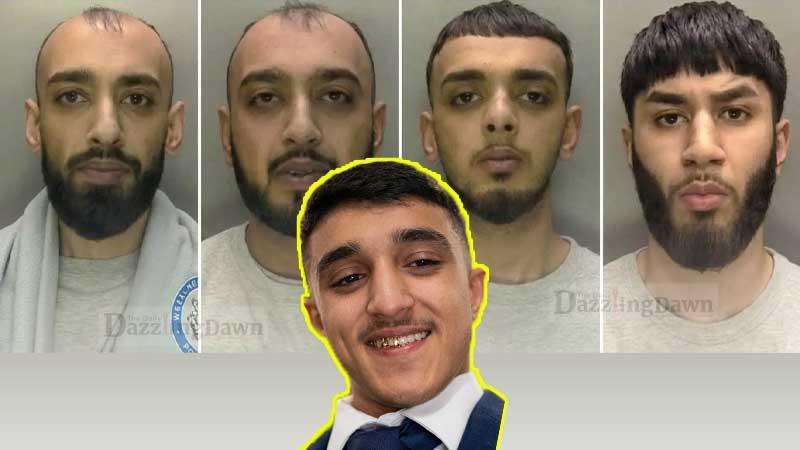
The judicial proceedings at Wolverhampton Crown Court have finally provided a definitive timeline for the tragic events that claimed the life of 22-year-old Mohammed Khan. While the convictions of twins Asad and Hassan Iftakhar, their brother Zain Raja, and cousin Amaan Khan have concluded the legal chapter, the investigation into the cultural and social ripples of this "execution-style" assault reveals a family and a community struggling to reconcile with such profound ferocity.
The Anatomy of a Fatal Encounter
The incident, which occurred at approximately 5:00 PM on March 17, 2025, was not a random act of misfortune but the culmination of a targeted confrontation. Mohammed Khan, a young man of South Asian heritage whose family has deep roots in the local community, met his assailants on Bloxwich Road. What began as a dispute escalated into a coordinated attack involving a knife and an axe.
The forensic evidence presented during the trial painted a harrowing picture of the final moments. Khan suffered 16 sharp force injuries, including four fatal wounds to his neck, back, and side. The sheer intensity of the blunt force trauma led to a traumatic brain injury so severe that it necessitated a separate burial—a detail that has left the Khan family in a state of perpetual psychological torment.
A Family Fractured by Grief
Speaking to a journalist following the sentencing on April 30, 2026, the victim’s mother articulated a void that no judicial verdict can fill. She described the harrowing reality of "burying her son in parts," noting that her nights are dominated by the silence of a house that should have been filled with his future. Her testimony underscored a haunting question that remains: the isolation of a single man facing an armed group.
Read Also: 66 Years for the Iftakhars: Walsall’s Fatal Family Feud Ended
The victim’s father reflected on the trial as an indelible trauma, stating that his life is now permanently bifurcated into "before" and "after." He told a journalist that the realization of his son’s fear and solitude in those final moments is a burden he will carry indefinitely. For the Khan family, the loss is compounded by the ethnicity and shared background of the parties involved, highlighting a tragic fracturing within the local diaspora.
Judicial Reckoning and Local Impact
Reporting for Daily Dazzling Dawn, the investigation into the backgrounds of the perpetrators reveals a troubling pattern of escalation. The Iftakhar brothers, both 34, received substantial life sentences, reflecting the premeditated nature of their involvement.
| Defendant | Conviction | Sentence |
| Asad Iftakhar | Murder & Knife Possession | Life (Min. 22 Years) |
| Hassan Iftakhar | Murder & Axe Possession | Life (Min. 18 Years) |
| Zain Raja | Murder | Life (Min. 18 Years) |
| Amaan Khan | Manslaughter | 8 Years |
The Path Forward
With the perpetrators now behind bars, the focus shifts to the prevention of such "rivalry" killings. Local authorities and community leaders are under increased pressure to address the underlying tensions that lead to such violent outbursts in broad daylight. The legacy of Mohammed Khan is now intertwined with a call for more robust intervention strategies to ensure that no other family has to endure the indignity of a fragmented burial.
Read more- Vengeance and Blades: The Hidden Catalyst of the Khan Tragedy
As the Black Country moves forward, the memory of March 17 remains a stark reminder of the fragility of peace. The Khan family continues to seek solace in their faith and community, hoping that the severity of the sentences serves as a lasting deterrent against the culture of violence that claimed their son.