




.svg)
Eight bodies were found in an advanced state of decomposition at a mortuary operated by Nottingham University Hospitals (NUH) NHS Trust after a shortage of freezer space prevented them from being stored appropriately.
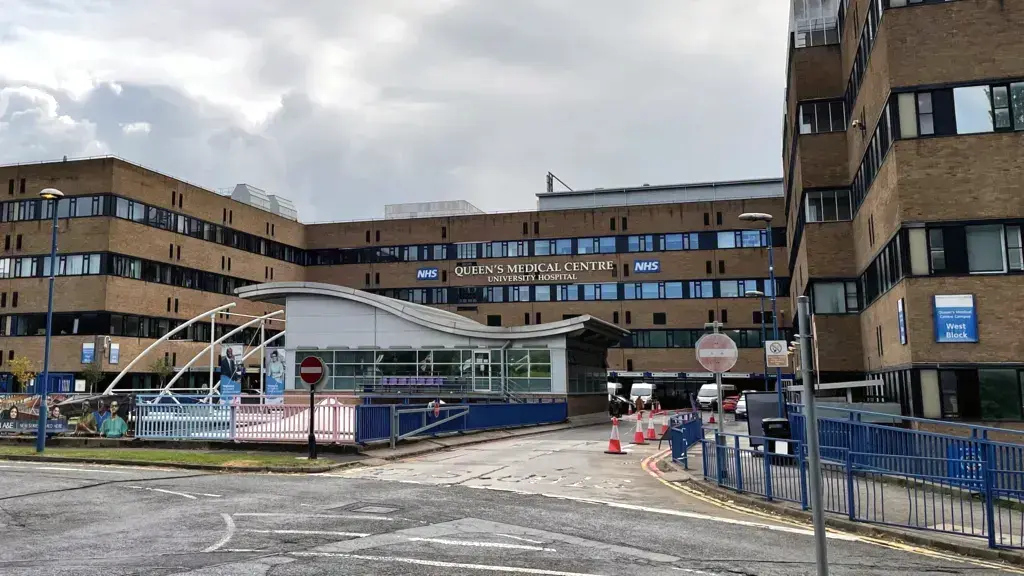
A recent inspection by the Human Tissue Authority (HTA) at the Queen’s Medical Centre (QMC) in Nottingham also identified failures in identity verification procedures, raising concerns that bodies could have been mistakenly released to the wrong families.
The findings add to growing criticism of NUH, which was recently condemned by independent review chair Donna Ockenden for serious shortcomings in maternity care affecting hundreds of families.
The trust has apologized, acknowledging that its mortuary services failed to meet required standards.
In a separate development, two men have been released on bail after being arrested as part of Operation Perth, a police investigation launched in 2023 into mortuary management practices linked to longstanding concerns at the trust. The inquiry uncovered breaches of the Human Tissue Act and other regulatory failings.
Concerns over after-death care first emerged when the parents of stillborn baby Harriet Hawkins learned that her body had deteriorated significantly before her funeral in 2016. Subsequent investigations revealed multiple failures, including one premature baby being disposed of as clinical waste, the wrong infant being released to funeral directors, and a deceased mother’s body deteriorating to such an extent that relatives were advised not to view her before burial.
Ockenden’s review highlighted repeated failures to preserve the dignity of deceased patients, including shortcomings in pediatric post-mortem procedures.
Following these revelations, the HTA conducted an unannounced inspection of the trust’s mortuary services in March 2026. The regulator identified three critical, six major, and one minor breach of its standards across the QMC and City Hospital sites.
Inspectors found that limited freezer capacity forced some bodies to remain in refrigerated storage rather than freezers, contributing to the advanced deterioration of eight individuals. They also discovered that certain infant post-mortem examinations were performed in a poorly ventilated laboratory instead of a dedicated post-mortem facility, with assistance from staff lacking appropriate mortuary training.
An accompanying audit further revealed that more than half of 145 incidents that should have been reported to the regulator had not been escalated.
While noting that the QMC complied with most regulatory requirements and had implemented improvements since the inspection, the HTA emphasized the seriousness of the shortcomings.
NUH Chief Executive Anthony May described the findings as deeply disappointing and said the trust had introduced an action plan to address the issues. He offered a public apology to anyone whose loved ones were not treated with the dignity they deserved.
Medical Director Manjeet Shehmar also expressed regret, stating that the trust had already begun making significant improvements and remained committed to addressing the concerns raised by the HTA.