.jpg)


.svg)
The unannounced return of a convicted exploitation ringleader into the community has triggered unauthorized civilian street patrols and forced an emergency legislative battle over UK border laws.
An investigation by Daily Dazzling Dawn reveals an escalating multi-agency crisis following the prison release of Shabir Ahmed, 73. Convicted in 2012 for 30 counts of child rape and sexual violence, Ahmed was quietly freed on licence on Thursday after serving 14 years of his sentence. Widespread public anger has intensified following disclosures that official state channels entirely failed to notify his victims of his release, leaving survivors to discover the development through media reports.
Although Whitehall successfully stripped Ahmed of his British citizenship post-conviction, a protected legal status within the Immigration Act 1971 completely insulates him from deportation. The statute dictates that Commonwealth citizens who settled in the United Kingdom prior to 1973 cannot be removed if they established continuous residency before their deportation was officially considered.
This domestic legislative barrier is further compounded by a severe diplomatic logjam. Senior government officials admitted to journalists that international repatriation routes are entirely stalled, as foreign governments are actively refusing to accept the return of multiple co-defendants from the original nine-man criminal network whose British nationalities were similarly cancelled. In response, cross-party leaders—including Conservative leader Kemi Badenoch and senior Labour figures—are rushing emergency statutory amendments to retrospectively strip serious offenders of this historical immunity.
The state's management of the release has drawn intense scrutiny from justice advocates and former law enforcement. Survivors have reported being plunged into severe psychological distress due to a total absence of official proactive communication from the Probation Service or local victim liaison networks.
"I am absolutely furious that no one contacted me to tell me that Shabir Ahmed was going to be released – not the Prison Service, not Victim Liaison, no one. I had to find out about it from the media, in the week of his release," an individual abused by the network, speaking to journalists under the pseudonym Amber, stated. She described suffering physical illness and sleeplessness, adding: "He has contacts. They operated as a gang – so even if he stays out of Rochdale, he could still get other men to do what he wants. I feel like I've been let down all over again."
A second survivor, identified as Ruby, told journalists she is living in constant terror for her family's safety. Her representative, former Greater Manchester Police detective Maggie Oliver, told journalists that the state has offered zero formal protection mechanisms, forcing victims to fend entirely for themselves during an acute psychological crisis.
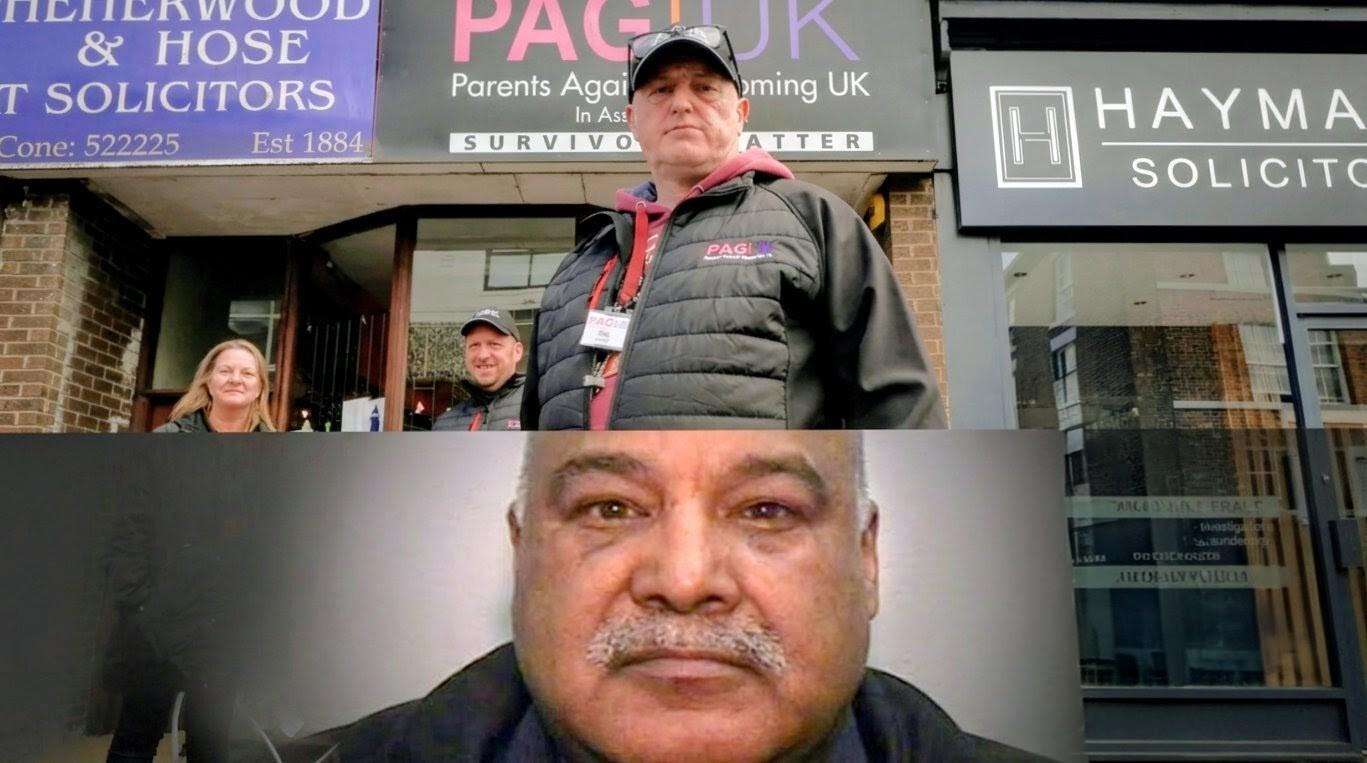
Faced with perceived state inaction, local safety groups have rapidly deployed independent street teams to patrol neighborhoods and monitor high-risk zones. Organiser Billy Howarth told journalists that a rapid-response network of local residents has been assembled to protect terrified households, demanding that the state fund 24-hour static security guards outside survivors' homes.
Whistleblowers who originally exposed the exploitation network have also voiced deep skepticism regarding institutional oversight. Sara Rowbotham, the former health worker whose evidence dismantled the ring, told journalists she remains terrified of encountering Ahmed, warning that severe historic underfunding within the Probation Service will render real-time electronic tracking and compliance monitoring dangerously weak.
To suppress immediate public risk, the Ministry of Justice has enforced an expensive, high-tier containment strategy. Ahmed is fitted with an active GPS tracking tag and confined to a 24-hour staffed bail hostel outside his historical operational base. Stringent licence terms bar him from entering absolute exclusion zones covering Rochdale, Oldham, and Middleton, with Greater Manchester Police holding standing orders to intercept and re-imprison him at the first geographical breach.

.jpg)