




.svg)
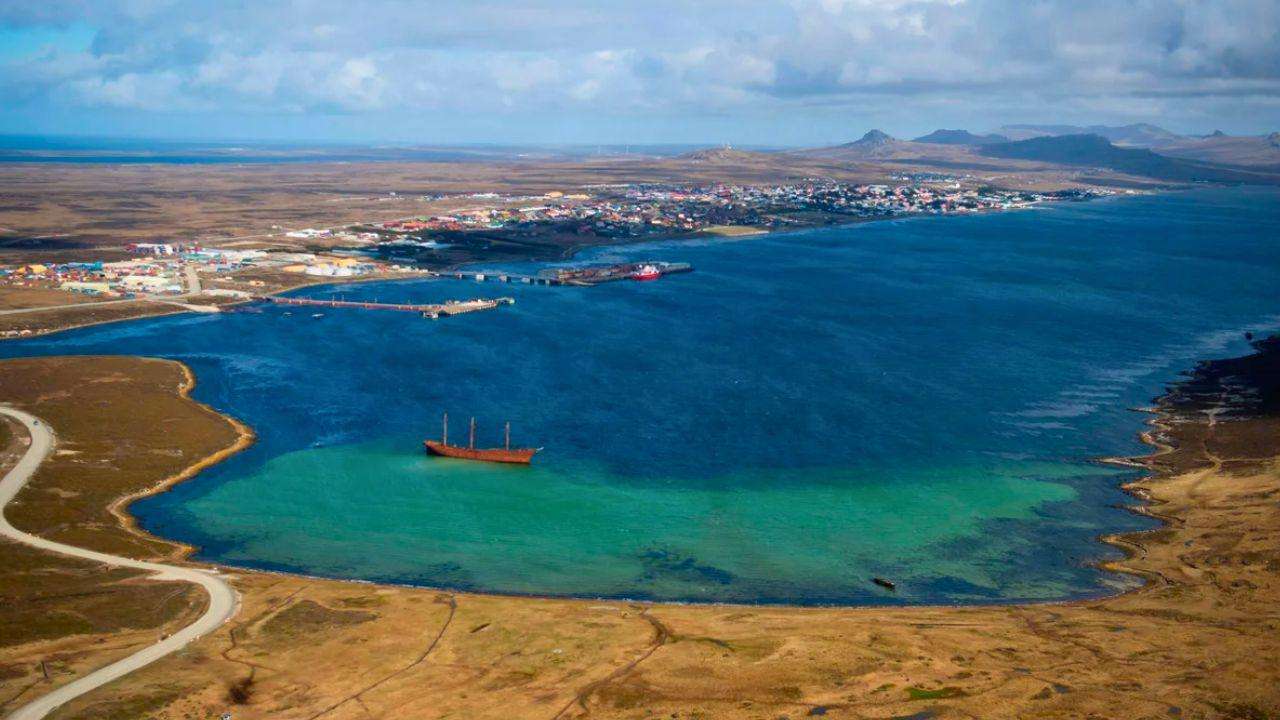
Argentina’s government said on Monday that it will file criminal charges against Israeli energy company Navitas Petroleum and its executives over their operations in the Falkland Islands.
The decision came after Argentine President Javier Milei said on Friday that his government would take action against oil companies carrying out drilling activities in the British overseas territory, as Argentina renewed its long-standing claim to sovereignty over the islands.
According to a statement from the Argentine presidency, Foreign Minister Pablo Quirno will submit the criminal complaint against several Navitas subsidiaries and business partners operating in the territory, as well as the directors of those companies.
Navitas Petroleum did not immediately respond to a request for comment.
Argentina’s government claims the companies have breached Argentine law by holding licences for hydrocarbon exploration and production that were granted by the UK for operations in the North Falkland Basin.
Judge Condemns Councillor Over Character Reference for Teenage Knife Attacker Azhar Alizaib
Milei specifically referred last week to the Sea Lion offshore oil project as he announced measures aimed at companies involved in oil and gas operations around the Falkland Islands. The proposed penalties could also affect shareholders, company directors and suppliers linked to the projects.
The Sea Lion field is operated by Tel Aviv-listed Navitas Petroleum, which owns a 65% stake in the project.
Gideon Tadmor, a prominent figure in Israel’s energy industry and chairman of Navitas Petroleum, owns around 9% of the company’s shares, according to data from LSEG.
In a televised address last week, Milei said “winds of change” supporting Argentina’s sovereignty claim over the Falkland Islands were emerging internationally. His comments came after US President Donald Trump suggested that he was reconsidering Washington’s position regarding British sovereignty over the South Atlantic islands.
The United States officially maintains a neutral position on the question of sovereignty over the Falklands, which Britain first claimed in the late 17th century and has controlled almost continuously since 1833. In practice, however, Washington recognises British administration of the territory.
The islands were invaded by Argentina in 1982, leading to a military conflict with Britain that ended with British forces regaining control.
Asked last week whether he was reconsidering the US position on the Falklands, Trump said: “I always review every position – that’s just one of many.”
Milei described Trump’s response as a “threat” and said it was “not innocuous”.
“The US is considering this change of position because it knows that Argentina is a reliable partner, aligned with western values, in a strategically important position that can be a valuable ally in the decades to come,” Milei said.
He also warned that companies developing oil in the Falklands “behind the back of the Argentine government” would be prevented from doing business in Argentina.
UK ministers quickly rejected Milei’s comments, insisting that the Falkland Islands would remain British for as long as the people living there wanted them to.
Speculation that the United States could change its position on the islands has been growing for several months.
In April, a leaked Pentagon email reportedly suggested that Britain’s claim should be reviewed in response to what it described as a lack of British support for Trump’s decision to go to war with Iran. Trump has also criticised Nato members over what he considers insufficient defence spending.
Any change in the long-standing US position would deliver a significant psychological blow to Britain’s claim over the Falkland Islands.
Following Argentina’s invasion in 1982, then-British Prime Minister Margaret Thatcher ordered a naval taskforce to retake the islands. Britain’s military campaign was strengthened by strong diplomatic backing from US President Ronald Reagan, who ultimately supported Britain despite Washington also maintaining an alliance with Argentina’s military government at the time.