






.svg)
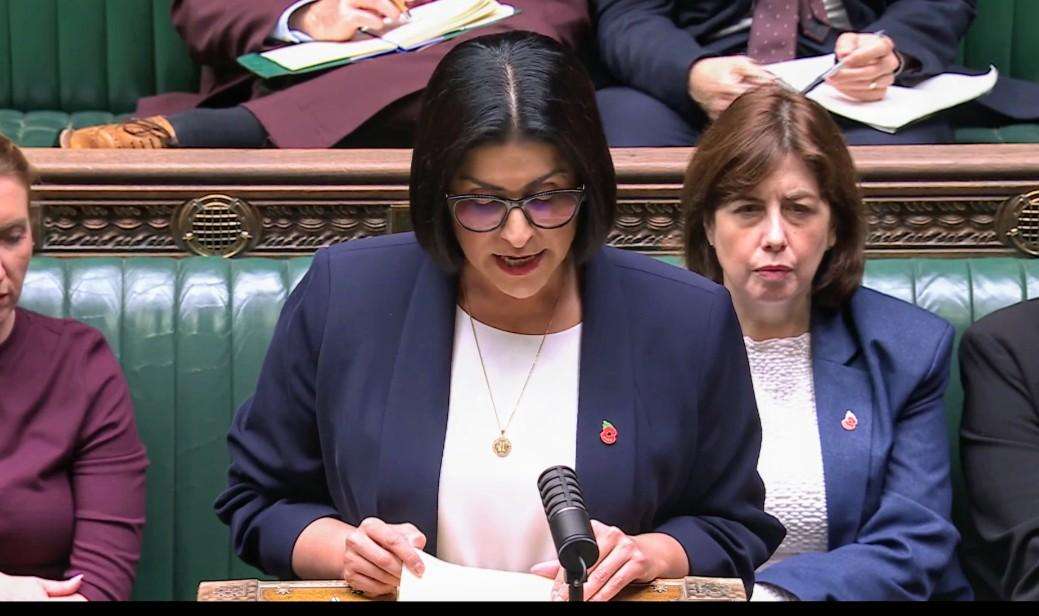
Home Secretary Shabana Mahmood has unveiled a comprehensive overhaul of the United Kingdom's legal migration system in the House of Commons on 2 November 2026, doubling the standard qualifying period for Indefinite Leave to Remain (ILR) from five to ten years. The sweeping Home Office blueprint introduces strict tiered income requirements that will delay permanent residency for an estimated 500,000 overseas nationals across Britain, while establishing a protected five-year settlement pathway for post-pandemic foreign care workers earning at least £25,000 annually. Backed by Prime Minister Andy Burnham, the Earned Settlement framework replaces nearly automatic five-year residency rights with stringent tests assessing tax contributions, English language proficiency, and criminal history to reduce public expenditure by billions of pounds.
Under the newly published Home Office blueprint, an applicant's timeline to permanent residency in the United Kingdom is directly tethered to their economic output and tax bracket. While a ten-year wait becomes the default standard for migrants who have earned at least £12,571 in five of the previous seven years, the Government has created accelerated pathways for top contributors and essential public servants.
Daily Dazzling Dawn understands that the highest earners generating annual incomes above £125,141, alongside specialists on the Global Talent and Innovator Founder visa routes, will qualify for settlement after just three years. Furthermore, higher-rate taxpayers earning over £50,271 a year—as well as skilled public sector professionals including National Health Service doctors, nurses, and qualified teachers—will retain a five-year route to permanent residency. Dependents, including partners arriving alongside a principal applicant and children under the age of 18, will continue to qualify for settlement simultaneously with the main visa holder, provided they meet the relevant statutory criteria.
A central pillar of the Westminster announcement is a major policy concession for the social care sector, following months of intensive consultation with trade unions, the Royal College of Nursing, and senior Cabinet figures including Angela Rayner. Earlier Home Office proposals had suggested extending the settlement wait for overseas care workers to 15 years, a retrospective change critics warned would destabilise Prime Minister Andy Burnham's plans for a National Care Service. Furthermore, analysis by The King's Fund think tank highlighted that international care recruitment is projected to fall to just 10,000 starters this financial year amid declining domestic recruitment.
Addressing MPs in the House of Commons, Ms Mahmood confirmed that overseas care workers who arrived in Britain following the COVID-19 pandemic, adhered to their visa conditions, and earned a minimum of £25,000 over the 12 months preceding their application will remain on their existing five-year path to settlement. Everybody will have a fair shot to make their contribution, she told journalists and parliamentarians, noting that the Government is honouring its commitment to care staff who answered Britain's call while addressing widespread abuse of the visa route under the previous Conservative administration.
For care workers who do not immediately meet the £25,000 salary threshold, the Home Office will offer a five-year visa extension as a second opportunity to qualify for settlement. Additionally, Daily Dazzling Dawn learned that strict new transition timelines will take effect from 1 February 2027 for care workers who lose their employment because their sponsor's licence was revoked by regulators. Affected workers will be granted up to 120 days to secure new sponsored employment and a further 60 days to regularise their visa and employment status. Any individual who fails to secure compliant work by day 181 will have their visa cancelled and will be required to leave the United Kingdom.
Beyond financial thresholds, the Earned Settlement model introduces four mandatory baseline criteria that every applicant must satisfy before being granted Indefinite Leave to Remain. First, claimants must possess a completely clean criminal record, a marked tightening from the previous threshold that only disqualified individuals handed custodial or suspended sentences exceeding 12 months. Second, applicants must demonstrate English language proficiency equivalent to an A-level standard as a foreign language. Third, candidates must hold zero debt owed to the British taxpayer or public services. Fourth, individuals must present a verified record of sustained National Insurance contributions spanning at least three years.
Notably, the Home Office has abandoned a proposal first floated in November 2025 that would have allowed migrants to shorten their qualifying period through community volunteering. Following public consultation, voluntary-sector organisations raised substantial safeguarding and verification concerns with Daily Dazzling Dawn and Government officials, warning that vulnerable migrants could be coerced into unpaid labour. Consequently, unpaid community activity will play no part in reducing settlement timelines.
The legislative package also introduces severe delays for individuals who breach immigration controls, claim specific state benefits, or enter the country via clandestine routes. Any migrant who commits a visa offence or relies on designated public funds will face a 20-year waiting period before becoming eligible for permanent settlement.
For refugees and asylum seekers, settlement timelines will be strictly bifurcated by their method of arrival and economic integration. Refugees arriving in Britain via official, safe, and legal routes will qualify for settlement after five years. Individuals who did not arrive via small boats across the English Channel and who enter employment or higher education will face a ten-year wait, whereas those who do not enter work or study will wait 20 years. Conversely, anyone arriving by small boat or other clandestine means faces an automatic ten-year penalty added to their baseline timeline; those who subsequently enter work or study will wait 20 years for settlement, while clandestine arrivals who remain outside employment or education face a 30-year wait. Speaking to broadcasters earlier on Monday, Prime Minister Andy Burnham stated that the reforms establish firm border control and reward hard work, ensuring those making the highest economic contribution settle earliest as the Home Office prepares to enforce the new framework against the post-pandemic cohort of 1.6 million migrants.