






.svg)
Hundreds of Turkish nationals seeking permanent residency in the UK have reportedly had their applications rejected since the beginning of 2026, prompting concerns over Home Office decision-making and comparisons with the Windrush scandal.
The refusals involve people applying through the European Community Association Agreement (ECAA) route, a long-established immigration arrangement that allows Turkish nationals to establish businesses in the UK and, subject to meeting the relevant requirements, apply for indefinite leave to remain (ILR).
The number of successful settlement applications has fallen sharply, while lawyers and affected applicants have raised concerns about errors in refusal letters, delays and requirements that do not appear in published immigration rules.
Former foreign secretary David Lammy is among those calling for the Home Office to reconsider its approach.
Figures cited in a Freedom of Information request show a significant reduction in successful ECAA settlement applications.
Between January and June 2025, the Home Office granted 3,378 settlement applications through the route. During the same period in 2026, the figure fell to 745, representing a 78% decrease.
The number of applications undergoing administrative review has also increased. The figures show 145 such cases in 2025, compared with 395 between January and mid-August 2026.
Administrative review allows the Home Office to reconsider a decision following a refusal.
Lawyers working on ECAA cases have also reported delays for applications submitted from September 2025, with some waiting longer than the usual six-month processing period.
Several cases highlighted in reporting by The Guardian have raised questions about how applications are being assessed.
One applicant, a woman who had been diagnosed with cancer while visiting Turkey during the Covid-19 pandemic, had her application refused after beginning treatment in Turkey. Her medical team had reportedly warned that transferring her clinical care carried significant medical risks.
Following a review, the Home Office maintained its decision and informed her in October that she and her three young children should leave the UK.
In another case, a man running a window-cleaning business was reportedly told that his business was not legitimate because he had no social media presence. Applicants have also described errors involving bank statements and calculations of time spent outside the UK.
A further case involved a woman whose father in Turkey had terminal Alzheimer's disease. Her application was refused after the Home Office reportedly considered his condition to have been known for several years, rather than an urgent and unforeseen circumstance.
These cases have intensified concerns about whether vulnerable applicants are receiving fair and consistent consideration.
David Lammy, the MP for Tottenham, said he had received complaints from constituents whose lives had been seriously affected by what appeared to be a sudden change in Home Office policy.
He drew comparisons with the Windrush scandal, in which people who had established their lives in Britain faced serious difficulties because of immigration policy and administrative failures.
Lammy called on the Home Office to revisit its decisions and consider the recommendations of the independent Windrush Lessons Learned Review.
The review included recommendations for clearer guidance on the burden and standard of proof, better communication with applicants and improved procedures for people in vulnerable circumstances.
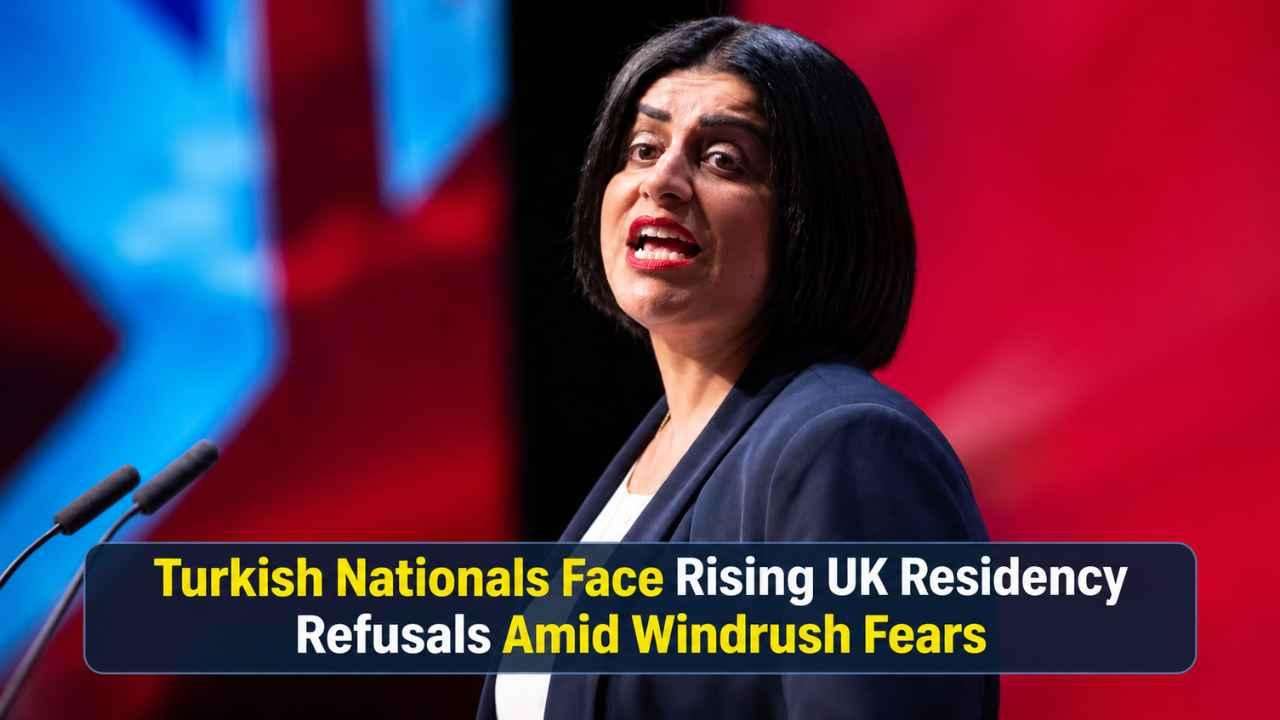
The reported increase in refusals appears to affect applications submitted from September 2025, shortly before Home Secretary Shabana Mahmood announced proposals for tougher settlement conditions at the Labour Party conference.
However, the Home Office has denied changing how ECAA settlement applications are considered.
A department spokesperson said: "There has been no change to how ECAA settlement applications are considered. Every application continues to be considered on its individual circumstances, in line with the published rules and guidance."
The contrasting positions have left affected applicants and immigration lawyers seeking greater clarity over the decisions.
For Turkish nationals who have built businesses, established families and spent years living in Britain, the outcome of these cases could have significant consequences for their future in the country.




.jpg)