







.svg)
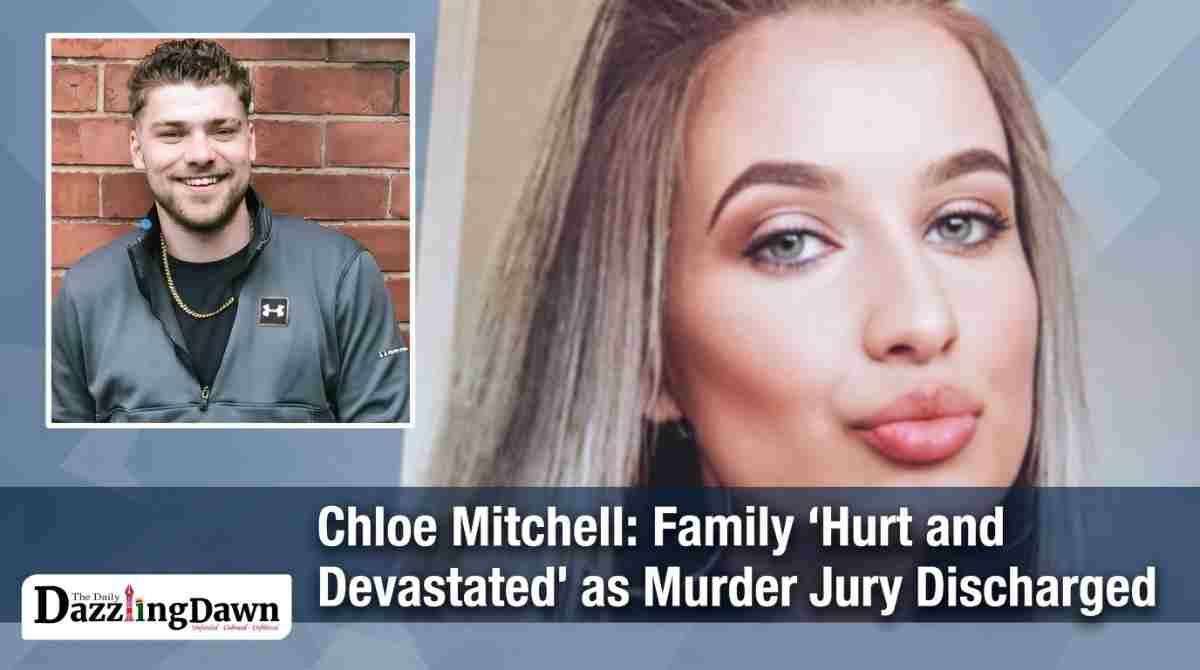
A new jury will be sworn in at Belfast Crown Court on November 25 to hear the murder trial of Brandon Rainey, 30, accused of killing 21-year-old Chloe Mitchell in Ballymena in June 2023. The original jury of eight women and four men was discharged on Tuesday 10 November 2026 by Mr Justice Fowler, who cited "matters outside of my control" as the reason for his decision, without outlining specific details at this stage. The case has been relisted for later this month, with a fresh panel expected to be empanelled to hear the evidence from the beginning.
Daily Dazzling Dawn understands the dramatic development unfolded shortly after 1.40pm on Tuesday when the jury was called into court, having waited in the jury room throughout the morning. Mr Justice Fowler addressed the panel directly, stating that "with regret" he was discharging them from further service. He apologised for the delay, attributing it to "matters outside of my control" and confirming that "matters were brought to attention which required me during the course of the morning to make a number of enquiries from several persons." The judge emphasised that the discharge was "absolutely no reflection on you as a jury" and indicated he would provide his reasons "at a later date."
The discharge of a jury mid-trial is a significant legal event, though not unprecedented in complex criminal proceedings. Under Northern Ireland law, a judge may discharge a jury if it becomes necessary in the interests of justice, whether due to procedural irregularities, jury misconduct, or unforeseen circumstances that could compromise a fair trial. Mr Justice Fowler's decision means the case against Brandon Rainey remains unresolved, and the Public Prosecution Service for Northern Ireland will proceed with a fresh trial later this month.
The judge cautioned against speculation regarding the reasons for his decision, stating he would provide a full explanation "in due course." This deliberate approach reflects the sensitivity of the case and the need to protect the integrity of the forthcoming retrial. Legal observers note that disclosing detailed reasons prematurely could prejudice the new jury pool and compromise Rainey's right to a fair hearing.
Daily Dazzling Dawn understands that Brandon Rainey has been remanded back into custody following Tuesday's proceedings. He has consistently denied the charges against him, pleading not guilty in 2024 to murdering Chloe Mitchell on 3 June 2023, an offence aggravated by reason of involving domestic abuse, and to attempting to prevent the lawful and decent burial of a deceased body on the same date.
The original trial, which commenced last week, had already exposed the court to deeply distressing evidence before its abrupt conclusion. On Tuesday, the jury had been expected to hear evidence regarding police interviews conducted with Rainey on 8 June 2023, five days after Chloe was last seen alive in his James Street flat and three days before her remains were discovered in two wheelie bins close to his home.
PSNI Detective Sergeant Michael Russell had told the court how a "putrid smell" led him to discover human remains while conducting door-to-door inquiries in Ballymena on 11 June 2023. He described encountering an "overwhelming stench" as maggots fell from the lid of a wheelie bin outside a property near Rainey's former flat, leaving him struggling not to vomit. A second bin was found to contain further human remains. A former neighbour whose bin was used stated in a statement that she had poured two cups of Dettol bleach into the receptacle due to the smell, having only seen tied-up black bin bags inside.
Forensic scientist Jonathan Irons provided expert testimony establishing that blood stains, smears and spatter found throughout Rainey's flat matched Chloe Mitchell's DNA, with the odds of the samples originating from another individual placed at one in a billion. Blood was identified on the door handle, electric box, bedroom, shower, and the accused's wristwatch.
UK Falls Silent to Mark Armistice Day
State Pathologist Dr Lynas, despite difficulties posed by dismemberment and decomposition, ascertained that Ms Mitchell's skull had been fractured and she had sustained 55 stab wounds, some inflicted before death and some after, with her limbs and head severed post-mortem. Tissue paper was found in her throat, indicating she had been gagged.
The court also heard a witness statement from a person who attended a barbecue with Rainey days before Ms Mitchell went missing, claiming they overheard him ask his mother: "Would you still love me if I dismembered 50 people and hid their parts?" Interior photographs of Rainey's flat were shown to the jury, where knives, a crossbow and evidence of blood spatter were recovered.
Under cross-examination from defence KC Desmond Fahy, forensic scientist Irons agreed he could not state how, when or in what circumstances the blood came to be present, only whose DNA it matched.
The Mitchell family, who have endured 17 months of agonising uncertainty since Chloe's disappearance, described the discharge as "another heartbreaking blow" in their quest for justice. Daily Dazzling Dawn understands the family's statement was issued shortly after the dramatic turn of events, which has left them facing the prospect of a second trial and a further wait for resolution.
The family's pain has been compounded by the graphic nature of the evidence already heard in open court, detailing the final moments of Chloe's life. As they prepare for the retrial, victim support organisations have emphasised the importance of maintaining robust emotional and practical support for families navigating the criminal justice system, particularly in cases involving such traumatic circumstances.
The case has also prompted broader questions about how high-risk missing person searches are conducted and coordinated with forensic teams across Northern Ireland. Sergeant Russell's evidence illustrated the grim reality facing officers on the ground, where initial inquiries can rapidly escalate into the discovery of human remains. The PSNI has faced previous criticism over its handling of missing person investigations, and this case may intensify calls for a review of protocols governing the search of private and communal spaces.
The retrial is scheduled to commence on 25 November 2026 at Belfast Crown Court. A new jury will be empanelled, and the prosecution is expected to present its evidence afresh, with witnesses potentially recalled to give testimony. The defence will have the opportunity to cross-examine prosecution witnesses and present its case.
Legal experts suggest the prosecution will seek to streamline its presentation while ensuring all relevant evidence is placed before the new jury. The judge's forthcoming explanation for the discharge will be scrutinised by both legal teams, though it is unlikely to affect the substance of the retrial itself.
Brandon Rainey remains in custody pending the retrial. His legal team, led by defence KC Desmond Fahy, will continue to prepare their case, emphasising the presumption of innocence and the need for a fair hearing.
Daily Dazzling Dawn will continue to provide comprehensive coverage of the case as it progresses. The retrial represents a further chapter in a tragedy that has resonated deeply across Northern Ireland, and the pursuit of justice for Chloe Mitchell remains at the forefront of proceedings.
Should the Northern Ireland criminal justice system introduce statutory timelines for retrials following jury discharge to minimise prolonged uncertainty for bereaved families?




.jpg)