






.svg)
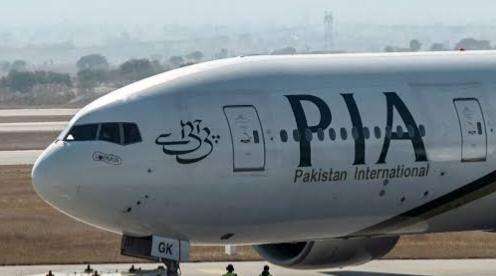
Pakistan International Airlines (PIA) is grappling with an unprecedented and embarrassing workforce crisis, not caused by layoffs or strikes, but by a growing wave of deliberate desertions. The disappearance of senior flight attendant Asif Najam in Toronto this week marks the third such incident in 2025 alone, bringing the total number of crew members who have vanished in Canada to at least 13 since 2022.
This latest episode has once again spotlighted the vulnerability of the struggling national carrier, which is seeing its staff exploit international stopovers to escape Pakistan's deepening economic turmoil. Asif Najam, a senior crew member, failed to report for flight PK-798 from Toronto to Lahore on Wednesday, November 19. While he initially contacted airline management claiming ill health, he provided no medical documentation and subsequently severed contact. His disappearance follows a meticulously established pattern that has humiliated the airline and forced an internal investigation into whether these exits are being coordinated by smuggling rings or support networks in Canada.
The sheer volume of these "runaway" cases has become a statistical nightmare for PIA management. The trend began accelerating noticeably in 2022, which saw four crew members slip away. The following year, 2023, proved even worse, with at least seven staff members vanishing after landing in Toronto. The crisis continued into 2024 with high-profile exits, including the widely publicized case of Maryam Raza. Raza, a flight attendant with 15 years of service, vanished in February 2024 after leaving her uniform in her hotel room with a polite "Thank you, PIA" note. Alongside her, colleagues like Faiza Mukhtar and Jibran Baloch also abandoned their posts that same year.
With Najam’s disappearance in November 2025, the tally continues to rise despite aggressive countermeasures implemented by the airline. PIA has previously attempted to stem the tide by confiscating crew passports upon arrival in foreign countries and raising the minimum age for staff deployed on Canadian and European routes to 50, under the assumption that older employees would be less likely to emigrate illegally. Najam’s case, involving a senior staffer, suggests these profiling measures are failing to deter determined employees.
The primary driver behind this exodus appears to be a combination of Pakistan’s soaring inflation and the looming privatization of the airline. With the government announcing this week that bidding for a 75 percent stake in PIA is imminent, anxiety among staff regarding job security and pension cuts has reached a fever pitch. For many, the liberal asylum policies of Canada offer a more stable alternative. Under current regulations, airline crew can enter Canada on a General Declaration without a visa. Once they slip away from their hotel or the airport, they can file for asylum, a process that allows them to stay in the country for years while their cases are adjudicated.
The financial ramifications for PIA are severe. Already burdened by a £1.9 billion debt pile and operating under strict conditions from a £5.3 billion IMF bailout agreement, the airline is fighting to maintain its international credibility. Every disappearance triggers potential fines and diplomatic friction, painting a picture of an airline unable to control its own representatives abroad.
As investigators look into Asif Najam’s whereabouts, the airline faces a grim reality. The "vanishing crew" phenomenon is no longer a series of isolated incidents but a systemic route for economic migration. Unless the underlying economic incentives change, PIA risks becoming a one-way ticket for its own workforce, with over a dozen empty seats left behind by those who chose never to return.



.jpg)