

.svg)
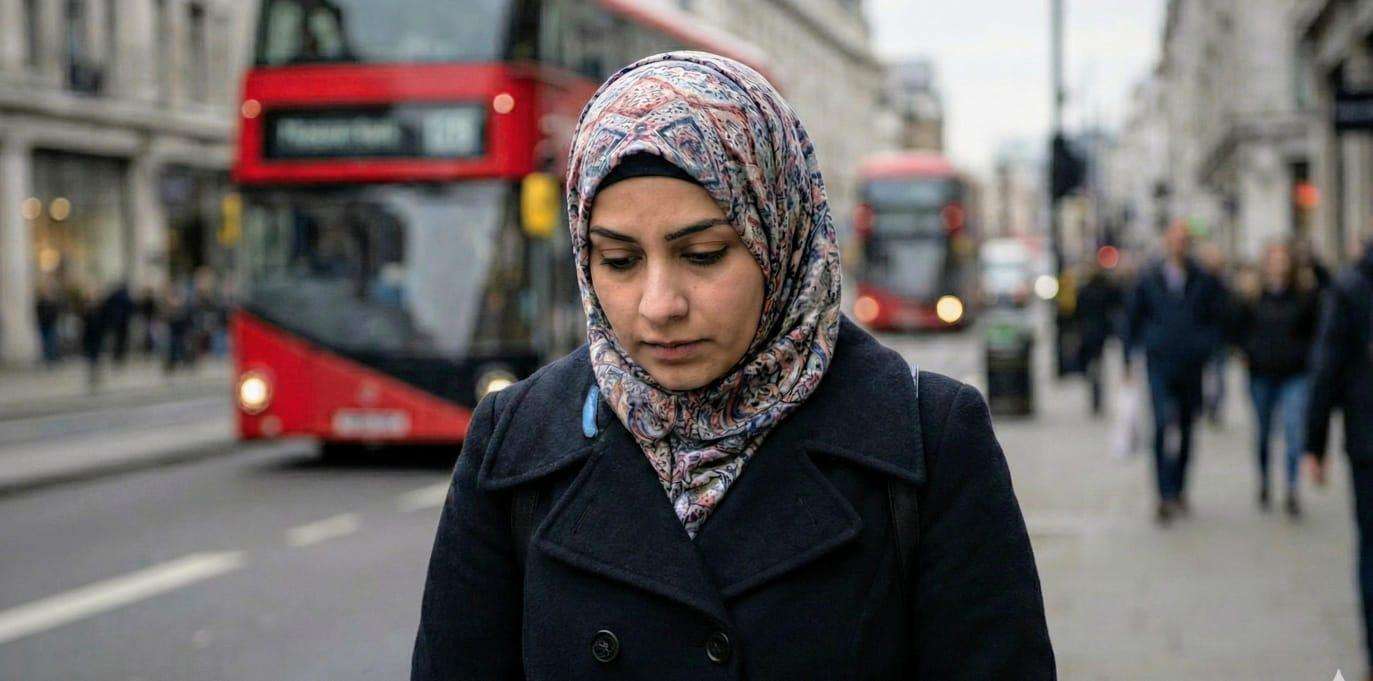
The view from the top deck of a Manchester bus used to be a mundane tableau of city life for Donya. Now, it is a source of creeping anxiety. During a single 20-minute journey last week, she counted half a dozen England flags fluttering from homes and gardens. In another time, these might have been innocuous symbols of national pride. Today, for women like Donya, they have been weaponised—co-opted by a far-right movement that signals Britain is closed to anyone who does not fit a specific, white mould.
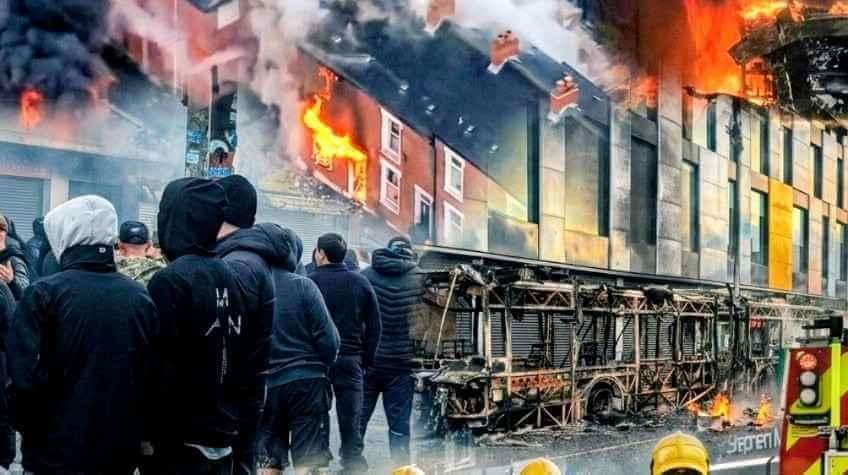
This rising nationalism is not just atmospheric; it is statistical and visceral. Following the violent disorder that swept through Southport and other towns last summer, the UK has entered a dark new chapter for its Muslim population. The street-level hostility has morphed into a multi-front crisis, ranging from record-breaking hate crime figures to the horrifying sexual exploitation of newly arrived refugee girls.
The Numbers Behind the Fear
The scale of the hostility has now been laid bare by chilling new data. According to the latest annual report from the monitoring group Tell MAMA, anti-Muslim hate incidents have reached their highest level since the organisation began recording them more than a decade ago. In the last year alone, verified incidents skyrocketed to 6,313, representing a staggering 165% increase compared to 2022.
While political rhetoric often focuses on "integration," the reality for British Muslims is alienation. Home Office statistics for the year ending March 2024 corroborate this surge, showing a 25% increase in religious hate crimes, with Muslims now the target of 38% of all such recorded offences. Perhaps most alarming for the community is the specific targeting of those who are most easily identified. Data indicates a 103% increase in hostility directed towards "visibly Muslim" individuals—predominantly women wearing the hijab or niqab.
The Visible Target: From Verbal Abuse to Street Violence
For women who wear the veil, the threat is no longer just verbal abuse; it is physically dangerous. The streets of Britain’s diverse neighbourhoods, once considered safe havens, have become flashpoints for unpredictable violence. This volatility was thrown into sharp relief during the terrifying incident in Bordesley Green, Birmingham, where an out-of-control XL Bully dog attacked pedestrians, including an 11-year-old girl.
While the incident sparked a national debate on dangerous dogs, for Muslim women, it resonated as a stark symbol of their vulnerability in public spaces. The image of a young girl from the community being mauled in broad daylight has compounded a growing sense of paranoia. In local WhatsApp groups, the conversation has shifted from school runs to safety tactics, with many hijab-wearing women expressing a fear that they are viewed as "soft targets" for both hate criminals and general street violence.
“I’ve become hyper-aware of myself in public,” says Donya. “I’m constantly reminded that the country I call home doesn’t want me. It’s not just the insults anymore; it’s the physical fear of what might happen when I turn a corner.”
The Hidden Crisis: Exploitation of the Most Vulnerable
Beyond the public spectacle of street harassment lies a far quieter, yet equally devastating crisis affecting newly arrived Muslim women. Amidst a crushing cost-of-living crisis and a hostile asylum system, vulnerable immigrant girls are falling prey to predatory exploitation.
Shocking new findings from the charity Women for Refugee Women reveal that the government’s ban on asylum seekers working has forced a desperate demographic into the shadows. The report estimates that up to 10% of female asylum seekers have been pushed into sex work to survive, unable to afford basic necessities like food or sanitary products on the meagre state support provided.
For many young Muslim girls arriving in the UK, often traumatised by war and isolated from support networks, this exploitation is increasingly taking place online. Digital platforms have become the new hunting ground for traffickers who coerce these destitute women into "survival sex" or online prostitution. It is a grim reality that stands in stark contrast to the "safe haven" Britain promises to be, leaving a generation of young women trapped between the trauma of their past and the exploitation of their present.
"The World Has Become Crueller"
The psychological toll of this environment is profound. Samia, a long-time resident, describes herself as a former "incorrigible optimist" who has lost faith in the decency of her neighbours. “A few years ago, basic decency was an expectation. Now, they’ll tell you to your face that they can’t stand you. The world seems to be becoming cruder and crueller,” she says.
This sentiment is echoed by Khadiga, a Black Muslim healthcare professional who has dedicated her career to the NHS. She reports receiving more verbal abuse in the past twelve months than in her entire career combined. “It’s getting to the point where I am afraid to be out early in the morning and late in the evening after my shifts,” she admits. “I’ve never felt this fear before.”
For converts like Amy, the shift has been equally jarring. Having embraced Islam later in life, she now finds herself navigating a society that projects its biases onto her instantly. “I often feel that I’ll never be properly seen for all that I am,” Amy explains. “They want you to fit into a certain narrative. I now spend more time seeking refuge at home where I feel safest.”
Glimmers of Hope in a Fractured Landscape
Despite the suffocating weight of statistics and anecdotes, there are pockets of resistance and hope. Many of the women interviewed pointed to the younger generation as a beacon of light. They cite the political engagement of youth and the successes of the Green Party as evidence that a "politics of hope" can still compete with the "politics of hate."
“Seeing more young people speaking up for justice, equality, and the environment gives me hope,” says Mai. “Our generation can create a fairer and kinder society.”
For now, however, the reality for the Muslim woman in Britain is one of resilience in the face of hostility. From the terrifying prospect of street violence to the silent exploitation of refugees behind closed doors, the message from the community is clear: they are under siege, and the country they call home feels increasingly like a hostile territory.