




.svg)
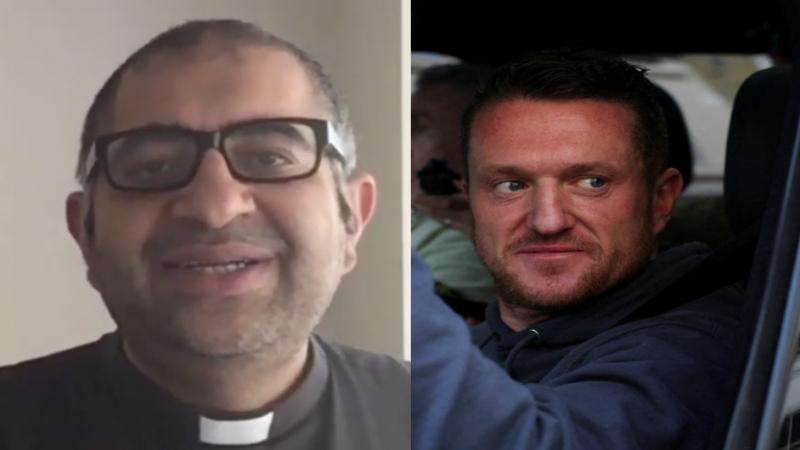
A profound and controversial shift is underway in British populist politics, where the language and symbolism of the Christian faith are being brazenly co-opted to serve a nationalist, anti-migrant agenda. At the heart of this movement is far-right activist Tommy Robinson, whose efforts to "put Christ back into Christmas" are being denounced by major church bodies as a cynical exploitation of religious conviction for political gain, Daily Dazzling Dawn understands.
This strategic pivot to Christian identity politics by figures like Robinson, whose real name is Stephen Yaxley-Lennon, and other groups such as Ukip under leader Nick Tenconi, has drawn widespread commentary. As one public observer noted, "Robinson and co are trying to go MAGA. Just another way we're becoming Americanised," highlighting the growing transatlantic influence of culture-war politics that intertwines religious identity with nationalistic fervour.
The Christian Banner: From 'Free Speech' to 'United for Christ'
The foundation of this new political strategy was laid bare during the massive 'Unite the Kingdom' march in September, an event billed as a "free speech" protest which saw more than 100,000 attendees take to the streets of London. Christian symbols, particularly large wooden crosses, were a common sight among the crowd—a stark visual departure that showcased the merging of conservative political outrage with a 'reclaim our heritage' religious message.
Despite the scale of the demonstration, which featured high-profile speakers like Elon Musk railing against the "woke mind virus," the event was marred by violence. As police and protesters clashed at the ‘Unite the Kingdom’ rally, dozens of arrests were made and twenty-six police officers were assaulted, highlighting the volatile undercurrent beneath the patriotic display.
The follow-up event, ‘United for Christ this Christmas,’ promises "bible readings, live music, and faith testimonies" with the explicit aim of starting a "new Christian revival in the UK" and "reclaiming" the nation's Christian identity. For critics, however, this represents not a spiritual awakening but a calculated attempt to make political capital from a faith Robinson claims to have found while in prison earlier this year.
Church Leaders Launch a Rapid Response
The Church of England (C of E) and other major denominations have refused to stand by while Christianity is seemingly subverted. The Right Reverend Arun Arora, the Bishop of Kirkstall and the C of E’s co-lead on racial justice, has issued a powerful and unequivocal warning, asserting that the Church must act to “resist the capture of Christian language and symbols by populist forces seeking to exploit the faith for their own political ends.”
Bishop Arora directly addressed Robinson's purported conversion, stating, "I rejoice that Stephen Yaxley-Lennon has recently come to faith in prison. Having experienced the wide mercy of God’s grace, Stephen does not now have the right to deny it to others." However, he critically added that Robinson "can’t now restrict it from others who may be equally lost. Nor does he have the right to subvert the faith so that it serves his purposes rather than the other way round.”
In a practical and unprecedented move, the C of E, alongside a coalition of church groups including the Baptist Union of Great Britain, the Methodist church, and the United Reformed church, has launched a poster campaign. These resources—part of a "rapid response" initiative—will be displayed at bus stops and in churches with messages like “Christ has always been in Christmas” and, critically, “Outsiders welcome.” This is a direct, public challenge to the far-right rhetoric, reaffirming the faith’s message of inclusivity and hospitality towards the stranger, particularly poignant as the Holy Family themselves were refugees.
The danger for the Church, as Bishop Arora warned, is that a failure to act would diminish it "to a people who offer religious observance as an alternative to an active pursuit of justice and righteousness." This sentiment is rooted in the conviction that the faith, especially during Christmas, must stand for a compassionate asylum system rooted in human dignity, challenging the narrative that, in the words of former Archbishop of Canterbury Rowan Williams, every migrant is "an unfriendly alien with unintelligible and hostile values."
The Wider Political Landscape
This Christian-centric messaging is not isolated. Nick Tenconi, the leader of Ukip, has also been intertwining Christianity with his party’s anti-migrant politics, placing Christian identity politics at the core of the organisation. Tenconi's connection to Turning Point UK, a right-wing student political group linked to the US-based Turning Point USA, further underscores the transatlantic ideological flow.
The confluence of these factors suggests a concerted effort to rally a segment of the public who feel disenfranchised, using religious and cultural identity as the ultimate political signboard. While rival initiatives, such as the ‘Shine Your Light’ campaign, aim to mobilise 200,000 Christians for non-political carol singing, the narrative battle over the meaning of Christianity in Britain has been thrust into the national spotlight, demonstrating how political entrepreneurs can attempt to weaponise even the most sacred symbols to
gain influence.