




.svg)
The UK's welfare system is facing a seismic shake-up as the Conservative Party embarks on a major policy review designed to drastically cut costs and redefine who qualifies for state support. Conservative leader Kemi Badenoch announced that the party would "draw a line" on which health issues are treated as disabilities for benefit entitlement, warning that the current system is unaffordable in what she called an "age of diagnosis."
This review directly targets the conditions that currently qualify individuals for benefits under the existing framework, which remains largely defined by the Labour government's Universal Credit structure. Current eligibility for Universal Credit is broad, factoring in age, savings, and whether an individual has an illness or disability that stops them from working, with additional elements for those with health conditions. The Conservatives, however, are specifically questioning the inclusion of "low-level mental health issues" such as ADHD, suggesting that some diagnoses are being used to "game the system." Badenoch hinted at the possibility of time-limiting some payments and reviewing the household benefit cap, which she claims is easily avoided through various exemptions. Furthermore, she suggested an end to using relative poverty—defined as receiving less than 60% of the median income—as a measure of deprivation, arguing that it fails to account for improved real incomes in a growing economy.
Rivals Propose Significant Uplifts and System Overhauls
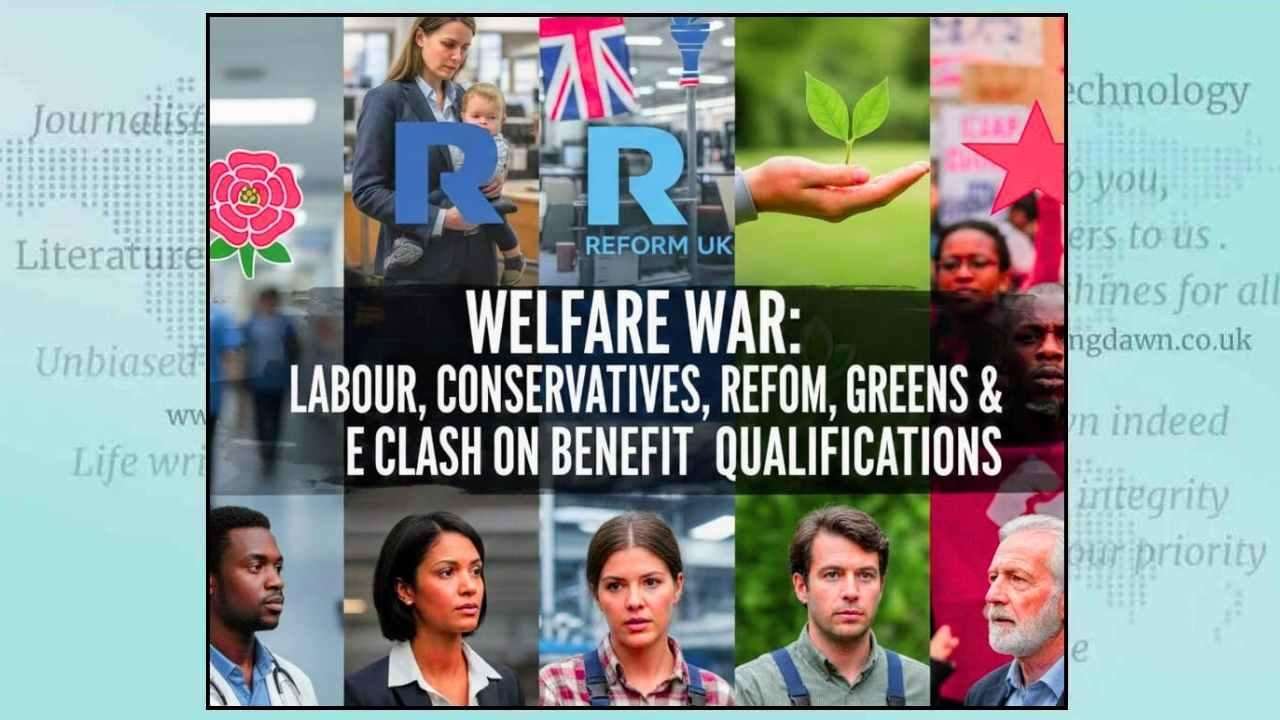
The Conservative stance is in stark contrast to the proposals and strategies of the other major political parties, all of whom advocate for significant expansions or protections for welfare recipients.
The current Labour government, while also focusing on getting people back to work, has been resisting further cuts, notably abandoning plans to reduce disability benefits and introducing a strategy to tackle child poverty by measures such as scrapping the two-child benefit cap. They emphasise tackling long waiting times for treatment, particularly for mental health, and reforming the Work Capability Assessment process to ensure better support for disabled people entering the workforce. Labour's approach is centred on making work pay while also using the welfare system as a stronger safety net.
The recently formed Jeremy Corbyn's New Party (Your Party) is expected to adopt a more radical, left-leaning approach, likely advocating for robust social security measures and a focus on public services. While specific welfare policies are still emerging, the party's foundation is rooted in the outward-facing mass politics of the previous Corbyn-era Labour, suggesting proposals aimed at substantial economic support for those out of work and tackling regional inequalities in the labour market. Early indications from its proponents suggest a desire to reintroduce ambition into support services and better health provision to help people thrive.
Meanwhile, the Green Party proposes a dramatic increase in welfare spending and a complete overhaul of the system. Their policy is defined by immediate uplifts to benefits, including an increase in disability benefits and Universal Credit, and the outright abolition of the two-child benefit cap and the 'bedroom tax'. They advocate for ending intrusive eligibility tests and, in the long term, moving towards a Universal Basic Income. The Greens are also committed to fair disability and carer benefits, including a review to increase payments and ensure they meet the full costs faced by disabled people and carers.
Reform UK, while sharing the Conservative's focus on cost reduction and making work pay, generally advocates for simplifying and reforming contributory benefits into a single, non-means-tested, time-limited benefit for those who have paid into the system. Their policies lean heavily on ensuring the most vulnerable, such as disabled people and pensioners, are protected, but the broader emphasis is on reducing welfare dependency and reducing the overall benefits bill. They have previously supported strong measures such as the Benefit Cap.
The clear dividing lines across the political spectrum highlight a fundamental debate about the state's role: the Conservatives are prioritising fiscal sustainability by reducing the scope of support, particularly for less severe conditions; the Labour government is focusing on making the existing system work better and lifting children out of poverty; while the Greens and Corbyn's New Party are pushing for radical expansion of universal and targeted support.




.jpg)