





.svg)
In an extraordinary illustration of how digital errors can generate startling real-world consequences, a retired HR manager from Lancashire briefly held what appeared to be the UK's highest single train compensation claim, not through a record-breaking delay, but a simple keystroke error.
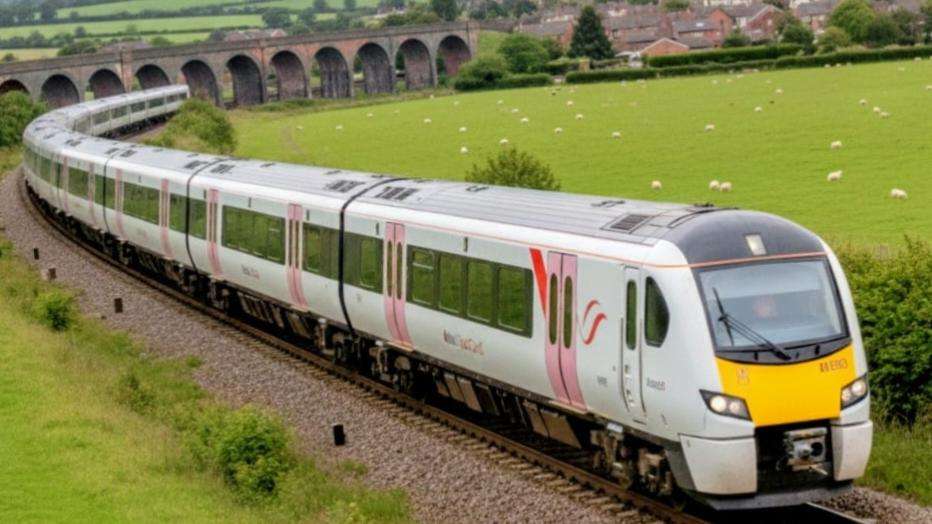
John Wareing, 72, expected a modest £10.10 back from Avanti West Coast after his lunchtime train from Preston to London on December 1st arrived 18 minutes behind schedule. His calculation was correct: the railway operator's generous Delay Repay policy for a delay between 15 and 29 minutes entitles a passenger to 12.5% of the cost of a return ticket—in his case, a fraction of the £80.85 fare.
However, the automated claim system had a momentary digital meltdown. Instead of entering the correct ticket price, Mr. Wareing accidentally submitted a figure of £80,850. Three days later, the retiree was stunned to receive an official email stating: "If your claim is approved for the delay you have entered, you can expect to receive compensation of £10,106.25." This eye-watering sum was over a thousand times the correct amount, theoretically enabling him to purchase a weekly return journey from Preston to London for more than two years.
The True Picture of UK Rail Compensation
While Mr. Wareing's erroneously generated £10,106.25 made headlines, it is crucial to clarify that this figure does not represent the highest actual compensation paid in recent UK rail history. Individual compensation payments of such magnitude for a short delay are unheard of under the Delay Repay scheme, which is calculated strictly as a percentage of the ticket price.
The largest compensation amounts in the UK rail network tend to be linked to long-term season ticket holders, or large-scale disruption events leading to mass payouts. In the financial year 2023-2024, the total compensation paid out by UK train operating companies under the Delay Repay and other charter schemes reached a substantial £138.6 million across all operators. Avanti West Coast itself paid out over £32.9 million in the same period. However, verifiable records for the single largest individual, non-litigation compensation payout to a passenger remain elusive, often obscured by operator-specific and commercially sensitive data. Mr. Wareing's claim, therefore, represents a unique, if accidental, benchmark of a system glitch, rather than a genuine compensation record.
Human Intervention vs. Automated Glitch
Avanti West Coast was quick to investigate the apparent windfall after media enquiries. A spokesperson confirmed the issue was an "autogenerated response" based purely on the inflated figure submitted by the customer. "The claim would be looked into and they would be paid the correct amount they are due as a result of the delay," the operator stated, confirming the inevitable human oversight that prevents the full, incorrect payment.
The retired HR manager, who has not yet received any compensation, spoke candidly about his experience, praising Avanti West Coast's standard Delay Repay process as "straightforward and reliable" based on his "plenty of experience." He also offered a balanced perspective on rail performance, noting that the vast majority of delays he has encountered over the years have been due to Network Rail's infrastructure issues, rather than Avanti's operational failings.
The contrast with international rail systems is notable. Mr. Wareing recently travelled on Uzbekistan Railways, where their policy offers refunds for heavily delayed trains only if the passenger decides to abandon the journey—with a strict caveat that "if the passenger is intoxicated" they forfeit their money back.
Ultimately, Mr. Wareing's story serves as a fascinating reminder of the power and pitfalls of automated digital claims processes, where a misplaced decimal point can momentarily transform a minor inconvenience into a theoretical life-changing windfall, before the cold logic of human oversight and policy takes hold.